Photo by Scott Enman
All Falls Down: How The Brooklyn Mirage Permitting Disaster Actually Unfolded
Former Mirage and Avant Gardner execs reveal new details about managing and living through one of the most spectacular collapses in nightclub history
The Brooklyn Mirage and its many miserable, very public missteps and malfunctions are, by now, officially, just about a thing of the past, razed to the ground before a single song could ever be shazamed. And yet, a year since it all started to go south, we’re somehow still learning details, still piecing together how it all unraveled, despite extensive previous reporting on its brilliant, complicated meltdown.
If you’re just catching up here, Pacha, the storied brand synonymous with Ibiza and, for a short time, Manhattan, is preparing for a June opening at 140 Stewart Avenue, once home to the Mirage and its $30 million venue, now a site slowly taking shape as its successor moves in, and with a similar promise, but with the new pressure of having to stage something like a resurrection. Early signs suggest the city might be ready to trust again: Opening weekend is already sold out, even before a venue has been built. But doesn’t this sound familiar?
With the Mirage gone physically, and its parent company Avant Gardner gone conceptually, bankrupt and forgotten, four high-level former executives, as well as a project manager for the renovation, recently met with Brooklyn Magazine face-to-face in a wide-ranging interview to shed light on what really happened. Most asked that their identities be kept hidden for fears of “being sued for sport.”
Now a year and change since the Mirage permitting disaster began, they recount how it all unfolded, and what it was like living through one of the most spectacular collapses in nightclub history.
Courtesy of Scott Enman
The clock starts
From the outside, it looked bad. The Brooklyn Mirage—as many TikTokers and anonymous Reddit users predicted—wasn’t going to be ready in time for its grand reopening on May 1, 2025. The Department of Buildings agreed, calling Mirage’s designers “incompetent” and labeling the 32,000-square-foot venue “unsafe,” slapping 109 total objections on it.
By now, you know the rest of the story: Former CEO Josh Wyatt was fired shortly after, Mirage’s parent company Avant Gardner would file for chapter 11 bankruptcy in August, demolition in October, and hand the reins to Pacha at the end of the year.
Still, questions remain unanswered as to how and why Avant Gardner employees felt so confident they could open. Why would Wyatt say the venue was—in what is now a viral quote—“show ready?” Why would they host a celebratory dinner with DJ Sara Landry the night before the first party? Were they oblivious to what was happening in front of their own eyes? Or were there factors at play behind the scenes that the public and press weren’t privy to?
These former executives have been threatened with litigation if they ever speak up, others have received death threats from fans, and several have been “financially ruined” and have had difficulty finding employment due to their reputations being tarnished through their association with the Mirage. “We’re representing a larger group of people that did not feel comfortable [opening up],” one told me. “But we, the collective, are speaking for the larger group of both vendors, employees, and the full-time operations team at Avant Gardner.”
A closer look at the weeks leading up to May 1, 2025 and the days immediately after, reveal a more nuanced image than 13 months of headlines might, painting a painful preventable portrait of how city bureaucracy and alleged corruption destroyed a company that was, despite its history of problems, a staple of the New York nightlife scene. It also tells the story of a Harvard-educated businessman determined to do things institutionally and by the book, who was, as one colleague put it, “in over his head at times, given all the moving parts and politics being played.”
And it serves, perhaps primarily, as a cautionary tale of what happens when a company with a history of circumventing rules and regulations flies a little too close to the sun.
Courtesy of Avant Gardner
Icarus takes flight
The East Williamsburg club complex known as Avant Gardner—comprising the Mirage, Kings Hall, and Great Hall—had been operating in debt for some time due to high-interest loans from Axar Capital Management, current owner of the former Mirage space, and now, Pacha New York.
Even at the peak of the company in 2023, when Avant Gardner made about $12 million in profit, according to company records, it still had to pay roughly 16.5% interest on a loan of more than $100 million. “You don’t have to be a Goldman Sachs investment banker to figure it out,” says one former exec. “You’re in the negative by almost $5 million from the day you wake up on the first day of the business year. You’re bankrupt even when the company was performing positive cash flow.”
After the failed Electric Zoo festival in September 2023, which led to costly lawsuits, many artists also refused to play at the Mirage unless something was done to reinvent itself following mysterious deaths of fans, a kidnapping and allegations of overcrowding. From 2023 to 2024, shows across all three venues at the Avant Gardner complex were scaled back by 29%, from 205 to 145, according to internal documents reviewed by BKMAG. Attendance also dropped by 32%, or 22,400 fewer fans, in 2024. It led to a loss of more than $9 million on the year. By 2025, now burdened by significant cash flow issues, the weight of additional loans taken to fund the rebuild, and the accrued interest and fees, the company was on the hook for roughly $120 million.
Billy Bildstein, the longtime 100% equity owner of the company, with the approval of Wyatt and Axar, decided the only way out of the red was through a massive renovation, with hopes that more expensive VIP offerings and season-long ticket packages could boost profits.
Wyatt, in a presentation to the club’s board of directors on August 31, 2024, said the company would need to make more than $25 million per year by 2026 to cover interest costs, refinance, and pay down the debt.
Courtesy of Scott Enman
No sense of self
Historically, the Brooklyn Mirage operated under two 90-day temporary place of assembly (TPA) permits meant for “limited-duration” or “one-of-a-kind” events. DOB lists examples as indoor exhibitions, political rallies, and farmers markets.
To gain approval for construction permits, the Engineer of Record would self-certify through the Professional Certification program, which allows state-licensed engineers and architects to, according to a DOB rep, “tell the truth” about whether their design plans fully comply with New York City’s codes and regulations. Applications filed through this program are not initially reviewed for compliance by DOB, allowing applicants to quickly receive approvals and construction permits with minimal delay or red tape.
It’s an honor system of sorts, which could work at colleges or small farm stands upstate. But for building massive structures in the country’s most populated city? According to a DOB spokesperson, the program “has allowed for efficient and safe development activity in New York City for decades.” Bildstein believed they could do the same thing in 2025; self-certify for construction permits and hope that their TPA application would also be approved. The key difference was the size and scope of the venue.
One former executive recalls Bildstein urging leadership to trust his methods, which had served him for years, but those around him raised doubts. “We told him the new structure wasn’t viable and legal under a 90-day TPA, so the strategy was to design temporary, but put in all the bells and whistles so we can flip it to permanent once we get open,” the executive said. “Once we get open legally under the TPA, we’ve future-proofed it enough so that we can then go into the next offseason and do all the final things to get it to the permanent structure.”
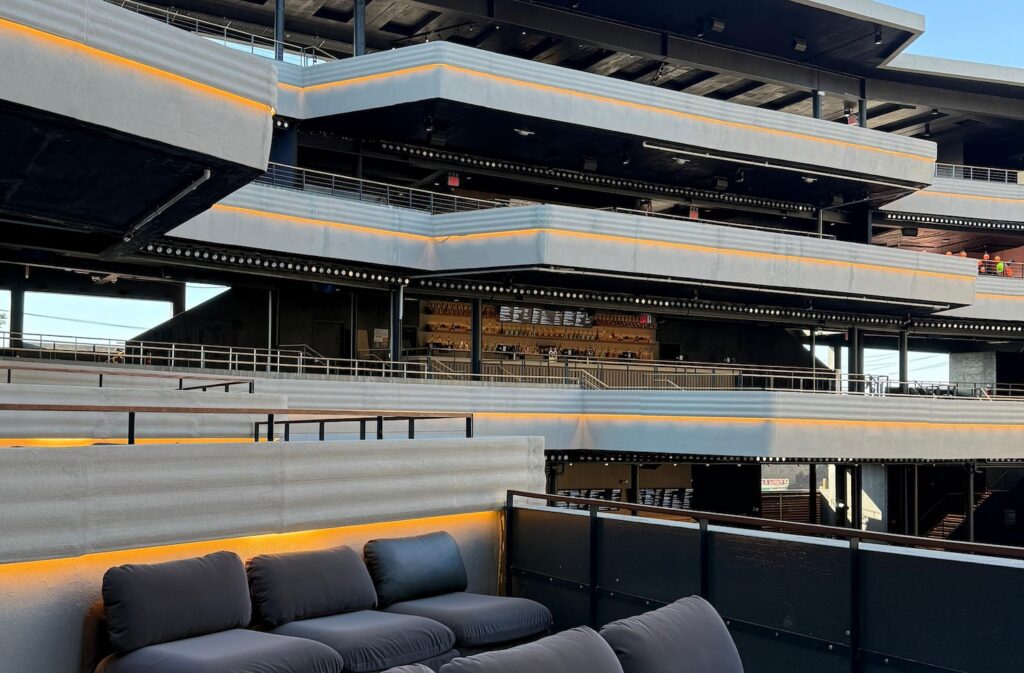
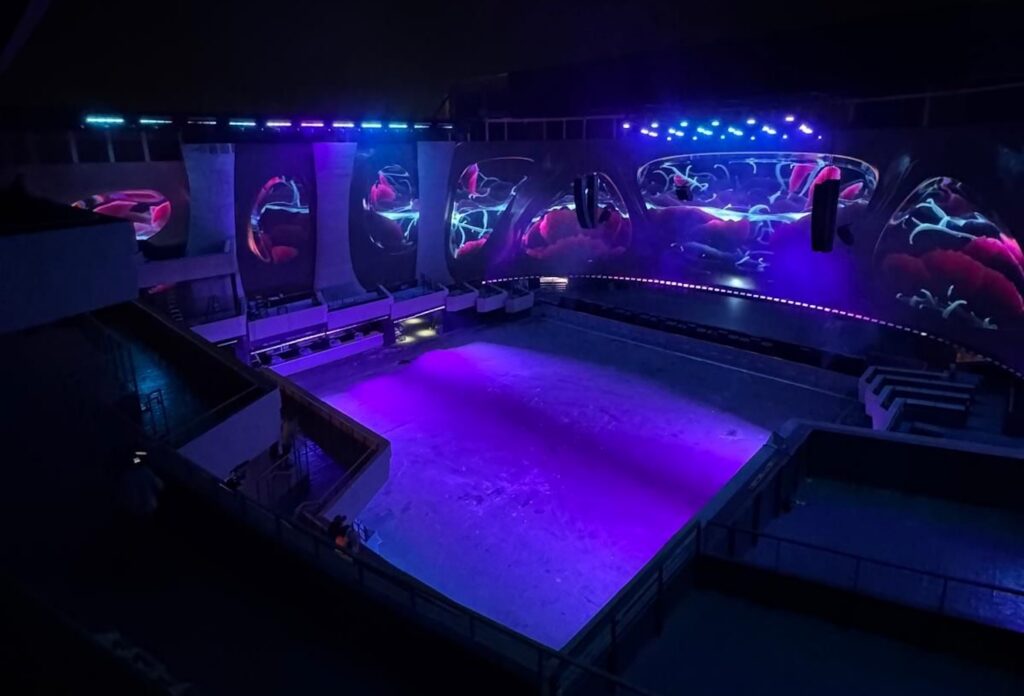
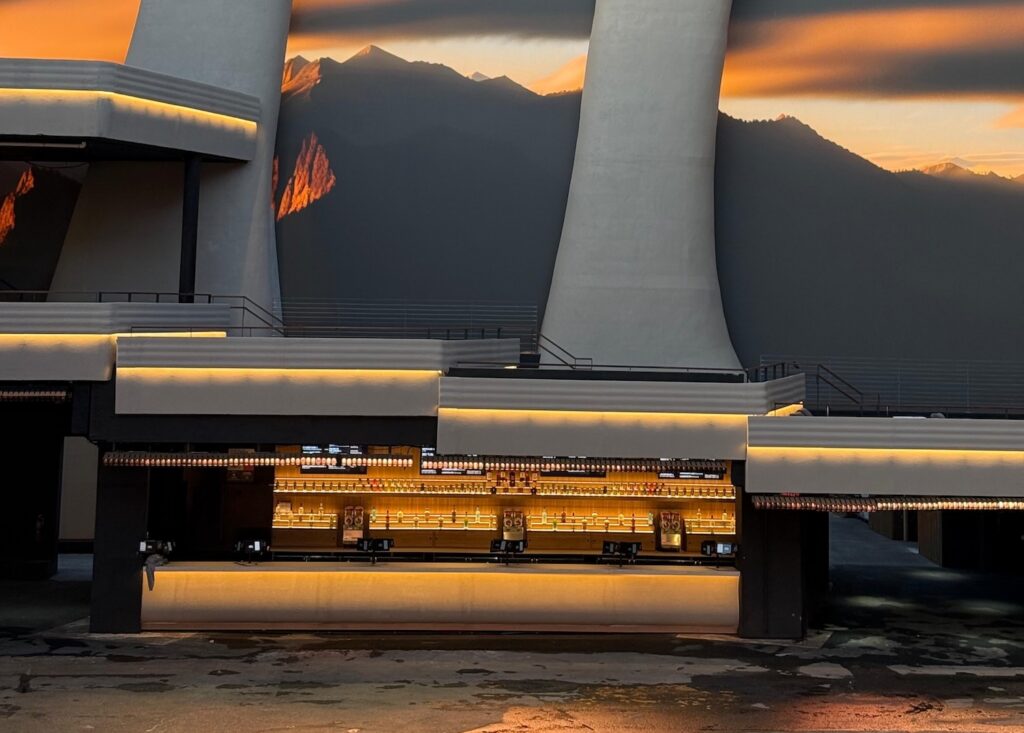
The futuristic-looking structure featured three levels of mezzanines and a stage wall that soared 65 feet in the air. They promised state-of-the-art sound and visuals, lower prices, and more room to move. Engineers say it was constructed modularly—like a lego set that could be taken apart piece by piece—a key requirement for a temporary structure. According to former employees, Bildstein threw the project off schedule and over budget with last-minute design tweaks, like altering the cantilever of the venue. Bad weather and tariffs didn’t help, neither did Bildstein going off-grid to Europe in January and February, just as construction was ramping up. With the rebuild’s costs stacking up and their deadline creeping up, Lilly Donohue—CEO of the Axar-owned Everstory Partners, one of the largest funeral home and cemetery operators in North America—was brought in to oversee the project’s finances.
By then, it wasn’t just social media influencers doubting whether the Mirage would be ready. “It was a running joke throughout the company that the venue was never going to open,” says Jenna Rosen, a marketing and hospitality development consultant. “There were just piles of dust and so much construction equipment all over the place weeks before opening. It was a mess.”

Photo by Scott Enman
Applying for a good time, not a long time
There are certain tests a permanent structure must pass that are not required for a temporary one, and while the Mirage team didn’t do them, a former exec insists they built the venue to pass those tests.
This wasn’t a question of safety, they said, but rather timing being off, and assumptions and miscommunication tanking the project. They compared it to inspecting a Ferrari instead of a minibus. For example, the renovated Mirage never did frost testing, which is required for a permanent structure, but not a temporary one. DOB said they needed it, but the test could only be done in the winter, and it was now spring. The renovated Mirage also didn’t have automatic sprinkler systems, which are not required for A-5 occupancy (outdoor assembly spaces), but required for permanent buildings.
According to the city, the structure needed to withstand a three-second gust of 117 mph as a wind test (roughly equivalent to wind speeds sustained in a Category 2 hurricane). One was never initiated, but its builders claim the renovated Mirage was able to withstand winds even higher than that. “We designed it to withstand 120 mph winds because we were going to flip it to permanent,” said a former executive. “If there’s a Category 4 Hurricane, we’re not going to have an outdoor concert, just to be clear. But let’s just say, for the sake of argument, that we did have 5,000 people inside of a windstorm. Maybe there was like some flash Nor’easter with 80 mph wind; the structure was built to withstand that.”
The Mirage also didn’t do a seismic test because it’s not required for a temporary structure, “but you better believe that we designed it to withstand earthquakes,” the employee said.
Courtesy of Scott Enman
“Show ready” after all?
Jonathan Mammele, the lead construction manager and technical coordinator for the Mirage upgrade, told BKMAG that his team worked under high pressure and near impossible timelines, but ultimately finished the venue, and did so safely.
“We had quality control throughout the process even though it was extremely high paced,” he said. “In the end, we ran a site for 24 hours over six weeks, and we had very minor, if any injuries; a couple of sprained ankles. Our safety and compliance track record was really top notch.” The venue, save for the closed upper level, was miraculously completed and infamously declared “show ready” by Wyatt, or so he thought.
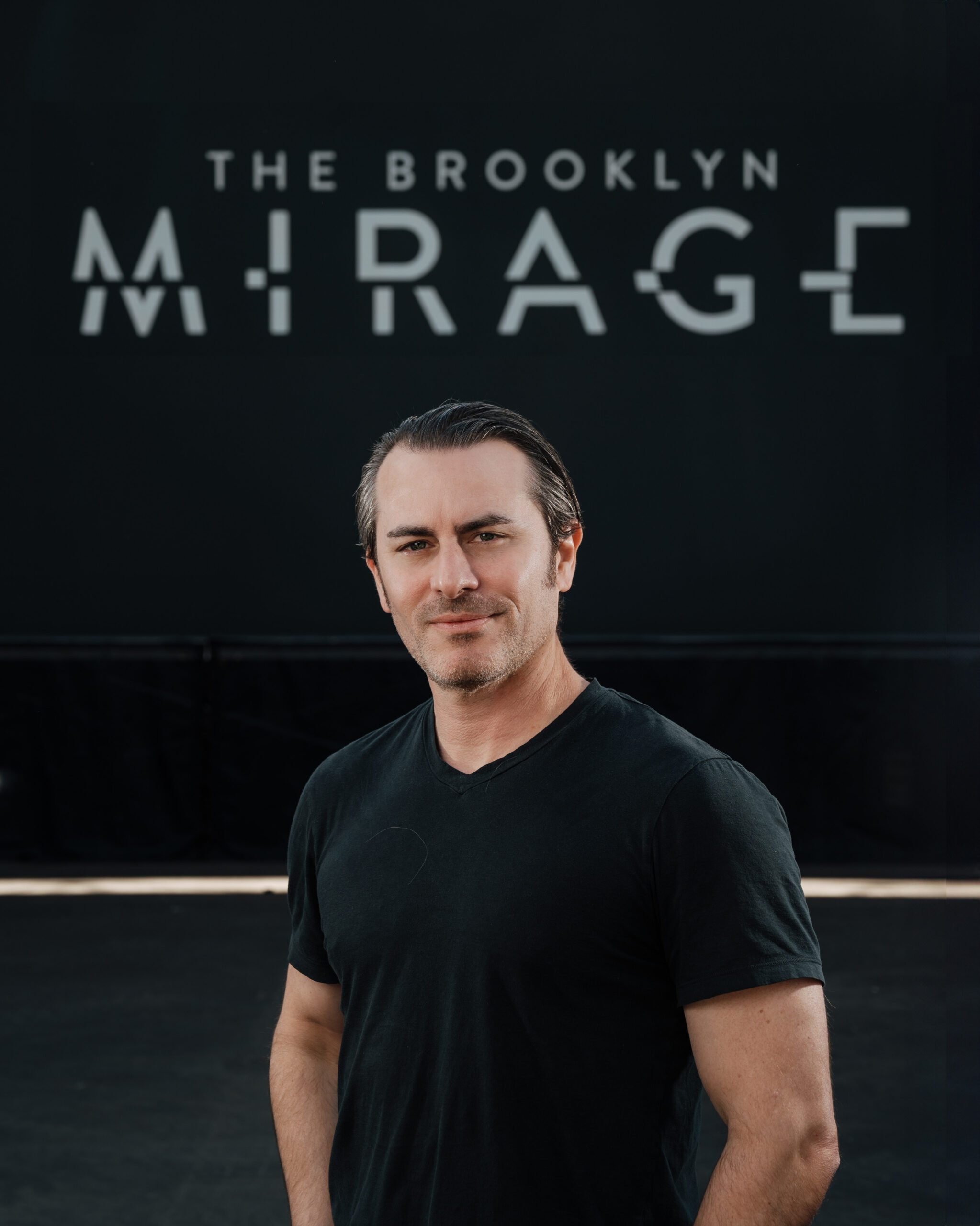
Courtesy of Brooklyn Mirage
After the venue was built, the owners of the Mirage applied for a TPA (required for venues where 200 or more people gather outdoors), which was reviewed by a DOB plan examiner, who found several inconsistencies in the application. Those inconsistencies triggered an audit with just two days left until its opening.
On April 29, the audit found 49 objections with the project, including concerns related to structural stability, that DOB said prevented it from being safe enough to open for the public. “This wasn’t a question of red tape, but rather a list of legitimate structural and egress issues with the constructed space,” a DOB spokesperson told BKMAG. A second audit in early May found 60 more, for a total of 109. Objections ranged from plumbing issues to insufficiently detailed drawings to a steel truss over the stage not being constructed as designed, leaving the roof unbraced. Other problems included not having compliant exit stairways, appropriate accessibility requirements or properly fire-rated materials. Some felt trivial. One requested that the venue “provide accessible toilet and bathing rooms,” even though the architect noted that those facilities already existed.
Many issues, employees said, were fixable. But at the root of the DOB’s objections was a refusal to classify the structure as temporary, insisting it was a permanent one, which requires more rigorous testing. In years past, the venue and stages could easily be removed, DOB said, but the “structural steel venue” that they had made “would more accurately be described as a new building, rather than temporary stage structures.” In addition, DOB said, “The applicant described not using the structure for a period of time, but not demolishing it, which in the eyes of DOB made it a non-temporary structure and therefore requires stricter enforcement related to egress and fire protection.”
Mirage executives say they were puzzled by this. In years past, the TPA-approved structure would be left up for extended amounts of time without the company taking it down, including from 2022 until the end of 2024. BKMAG has reviewed the structural analysis report and blueprints of the venue, as well as spoken to those who worked on the project, who say the renovated venue was, in fact, safer and stronger than previous iterations of the Mirage approved for temporary permits.
Partygoers recall past versions of the venue, its two-story elevated balcony swaying when crowded. There were limited support structures and no pilings going into the ground. “It was plywood in a parking lot,” said one former designer. “It should not have been able to run for as long as it did,” Brooklyn Borough President Antonio Reynoso told The Wall Street Journal. “They did a masterful job at building support through elected officials that made the city turn a blind eye.”
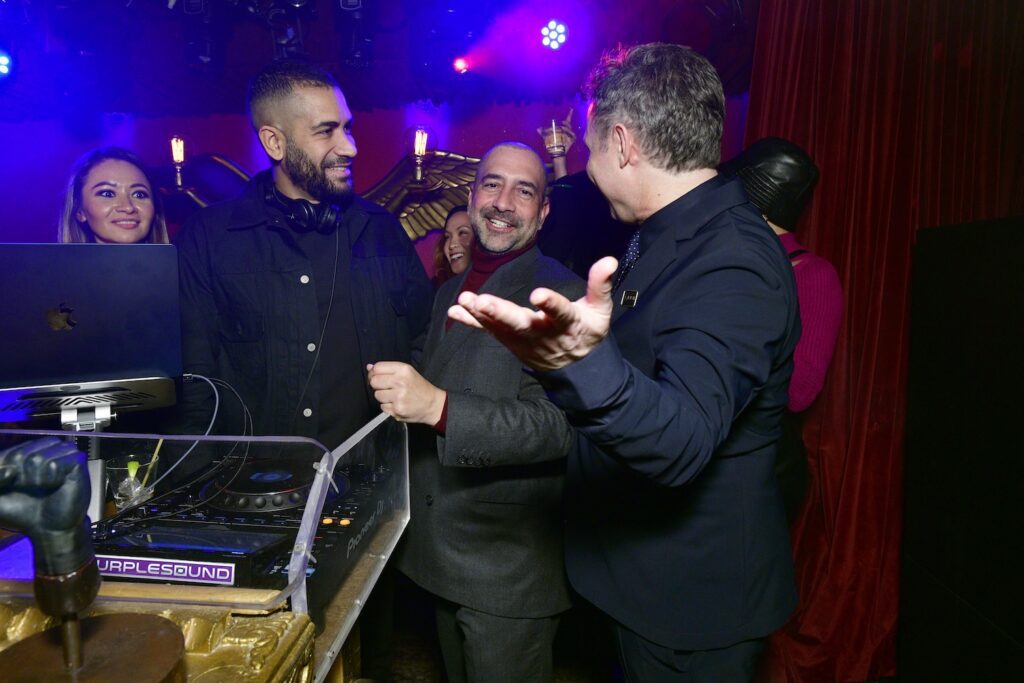
Frank Carone (C) and Jason Binn at DuJour Media’s James Huddleston Celebration on February 02, 2023 in New York City (Photo by Eugene Gologursky via Getty Images)
A pay-to-play political scaffolding
According to those who worked with him, Bildstein had kept the Mirage open through close ties forged with city officials since 2017. He controlled both the liquor license and access to a wide political network, and commanded a $650,000 per year salary as board director. His girlfriend, company records show, was on payroll for $146,000 per year, stashed in the marketing division, though employees say they didn’t see her in the office and couldn’t speak to her direct responsibilities.

NYC Nightlife Mayor Jeffrey Garcia (Photo by John Nacion via Getty Images)
Bildstein hired Frank Carone, a lawyer and Democratic powerbroker in Brooklyn described by his firm as an “accomplished negotiator,” to advise on government relations in 2023, the same year Electric Zoo went south and multiple bodies were discovered in the nearby Newtown Creek. Carone’s business, Oaktree Solutions, was paid a $15,000 monthly retainer by Bildstein to help manage the budding crisis, according to former execs.
Shortly after Wyatt was hired, payments to Oaktree were halted, according to those close to the former CEO. Court documents show that Oaktree filed a $90,000 claim during Avant Gardner’s bankruptcy, and Carone himself signed the papers. He went on to become Mayor Eric Adams’ chief of staff, and is currently being investigated for corruption by Brooklyn prosecutors.
Adding another wrinkle was the fact that labor unions, once they found out about the scale and profile of the project, started to complain to city officials because the venue had been primarily designed and built by Swiss, German and foreign non-union providers, according to people involved with construction of the project.
One former exec recalls them being chastised in a meeting for submitting documents that had German language on it. “There was a lot of ego. One of the problems was, ‘Oh, you’re using European steel versus American steel,’” one person on the project recalls. “It was really hardcore insular New York politics.” Despite all of this, Mirage leadership, and its team of builders and architects, still thought they would be able to open.
But mixed messages from City Hall and DOB added to the confusion leading up to May 1. Executives say they received calls from officials in City Hall contradicting DOB, telling them they would get the permits, at least for opening weekend, despite the objections. Around this time Wyatt, according to those who spoke with him directly, said he started to receive calls from “friends of the mayor” and Adams himself, including in one instance, just before midnight, on April 29.
BKMAG has reviewed phone records, Signal call logs, and messages, as well as spoken to people with direct knowledge of these conversations. Wyatt was contacted by Adams twice in the days leading up to May 1. These conversations were conducted via Signal using the phones of intermediaries, like Jeff Garcia, executive director of the NYC Office of Nightlife, and Fernando Mateo, chairman and spokesman for the New York State Federation of Taxi Drivers.
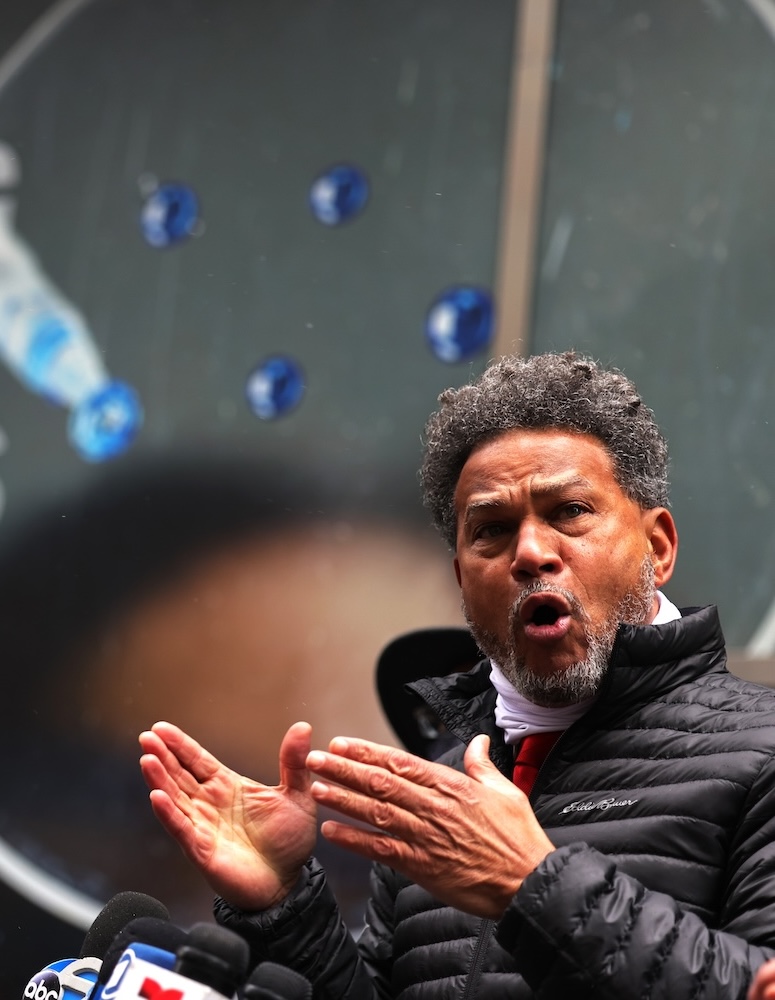
Fernando Mateo speaks during a press conference (Photo by Michael M. Santiago via Getty Images)
One of the calls with Adams took place on April 30 during a dinner with Sara Landry, the headliner for Mirage’s season opening night. That call came through Mateo’s number and left Wyatt visibly disturbed for the rest of the evening, according to those close to the former Mirage CEO.
Adams and his office had for years been active in helping Avant Gardner with its myriad issues, including brokering a meeting with a top aide to Governor Kathy Hochul in 2023, when the Mirage was having issues with its liquor license. He did not respond to a request for comment. Also around this time, Wyatt was put in touch with Steven Rivera, who was introduced to him by Garcia as “a representative of the mayor.” Garcia put Wyatt in touch with Rivera, hoping that Avant Gardner would hire his car service company to provide shuttles for fans.
“It was not a bribe request but a pay-to-play,” one former executive said. Avant Gardner ultimately hired his shuttle service. This has been confirmed by multiple people who worked for the company, including a former employee who helped facilitate the deal. With messaging getting scrambled from two different city agencies, the Brooklyn Mirage team all along felt like they could strike a compromise, meet half way, and make some adjustments to the venue that would be a win-win for both parties.
Despite the objections, no one explicitly told the Mirage team they wouldn’t be able to open until hours before doors on May 1. As journalists and camera crews were already at the venue touring the space, a call was simultaneously taking place between more than two dozen executives and officials from DOB and Avant Gardner.
On the call, DOB Commissioner Jimmy Oddo referenced a nightclub collapse in the Dominican Republic within the last month prior to the intended opening that had killed 235 people. It was still fresh in people’s minds, Oddo said, and partially why they were being extra cautious with the project. Concerns were expressed, but no one explicitly told the Mirage team they wouldn’t be able to open. It was only after the all-hands call that Oddo delivered to Wyatt the news he was dreading all along, that Mirage would not be able to open that night, reportedly citing videos of the space he’d seen on TikTok. Meanwhile, police officers swarmed outside the venue, making sure the show was off, as news crews pivoted their headlines from “grand reopening” to “spectacular failure.”
By this point, Wyatt’s pull within the company was beginning to erode. Some were referring to him as a “puppet” leader, and the DOB commissioner reportedly asked who the “real CEO” was in a call. “Between Andrew, Gary, Josh, and [Lilly], there were just too many cooks in the kitchen,” said Rosen. “Josh really didn’t know what was going on to the point where it was embarrassing for him.”
Wyatt was ultimately fired at a soundcheck on May 19 by Axar and Gary Richards, aka Destructo, a board member who was making $120,000 a year, according to financial documents reviewed by BKMAG. After Wyatt was let go, Richards was promoted to CEO, and his salary jumped to around $750,000, or $200,000 more than Wyatt’s $550,000 salary at the time.
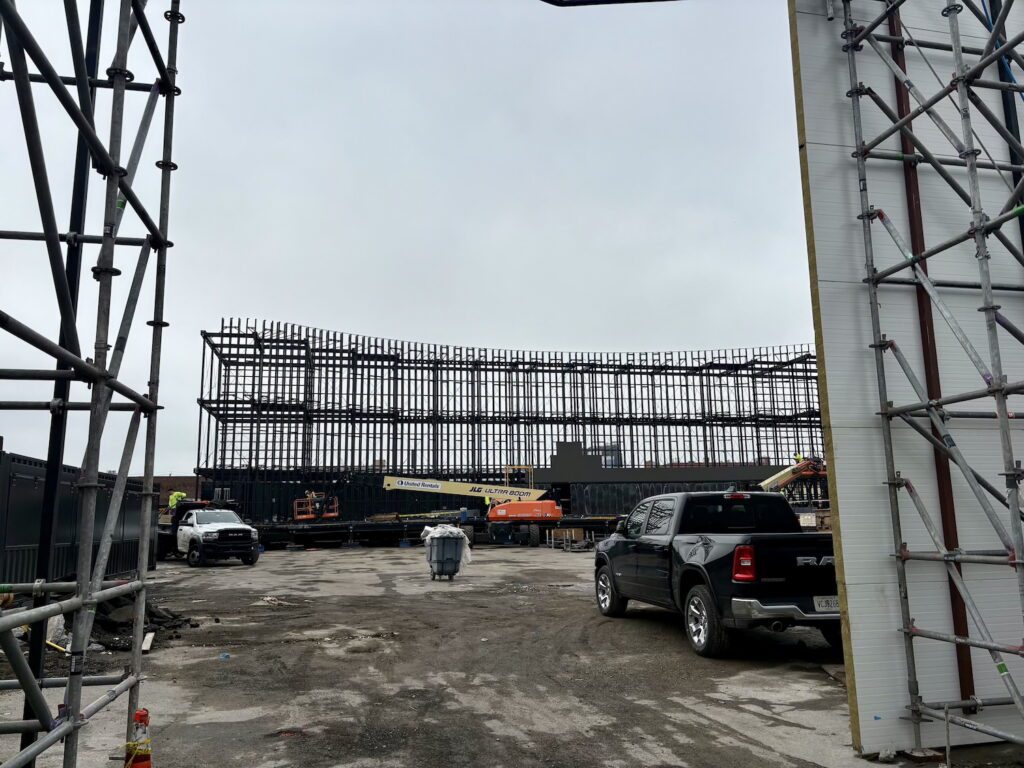
Photo by Scott Enman
Thoughts, prayers, and Pacha’s inheritance
It all led to a whirlwind 48 hours. Avant Gardner employees prayed the city would eventually approve them, hoping after some concessions were made, officials would, in Renyoso’s words, “turn a blind eye” like in years past.
“People ask us, ‘Why would we have done the social media? Why would we have posted that comedy video? Why would we have hosted that dinner with Sarah Landry the night before the opening?’ Because we genuinely thought we were gonna fucking open,” one executive says. “We were getting back-channeled by City Hall.”
“Innovation killed,” added a former lead designer. “Contrary to the uninformed social media hot takes, this project was properly designed, planned, permitted and built by extremely sophisticated people, teams and companies. We led with total transparency—to the now detriment of Wyatt and others’ careers. We had a deeply innovative, best-in-class team and product. The Mirage should have been on the cover of Fast Company. Instead it is a laughing stock.”
Many of the Mirage team members behind the venue’s supposedly “unsafe” rebuild—including the exact same architect (of Kostow Greenwood Architects), lawyer (James Colgate), expeditor (Metropolis), contractor (McAlpine) and structural engineer (Geiger)—are, meanwhile, now tasked with building Pacha New York.
FIVE Holdings, the Dubai-based parent company of Pacha, has entered into a 10-year venue management agreement with Axar for the former Mirage space and The Great Hall, according to a Pacha rep. Axar will retain ownership of the venue during the management term. FIVE Holdings does not have a purchase option, but rather the agreement includes a contractual obligation to acquire the venue, subject to certain future conditions being met. The acquisition value is $135 million.
Pacha appears to be pursuing the same ambition that drove Avant Gardner—namely, building a world-class dance space—but with a far more measured approach informed by Brooklyn Mirage’s mistakes.
But rather than rushing to recreate Mirage’s extravagance, Pacha plans to open with a stripped-down venue and expand gradually over future offseasons. According to FIVE Holdings founder and chairman Kabir Mulchandani, the company also avoided self-certification, one of Mirage’s most controversial shortcuts, choosing instead to undergo a more rigorous and expensive city approval process before construction began. Those decisions paired with a leaner design should ultimately give Pacha what Avant Gardner never had: time.
“We should have just shut everything down. We should have run the Mirage until the end of 2024—end of October, early November, and then shut it down for two to three years and just build it the right way,” one particularly reflective Avant Gardner exec said. “That’s hindsight, but we had everyone, especially Billy, be like, You gotta get open by May. Think about the timeline: It’s impossible to design this structure quickly and get ready to go within three months—it’s impossible.”