Photo by Scott Enman
“We Are Asking For a Chance”: Pacha Pleas for Trust, Previews Brooklyn Mirage Upgrades
Inside the community board meeting where the billionaire founder and chairman of the company behind Pacha began the work of rebuilding trust in the wake of Brooklyn Mirage's meltdown
It was a sweltering evening inside the Swinging Sixties Senior Center in Williamsburg, where the air conditioning struggled against the heat and an unusually packed crowd.
Folding chairs, far and few between, ran out quickly, leaving latecomers standing along the back walls, fanning themselves with pamphlets and meeting agendas. At the front, the microphone barely worked, forcing speakers to raise their voices over the hum of a restless room and an even louder A/C, making its presence known, but with very little effect.
The faint smell of that day’s lunch—something like meatloaf—lingered in the air.
And in the middle of it all stood Kabir Mulchandani. The billionaire founder and chairman of FIVE Holdings—the company that owns the Ibiza-born nightclub brand Pacha and is currently building its new outpost in the former Brooklyn Mirage space—stands in stark contrast to the bare senior center, dressed in jeans and a blazer, and surrounded by suits.
Mulchandani is there to receive the blessing of Community Board 1 for a liquor license at the new-ish venue, which is slated to begin hosting shows on June 13, with a proper two-night grand opening the following weekend. Unlike the rest of the room, however, Mulchandani was not sweating. He spoke evenly as he fielded questions from residents, some of them pointed and skeptical, others downright hostile. Years of practiced calm and boardroom cool were evident in his measured tone and steady posture. He did not raise his voice, even as the room grew more tense. He smiled at those who asked him the hardest questions, never getting defensive, and apologizing for not being more clear in the first place.
It’s a temperament that will prove useful, squared up with a rightfully incredulous crowd and community of clubgoers having a hard time figuring out where Pacha begins, and Brooklyn Mirage actually ends. But what became increasingly clear throughout my three-ish hours sweating it out in the senior center was that Pacha appears committed to earning the room’s trust.
“We don’t break our promises. We are asking for a chance,” Mulchandani said. “Do whatever you reasonably need to test us. Hold me accountable, but give me an opportunity. Just give me a fair chance.”

The old Brooklyn Mirage lot, where Pacha is building its new outpost. (Photo by Scott Enman)
Walking a different path
As far as we can tell, how Pacha is approaching the venue’s (re)construction process is an early sign of differentiation.
One of the factors that contributed to the Mirage’s unraveling was a decision to have its Engineer of Record “self-certify,” leaving the Department of Buildings review until after the venue had been built. A compressed timeline—further strained by construction delays, imported materials from Europe, tariffs, and what may have been a late start to the building process—didn’t help. Applications filed through this program are not initially reviewed for code compliance by DOB, allowing applicants to quickly receive approvals and construction permits with minimal delay or red tape.
That sounds a whole lot like an honor system, which can work well at colleges and at small rural farm stands, but may be ill-suited for building massive structures in the country’s most populated city. Apparently, it works, though—a DOB spokesperson assured Brooklyn Magazine the program “has allowed for efficient and safe development activity in New York City for decades.” But this also created the time crunch that eventually led to Mirage’s collapse. A DOB plan examiner was let in just days before Mirage’s intended opening date. When they identified inconsistencies and safety issues with the building’s $30 million renovation, there was virtually no time to do anything about them—a case of too little, way too late.
Pacha, on the other hand, has taken a different path, one that Mulchandani says was more rigorous and expensive. The previous Mirage structure “was a disaster,” he said, noting the DOB was right not to let it open last year.
“The first thing we did was demolish what was there,” he said. “There was no way to fix it. It’s a $3 million demolition. There was no way to use it. The more complicated way is you actually apply. So you submit tons and tons of drawings, do the entire process with the DOB, and then they then decide, is this going to work or not? This is a way to be sure what you’re doing complies with the regulations and complies with city code. We adopted the second process. It was far more expensive, far more time-consuming, but we received approvals for everything that we’ve done.”
Pacha also plans to skip the extravagance and build a more stripped-down venue, eliminating mezzanines while preserving the venue’s signature visual wall, and installing their own top-tier sound system on the ground rather than hanging it in the air to reduce noise pollution. The simplified design and pared-back structure should ultimately enable a more streamlined approval process, free of the bells and whistles, however beautiful, associated with Brooklyn Mirage. “I want to assure you [of] the simplicity of what we’re building,” Mulchandani added.
Pacha New York’s outdoor space will have a capacity of around 5,300, up from the Mirage’s 5,250. The entire complex, including the Great Hall, however, comes in at 7,850, slightly down from Avant Gardner’s roughly 8,000 total.
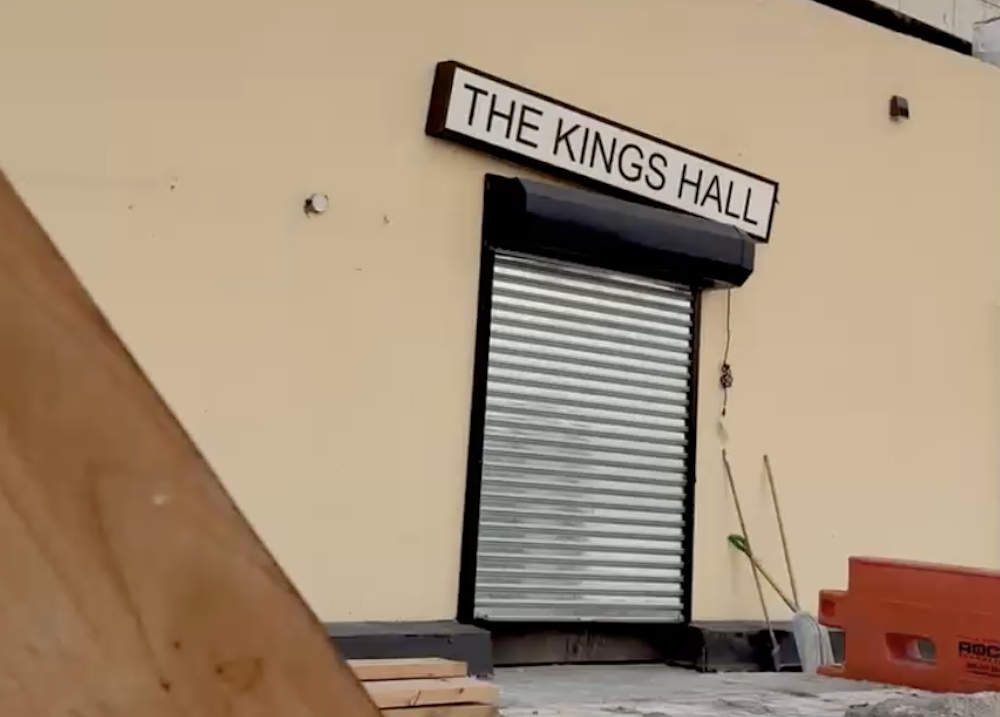
Photo by Scott Enman
Moving forward, with or without liquor license approval
In New York City, applicants are required to notify their local Community Board before the State Liquor Authority can process a liquor license application, providing an opportunity for the board to submit input. Their recommendations, as an SLA rep tells Brooklyn Magazine, are “an important factor” in their “decision-making process,” but they’re strictly advisory, not binding.
To head off accusations—of say, tickets being sold before a liquor license had actually been secured, or permits granted—Mulchandani moved to put those concerns to rest, emphasizing the nuances of how liquor licensing works.
“The venue has an existing liquor license,” Mulchandani said in response to a question about why they sold 16,000 tickets for shows before transferring the license. “So, the venue is going to open either way.”
Their end goal is ultimately to transfer the license and fully unshackle themselves from Avant Gardner, but that process can take many months. In the meantime, they are scheduled to appear before the State Liquor Authority board in May and have applied for a temporary retail permit. If approved, it would allow them to serve alcohol while the transfer is pending. In other words, drinks will be available on opening weekend regardless of the community board or SLA’s approval.
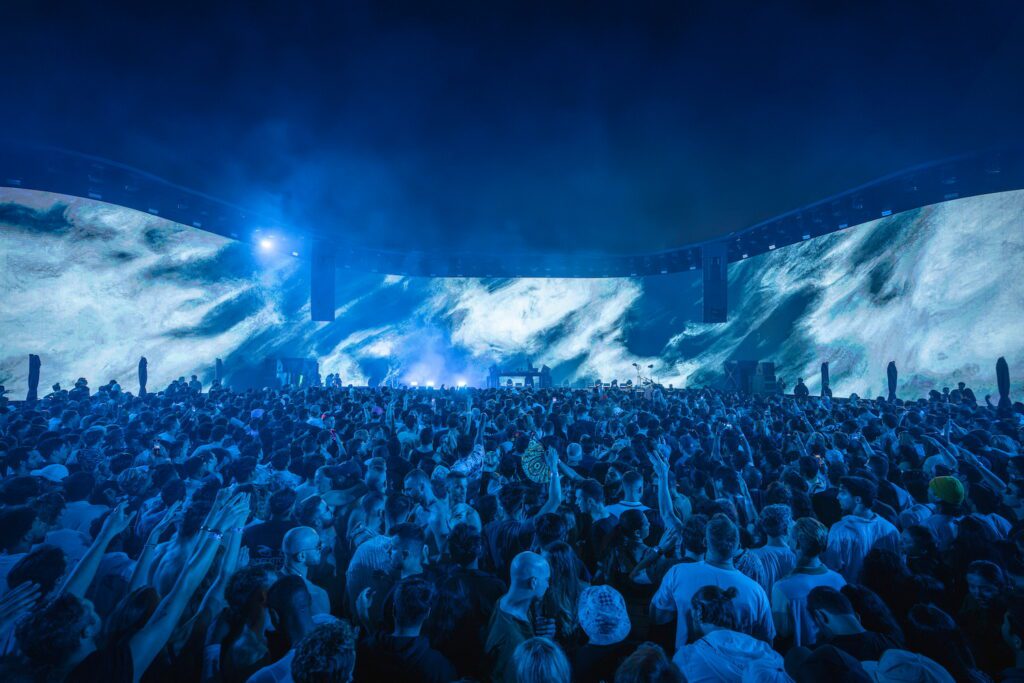
Rendering of the new club (Courtesy of Pacha)
Upgrades based on community concerns
In terms of improvements and renovations, Mulchandani said that his team has listened to community concerns and addressed previous problems posed by the Brooklyn Mirage build.
“We’ve heard the community clearly, and we’re rebuilding this venue from the ground up to operate the right way: by the book with full DOB compliance and with transparency and accountability at every level,” Mulchandani told me after the meeting.
“Overall capacity has been reduced, with real-time AI tracking and open access offered to the community board and NYPD to verify at any time. We’re eliminating overselling, and completely reengineering the experience—from advanced entry and screening that can move 3,000 guests per hour to coordinated exits with shuttles, traffic management, enhanced lighting, and a dedicated 5G cell tower to ensure safe dispersal and connectivity.”
Mulchandani said the new AI-based screening system will address past complaints from patrons of Brooklyn Mirage about overly aggressive security, eliminating the need for physical contact during entry. An app will be used to track real-time capacities. Mulchandani’s head of security noted there would also be stricter measures to combat phone theft, including flagging tickets purchased with stolen credit cards and requiring names on tickets to match attendees at the door.
Shuttles operating every 30 minutes from 2:30 to 4:30 a.m. will run in three sections, bringing patrons to Union Square in Manhattan, as well as the Morgan Avenue and Jefferson Street stops on the L line.
Mulchandani said quality-of-life issues are also being addressed for residents, many of whom raised concerns at the meeting about sound pollution, vomit and garbage in the street, and an inundation of inebriated patrons in residential areas.
“Independent third-party acoustic analysis confirms that engineered sound containment ensures sound leaving the venue remains well within city limits, reinforced by continuous real-time monitoring,” he told Brooklyn Magazine. “We’re also implementing full sanitation and street management after every event, in addition to expanded security, patrol, and on-site medical capabilities. This is not just a reset—it’s a global benchmark for fan safety, while being respectful of the local community.”
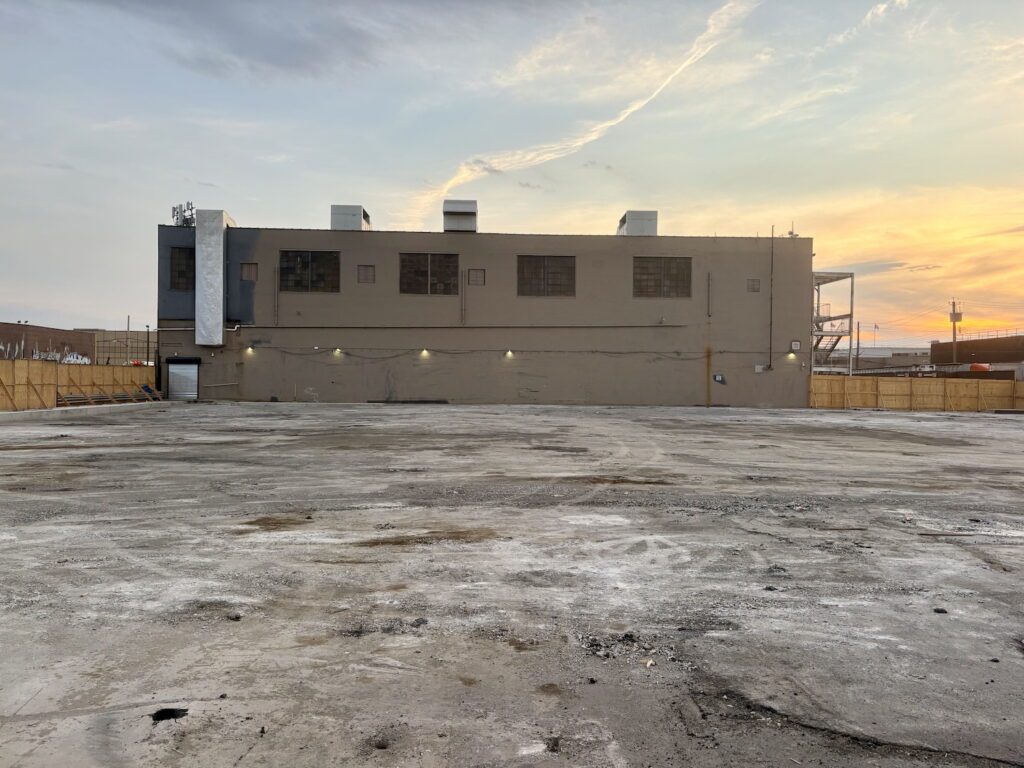
The lot at 140 Stewart Avenue. (Photo by Scott Enman)
Turning a new leaf
Pacha’s team has also taken additional steps to address issues tied to the Mirage’s bankruptcy process, which left tens of thousands of fans without refunds for shows that never took place.
The brand has given out 30,000 “goodwill coupons” worth $3.1 million to ticketholders who never received refunds for Brooklyn Mirage shows that didn’t happen. Most guests have received an email with a unique QR code to redeem the full value of their ticket, which they can use on beverages, food, or merchandise.
In their presentation, Pacha execs said they’ll create 450 jobs, provide $75 million in direct economic activity generated annually, and contribute $4 million in sales and payroll taxes every year.
A pre-opening weekend block party, curated by Keinemusik’s Rampa, is scheduled to take place June 13 and 14. Their official opening weekend features Michael Bibi and Black Coffee.
Mulchandani says he will continue meeting with the community in the near future and is also expected to appear before Community Board 4, which includes Bushwick. While 140 Stewart Avenue is not technically within its district, the neighborhood does bear much of the impact from patrons leaving the Mirage.
Whenever that meeting takes place, one can only hope the air conditioning performs a little better.