Photos by Raul Coto Batres
Last Dance at Dead Letter No. 9
Saying goodbye to the wonderfully weird world of a Williamburg club that defied any and all convention
Sitting inside Dead Letter No. 9 one evening during its final week, co-owners Taylor Myers and Michael Ryterband take a moment to reflect on what they’re about to leave behind.
The duo has been frantically preparing for a massive three-day closing weekend, on Halloween no less. But at this particular moment, the venue is empty, and the prospect of curtain call seems to be finally sinking in. “It’s been one hell of a ride,” Ryterband says of the club’s three-year run on Grand Street in Williamsburg, which came to an end after their landlord refused to renew their lease (rumors of potential redevelopment are swirling around the property).
“What type of ride?” Myers asks with a wry smile, seemingly aware that his partner is about to take the question somewhere unexpected. Ryterband thinks for a moment before comparing it to El Toro at Six Flags Great Adventure, one of the world’s tallest and fastest wooden roller coasters, which has, on occasion, sent a few thrill-seekers straight to the hospital. “El Toro was fucked up, dude,” he says. “It injures you, but it was awesome. It almost shakes your teeth out the whole time. It feels like you’re about to fly out of your seat.” Myers picks up on the comparison, describing a ride that is thrilling partly because you’re never entirely sure it’s holding together. “That’s pretty much how it feels here,” he says, looking around the room. “There’s certainly a significant amount of dirty hands and regular daily maintenance and upkeep.”
It’s a fitting analogy for a venue that, in many ways, was exhilarating, a little unpredictable and, at times, seemingly running on sheer force of will. Myers and Ryterband point to places in the room held together with tape, the floorboard where they once had to drill a hole—in the middle of a party—to drain a leak, old wires left over from their first year, when electricity was limited and the lack of HVAC forced them to close during the cold months. “The building only has two thirds of its power, but we have enough extension cables to pretty much make that not totally obvious when you first walk in,” Myers says, laughing.
Those rough edges were part of Dead Letter No. 9’s charm. It never felt overly polished or particularly conventional. That was the point. It had the loose, improvisational feel of a house party or DIY space.

Photo by Raul Coto Batres
“What the fuck?”
Dead Letter No. 9 is hard to put in a box, which is ironic, considering the venue operates out of a former post office, with literal boxes scattered everywhere. It’s a nightclub, of course, but it’s also a bar, restaurant, conversation parlor, experimental venue, and immersive theater experience. With its wide-open garage windows in a trendy stretch of Williamsburg near Domino Park, the venue might look like a neighborhood bar from the outside. But inside, it offers themed rooms, two dance floors, and a food menu that rivals that of a traditional restaurant.
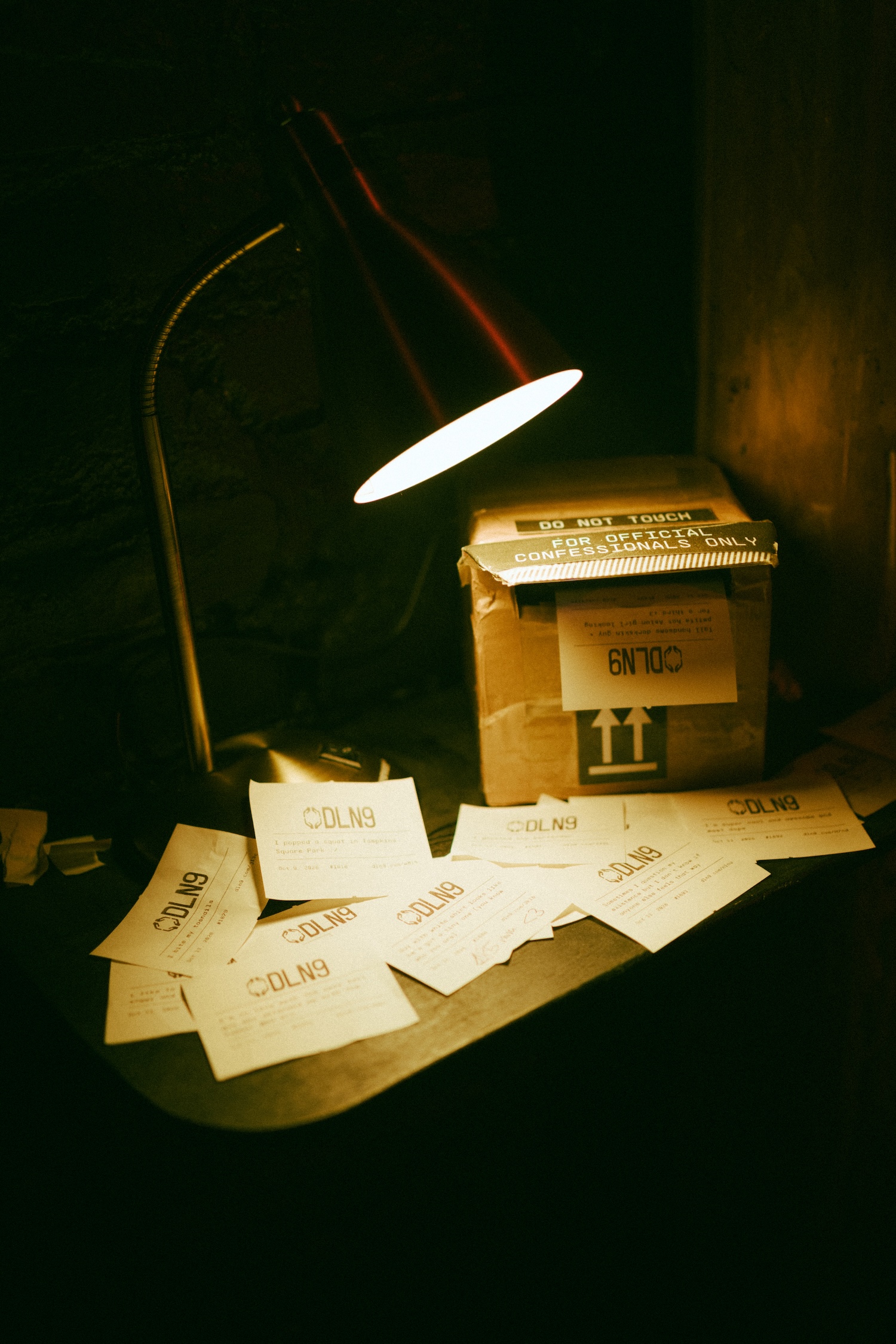
Photo by Raul Coto Batres
“The fact that this place challenged expectation meant that it was challenging people to kind of step outside of themselves,” Ryterband says. “It inspired people to be weirder, a little bit more bold. The amount of people I’ve heard say, ‘What the fuck?’ walking down the hallway was so delightful to me. Some people were actually offended by how unexplainable the place was, but they never left. They’d come back the next day with a group of six of their closest friends.”
Altogether, the venue has five to seven themed rooms, depending on how you want to count them. The bar has empty boxes tucked into cubbies above it, while a separate lounge and eating area offers a place to catch your breath. On any given evening, a cluster of partygoers can be found huddled on a couch, noshing on ribs with sauce smeared across their faces. It’s a welcome pit stop before heading back to the other rooms.
The Treehouse resembles a summer camp cabin, complete with bunk beds, wooden walls and shelves lined with knickknacks. The Camper, meanwhile, features an RV that guests can climb onto, surrounded by trees and cheap lawn chairs. The Porch is a screened-in space that feels straight out of the American South, while the Foyer most directly evokes the building’s former life as a post office, with an overflow dance floor surrounded by folders, papers, and miscellaneous packaging materials. In the back is Cargo, the main dance floor, complete with exposed brick, club lighting, and a gritty warehouse feel.
“I’ve said a number of times that we’re frame makers,” Ryterband says. “We’ve made a very beautiful frame so that our guests can be the art inside it. There’s a collective experience in that shock and awe and humor that pulls people together.”
“Totally,” Myers adds. “That sense of discovery engenders people with a degree of social ability. They come with a sense of invitation, and then they get a sense of wonder.”
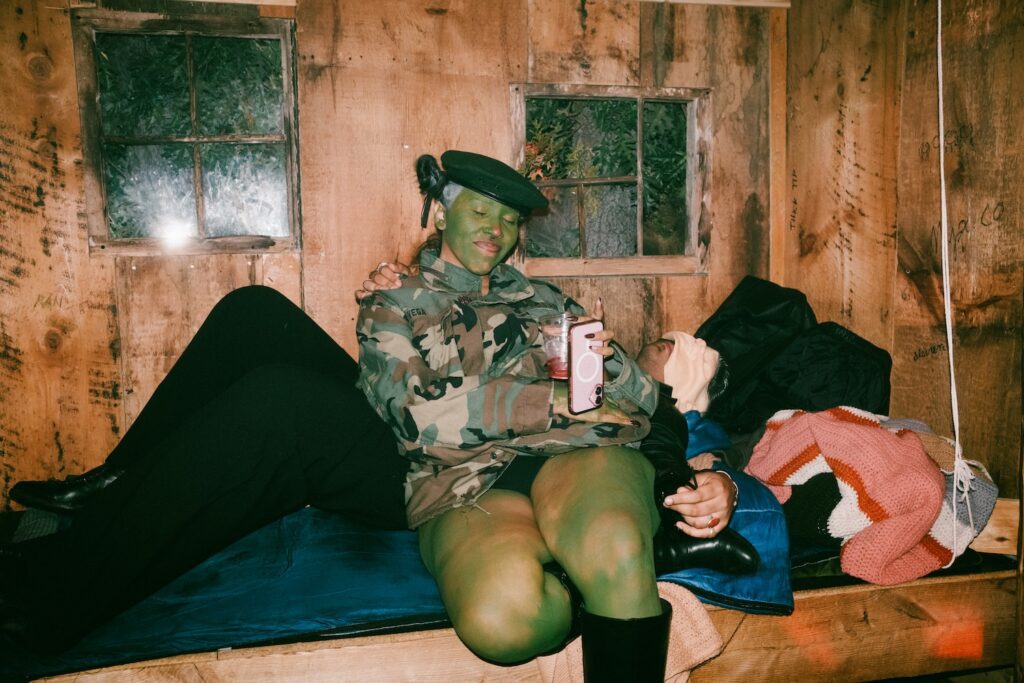
Photo by Raul Coto Batres
“A petri dish of connection”
Dead Letter No. 9 was unique in that it gave locals and up-and-coming collectives—much like the now-closed TBA Brooklyn—an opportunity to perform and host their own events in a professional environment.
Kseniya Sovenko and Mary Wolff, co-founders of NYC Rave Girls, know that firsthand. What began as a social media account highlighting parties has since grown into a media company that regularly hosts its own events. The duo credits the venue with helping launch their brand, having thrown their very first party there, followed by a second just a month later.
For Wolff, who lives in Williamsburg, the venue struck a rare balance: plenty of room to dance but also dedicated, loosely structured spaces to socialize, an increasingly uncommon combination of qualities in New York clubs, where the dance floor or the smoking section are often the only spots to have a barely audible conversation. “We have a pretty diverse community, and the venue itself is so whimsical,” she says. “There were just a lot of really cool things for people to explore. We often talk about side-questing and kind of doing your own thing at raves, and Dead Letter No. 9 was such an intimate space to do those sorts of things.”
“That was definitely one of the strengths of Dead Letter,” adds Sovenko, who lives in Bushwick. “It was a petri dish of connection, both through dancing and through conversation. It was really cool that somebody took the time to put all that love, effort, and care into creating literally a playground to explore, instead of just doing the bare minimum, which you can get away with in New York.” To Sovenko, Dead Letter No. 9 evoked an earlier era of New York nightlife, when clubs like Area, Limelight, and Club 57 embraced elaborate themes and a more playful, artistic approach to programming—something she feels has largely given way to the “minimal, stripped-down” aesthetic prevalent today.
The duo credits Anna Collecta of Hot Honey Sundays, who played a key role in shaping the bookings at Dead Letter No. 9, for bringing in an eclectic mix of sounds, from house and disco to techno and reggaeton. Beyond that musical diversity, they point to the large number of women DJs and artists of color who were prioritized on the bills.
“It was a super open format,” Sovenko says. “Other clubs in the scene focus on minimal or ‘underground’ bookings. Dead Letter really felt like an experimental playground where you could come in and bring any sounds, any mood, any flavor, and you had an opportunity to make it work.”
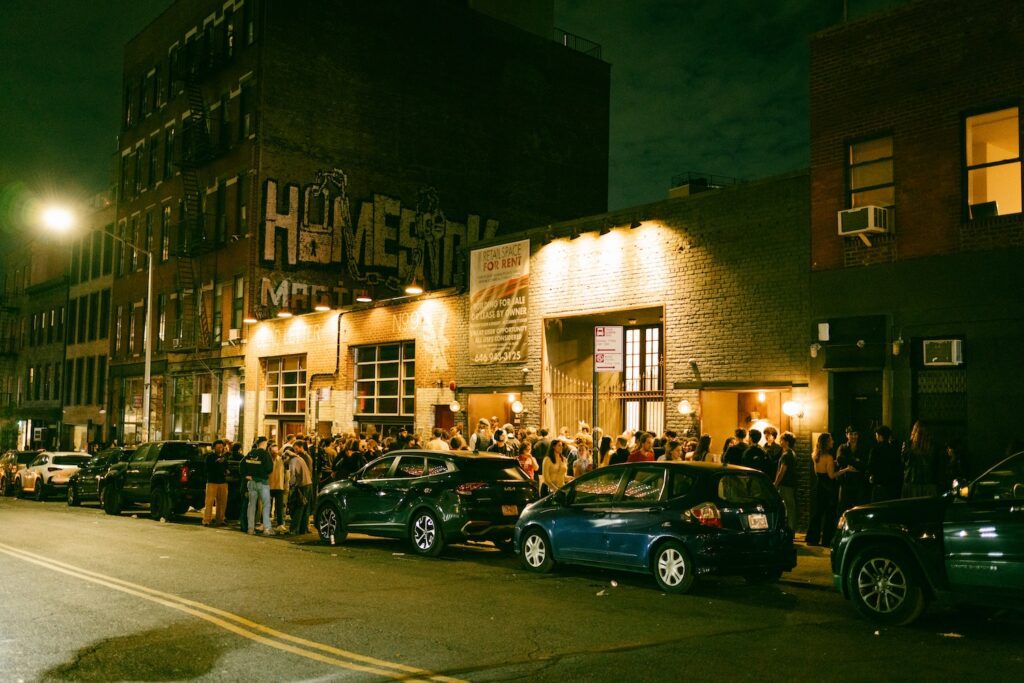
Photo by Raul Coto Batres
The show must go on
For Ryterband and Myers, the grief of losing something they love hasn’t quite sunk in yet. After all, there are still three events to get through, featuring local heavyweights Ron Like Hell and Sterling Juan Diaz.
In some ways, the past couple months have felt like one extended farewell party, with the venue bringing back its original interactive theater experience for six performances in September and seemingly every successive booking—the like of Mystic Bill and Mike Servito gracing the decks in recent weeks—raising the stakes.
To survive, let alone thrive, for three years in the nightlife business—particularly in present-day Williamsburg—is no small feat. To do so without bottle service, exorbitant cover charges, or velvet ropes makes it all the more remarkable. “I feel like we never meant to open a nightclub,” Ryterband says. “We didn’t come here to do, like, something cool and chic and sceney. It was an art project, and the intentions were really pure.”
Their success makes the closure all the more bittersweet, particularly because Myers and Ryterband aren’t leaving by choice. “It’s always bittersweet when something beautiful ends,” Myers says. “But it’s only bitter if it was, in fact, sweet. I hope that people look back on this place with a real fondness and with a warmth for the other people that they met here, the conversations they had, the strangers they met. And I hope it has encouraged folks to crack out of their shell a little bit: to say the thing, make the joke, flirt when you can.”
Myers, who comes from the theater world, says he views the closure much like the end of a stage production: Every show eventually ends, and the people behind it move on to the next one. And there will be a next one. The duo says they have projects in the works, though they’re keeping the details under wraps for now.
“You’re gonna see a lot more from us,” Ryterband says. “There’s gonna be, like, some real serious shit that we bring to the world.”