Photo by Ronald Martinez via Getty Images
Jonathan Abrams on the Past, Present, and Future of The NBA
How the CBA, the creation (and detonation) of the Thunder, and the very notion of a "Big 3" transformed the league as we once knew it
The first iPhone was launched on June 28th, 2007, a day after Seattle Supersonics’ GM Sam Presti drafted Kevin Durant. I know this because I read Jonathan Abrams’ When We Were Young and Fearless, a primer on the past two decades in the NBA that presents the core future MVPs Presti drafted in three consecutive years—Durant, Russell Westbrook, and James Harden—as paradigm-shifting and evolutionary tools of societal change.
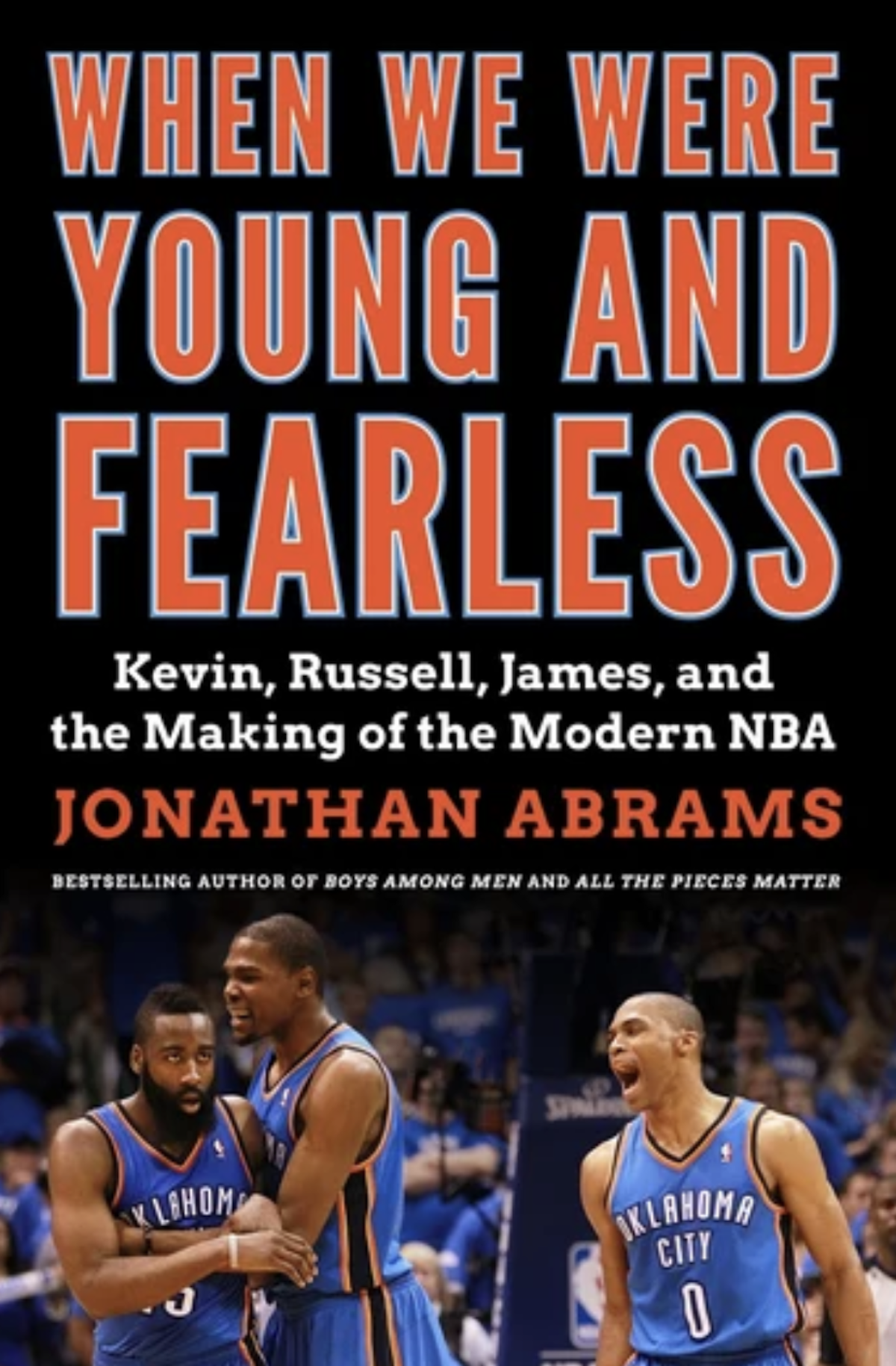
Courtesy of Harper Colins
When We Were Young and Fearless is a book that knows how many charges Presti took in a single D3 basketball game, the Jacob Riis quote mounted to the wall in his barren office as a 30-year-old GM for the pre-Thunder Sonics, and the contents of the impassioned letter he sent to The Boston Globe, advocating for the Celtics to draft Jason Kidd, when he was 16. It breathes new life into a story you’re certain there’s nothing left to learn about because it’s been so thoroughly told. This is to Abrams’ credit, once again proving himself a rigorous, omnivorous culture reporter who got his start covering the Clippers for the LA Times in the bad old Donald Sterling days, and parlayed that into a career with stops at Grantland and The New York Times, where he’s written books on a wide range of subjects, from rap, to The Wire, to basketball.
In Young and Fearless, Abrams has found his Breaks of the Game, a small cohort of players’ journeys—beginning at the end of the aughts when player salaries were meandering in the high single and low double-digit millions, through today’s global game where franchises are approaching double-digit evaluations in the billions—that are frustrating Greek tragedies, spanning and explaining the NBA’s Player Empowerment Era. There is Durant, the taciturn, social-media-addicted seven-foot guard with a scoring package that is impossible to bother, let alone stop. Westbrook, the human fireball on court, unfailingly kind and generous off it (unless you’re in media). And Harden, the rabinicalky bearded southpaw enigma with a computer chip in his brain and syncopated rhythm in his heart. They are three of the most complimentary players and personalities as a unit that the NBA had ever seen, until they weren’t.
These young men accomplished incredible feats that remade offense in the NBA, and Abrams charts them maturing into their middle age, bonding as brothers, then being torn apart involuntarily by the economics of basketball. They walk away from each other, they reunite, they walk away again.
But Abrams is concerned with more than biography. As the years pass, we keep a wary eye on the league’s collective bargaining agreements, swinging further and further away from the players’ and fans’ best interests and creating artificial limits on salary that provoke the dissolution of the trio in the first place. The book uses its subjects to explain the league-wide and even societal forces that decide their fate, with former NBAPA director Michele Roberts, David Stern’s league-mandated dress code, and a comprehensive history of the stepback three all contributing to a better understanding of how and why Durant, Westbrook, and Harden’s careers and lives worked out the way they did.
It is mandatory reading for NBA sickos like me, and as a longtime fan of Abrams’ work, I abused the opportunity of a press tour to nerd out for an hour about the basketball of our youths, the current state of the league, and the making of a great new book.
(This interview has been edited and condensed to make me sound like less of an asshole.)
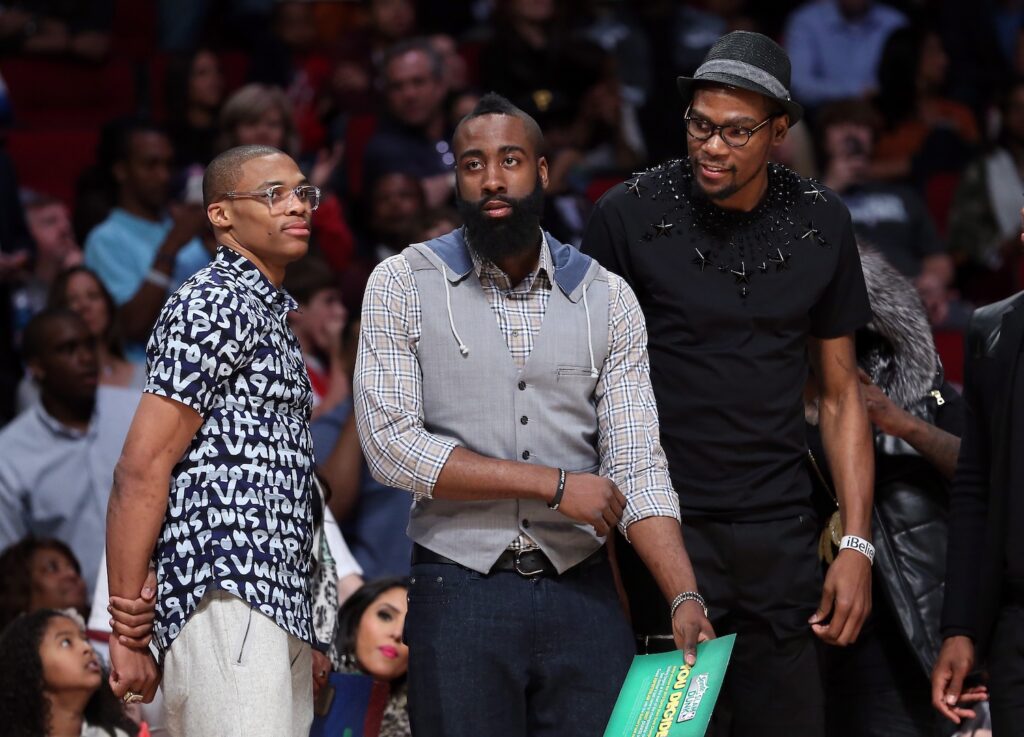
Photo by Ronald Martinez via Getty Images
For all your interests and the many subjects you cover, why was this the book?
Jonathan Abrams: In retrospect, looking at those guys, on that team, at that time, seeing where the league is now, I feel like they really represent the transition into the modern digital age of where we are in the NBA. These players are standalone media brands and fashion icons. They outgrew whatever media markets there are and became their own entities.
There was this innocence with this group when they got together; they are new to the league, the NBA is new to their city, and they’re just in their early 20s, immensely talented. Their potential is limitless, and it’s all in front of them.
And I suppose pragmatically, you had this unique access very early in their careers, so you could tell the birth-to-death story in a way that not many other people can.
Yeah, I was just starting my career covering the Clippers in 2007, I think my first year covering the league was Kevin’s rookie year. It was a completely different NBA; the Clippers had to practice at what was basically an LA Fitness. Social media was just starting out. It was really the dawn of something new.
No way, man. Donald Sterling wouldn’t do that to his players.
(Laughs) Donald Sterling, geez, I need to do a book about that year.
The way you just laid that out reminds me a lot of The Breaks Of The Game, which was really in my mind while I was reading the book.
Abe, don’t tease me. That’s my favorite book of all time.
I agree, it is (still) the greatest sports book of all time, with all due respect. But your book has the same quality of finding this perfect subject at this moment of generational influx and uses that subject as a lens to view the league through.
Oh, without a doubt. David Halberstam is the GOAT. I try to read that every year, so I’m pretty sure that as I was reporting and writing, that book was somewhere in the back of my mind. It was obviously a different era when David reported that book. He’s able to fly on the planes, and players go to him all the time…
Hey, listen, you got KD driving you around OKC. That’s pretty good.
So that was even a different NBA than what we have now. The Thunder are a notoriously tight-lipped organization; they even told me a couple years later, “We would have never done that today.”
The organization becoming more restrictive and tight-lipped feels like a manifestation of Presti getting more and more control. He’s basically the fourth main character in your book, who makes history when he drafts three future MVPs in three consecutive years, then reloads, and the Thunder are as good, if not better, than they ever were because of how deep and interchangeable they are. What does Presti know that all these other organizations with Godlike resources and every analytics advantage in the world haven’t been able to figure out?
I think Sam is the perfect mesh of somebody who genuinely cares about players and people within the organization but is also very practical and analytical and can see steps—many steps—down the line.
I got upset last year. I was working on the Rashard Lewis trade exception thread in the book, and you see how that trade in the mid-2000s pays off into this bounty almost 15 [years] later. But Baxter Holmes wrote that story, and I was like, “Dang it,” because I really wanted to be the first one to pull on that thread. It really showed how deeply this plan was laid out.
Then you look across the NBA. For the most part, GMs and presidents, they’re not there to stay. But if you look at the longevity of how long Sam has been in his position, there’s only been one voice of the Oklahoma City Thunder for its entire existence, and it’s been Sam. You don’t get that in sports these days.
The thing that hadn’t been clear to me is how fundamental his experience as a scout is to what he does. And to your point, he understands people on a human level, which makes him a great talent evaluator, and then he’s also an incredibly analytical, at times ruthless, manager of his assets. And when you put those two things together, you get the perfect modern GM.
We can’t underestimate what Sam has done in Oklahoma City and what the Thunder mean to that city. He’s really imprinted that team on the city culturally, as a utility the community can value and cherish and be proud of. And I think that means the world to him as well. It’s funny because this describes Sam perfectly: Sam will send me a Christmas card. But he wouldn’t talk to me for this book.
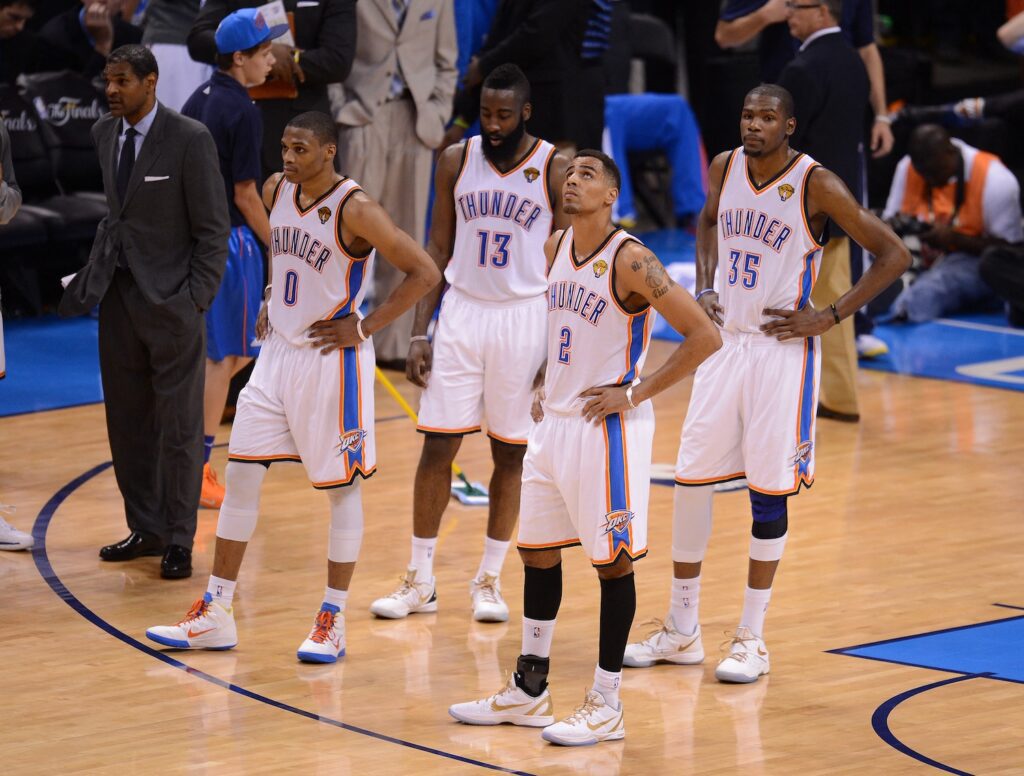
Photo by Robyn Beck via Getty Images
What do you think the league could learn from studying how the Thunder recovered from losing their core?
Probably not to panic. And I think that with the league executives these days, there’s a lot of smart people involved. You don’t see cycles with teams like what happened with the Knicks for so many years, where they let the pressure get to them and run out to buy high-priced free agents who won’t necessarily fit the culture and keep digging the hole and digging the hole and digging the hole. I think in today’s NBA, the executives know you either want to be at the bottom, where you’re rebuilding, or at the top. And Sam and the Thunder, people forget that they were on the bottom for a couple of years because it was so quick, turning around with Shai and Chet and Jalen, but now they’re back.
They’re a great example of how even the greatest architecture job in the modern history of the league is now really imperiled by this CBA. Is building a team like the Thunder had, or the one that they have now, even possible anymore?
Honestly, I don’t know. You saw what happened with the Thunder this offseason. They had to trade Dort and a couple other key role players, not because they necessarily wanted to, but it was the reality of what’s coming and where they are and where the cap is now.
It’s a reflection of where we are with the CBA, and I just wonder, as fans just getting into the sport, [do] you want us tethered to your team? As a result of this, is fandom going to be even more tethered to individual players now?
Today, the superstars have as much money and influence as they’ve ever had, but particularly with this CBA, almost the entirety of the rest of the league has suffered. How do you think about the players’ union as an equitable labor force?
I think the era when somebody like Anthony Davis or James Harden or KD could leverage their stardom and force a trade to a specific place may be over. The second apron is here now, in this current CBA. It effectively neutralizes the traditional super team model. So I think the league is always going to be top-heavy, and there’s always going to be players who will be able to dictate what they want. But we’re not going to have borderline All-Stars demanding their trade destinations anymore.
Do you think there’s greater awareness from the players that they’ve done something phenomenally stupid?
Well, I mean, veteran players have come out and said they should have done a better job of fighting back against the second apron. And I think the vast majority of the NBPA’s membership resides in that middle class that is becoming extinct. Rosters are now almost all stars and scrubs, where you have two or three max guys surrounded by a bunch of guys on rookie scale and minimum contracts. So I think that is pretty evident, that they’ve backed themselves into a bit of a corner.
I’ve always thought the original sin was when the union pushed back on massive rookie deals and demanded a rookie scale, which is just purely a shortsighted, crabs-in-a-barrel ego play, cutting their own interests as a collective.
Oh, you’re going all the way back to Glenn Robinson days? (Laughs) I don’t know. I think we all want to see teams that are good. You want to be able to see the Golden State Warriors be able to have a dynasty; for teams to be able to live their natural lifespans, not for artificial rules to curtail collective greatness in sports. I think that’s always going to be a negative thing bad for fans.
When Westbrook retired, all the criticism died away and there was an overwhelming, unbridled display of affection and love for him and everything that he represented. Do you see that happening for Durant and Harden when they’re ready to go?
Definitely Kevin. Just because Kevin is such a unique person and player. And there was more than one person who said that they can see Kevin coming back to Oklahoma City for one last season there.
I don’t know with James. He’s different, right? He really modernized the game offensively, but I don’t know if there’s a lot of people who would say the game is more aesthetically pleasing to watch since he introduced his and Darryl Morey’s vision of the game. I give him all the props in the world, but it’s almost like he invented cheat codes to bypass the natural flow of the game, as far as drawing fouls or his borderline travels. I think he’ll be appreciated, but it may not be right when he retires.
With Russell, it was immediate. With Kevin, I’m sure it’ll be immediate outside of Oklahoma City, if he doesn’t go back there. James may take a little while. I feel like those other two guya—you know their personality traits better than James’s. He’s always been shielded by the beard. How much of James have we really gotten to know throughout these couple decades?
I’ve always really enjoyed watching Harden solve defenses. It is its own kind of aesthetic that a lot of people don’t enjoy because it’s so heliocentric. But I get the distance fans have from him, because after all these years, I don’t really know a single thing about him. What is he like? What do you think he cares about? Are there impressions of him that didn’t make it into the book that helped you understand him on a human level? What is the essence of his being, as far as you can tell?
I think he’s a basketball savant, as far as how he goes about solving a puzzle. People make fun of James because of his weight, or maybe he’s not paying attention to defense as much as he probably should. But for how he solved those puzzles, there wasn’t a place on the floor you could keep him from if he was trying to get there. And to be able to do that against people who pride themselves on stopping you, I think is an amazing feat.
So if I can editorialize, you think he’s a hyper-focused prodigy who only really cares about one thing, and creating the best conditions for himself to accomplish that one thing? He seems immune to a lot of the issues that have haunted KD for much of his career.
For these guys, I think that there was a collective eye opening for all of them once they got to the league and experienced the type of success that they did. For James and Russell, nobody forecasted that they were going to be these Hall of Fame players who would revolutionize the game. Even with Kevin, people forget there was this huge debate over who should go first in that draft between him and Greg Oden. So I think they all reacted differently to their stardom, and they all drove each other for those couple years they were together in Oklahoma City.
The loneliness of Durant really comes out in the book in a way that I hadn’t really considered before. Every time I think I kind of understand him as a person based on the things that he claims he wants from a basketball situation, or his teammates, or a city, or a fanbase, or his career, he seemingly contradicts that with the next decision, and he just kind of strikes me as a very contrarian guy. It’s a big question but what do you think he’s after, at the end of the day?
That is a really good question, and I don’t know if I can answer it (laughs). I feel like there’s a nirvana out there somewhere for him, and he’s still looking for it. I think he may have found it in Golden State, for a little while, but he came to the conclusion he was never going to be one of those guys, drafted into that organization. That Steph, Klay, and Draymond would always be looked at as the favorite sons.
I think basketball means the world to him. There are so many former coaches who say KD is going to be at gym pickup games trying to play when he’s 55-60 years old. For a lot of people who play basketball, not on Kevin’s level obviously, but it’s this pure outlet where it’s just you and the ball, and you can lose yourself and your thoughts for hours, and I think that’s always going to be that for Kevin in some form or fashion. As far as what he wants to get out of it? I’m not sure (laughs).
Courtesy of NBA
You make this compelling argument that on a human level, the thing he wanted in Golden State was to be one of the guys, and you could argue that impulse is what motivated the Brooklyn move as well, but the tragic irony is the one time in his career he had that was in Oklahoma City, then he walked away from it.
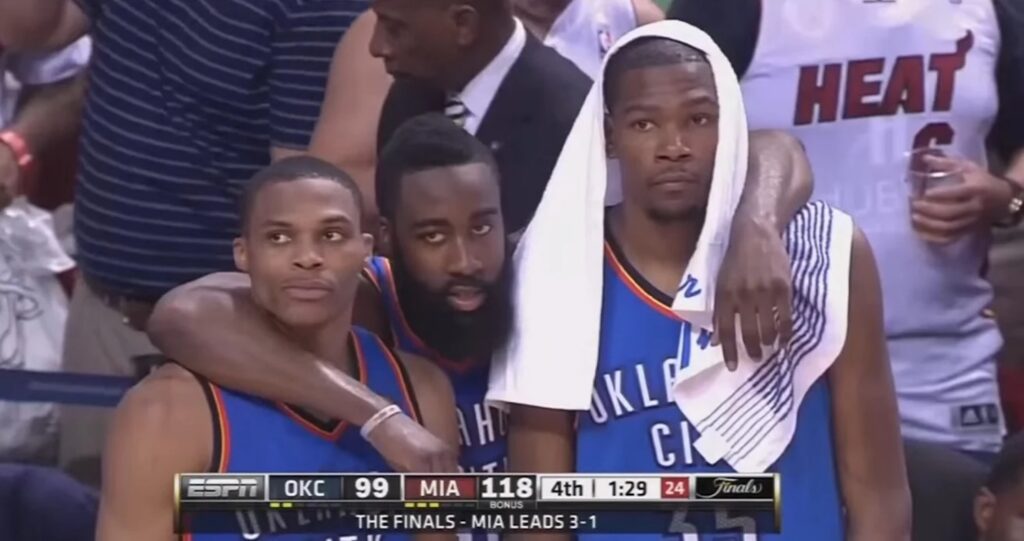
Yeah, I think in Oklahoma City he had tapped out the ceiling of what he felt that team could do. But people forget how close the 2012 Finals was. The Heat won 4-1, but it was really, really close; in the first four games there’s a total five point differential, and they couldn’t challenge that no-call in Game 2.
In the book, you write about that moment in a way that evoked the Charles Smith Game for me, which is a primal wound. People discount these kinds of pivotal basketball moments because there are moments that come after them where a team had the opportunity to reverse course, but that’s not how human brains or emotions or momentum works.
But then the following season—and people don’t really remember this either—after the Harden trade, that was the best Thunder team ever. But then Russell got hurt against Houston…
Pat Bev. Also, I’ve always felt the 2016 team that was up 3-1 on the Warriors was the best shot that era of the Thunder had. The regular season wasn’t as good, but the gear that they hit in the playoffs, where they run off the Spurs and were dominating Golden State before it falls apart because of the Klay game, I just think that team probably washes the Cavs. But who knows, with how that Finals actually played out.
Kevin has always said he was really proud of that team because no one picked them to win, and San Antonio was awesome that year. They ran into two historic teams between the Spurs and the Warriors, and I think that’s one of the things Anthony Morrow told me; they ran into LeBron after that season and he said the Cavs were happy they didn’t have to face the Thunder. They wanted the Warriors.
But then Kevin finds that Nirvana in Golden State and it’s like Shaun Livingston says, they could’ve just rolled the ball out most nights and they could’ve won most of those games. And maybe it’s fun to always win, but does that get boring?
In the book, Durant is almost like a Greek figure. To me it seems like he had everything he wanted; thought he was going to be able to replicate that in other places, but he can never go home again. You only get to be young, and be a part of a crew of guys on your level, that all start from the same place you start from, one time.
I remember very early in the reporting, when I was trying to conceptualize this book, my editor said “Think of these guys as Shakespearean characters,” and that always stayed with me.
That’s perfect. And with the exception of Durant, who got those two rings but seemed to enjoy them less than anyone else on Earth, the three of them were never able to realize the ultimate success they seemed destined for.
But then they had the individual success, and you have to wonder if they would have had it if they stayed together?
And then if they would trade one for the other, though I think we can say definitively Harden would not. (Laughs)
(Laughs)
If you were going to write another book that took on the similar task of understanding this current era of the NBA through a team, perhaps a specific cohort of players, who would you focus on?
(Long silence) That’s a good question. I mean, I think you’d have to take an international lens, right? Maybe look at the last four or five MVPs.
Shit. That’s really good, so Jokic, Embiid, Shai?
Yeah.
That’s great, actually (laughs).
(Laughs) Don’t steal that Abe!
I was about to say, I’m gonna put you on hold and send out a proposal to an agent (laughs).
I just sold a book (laughs)! That was a good question though. I’m kinda proud of that answer because I hadn’t thought about that.
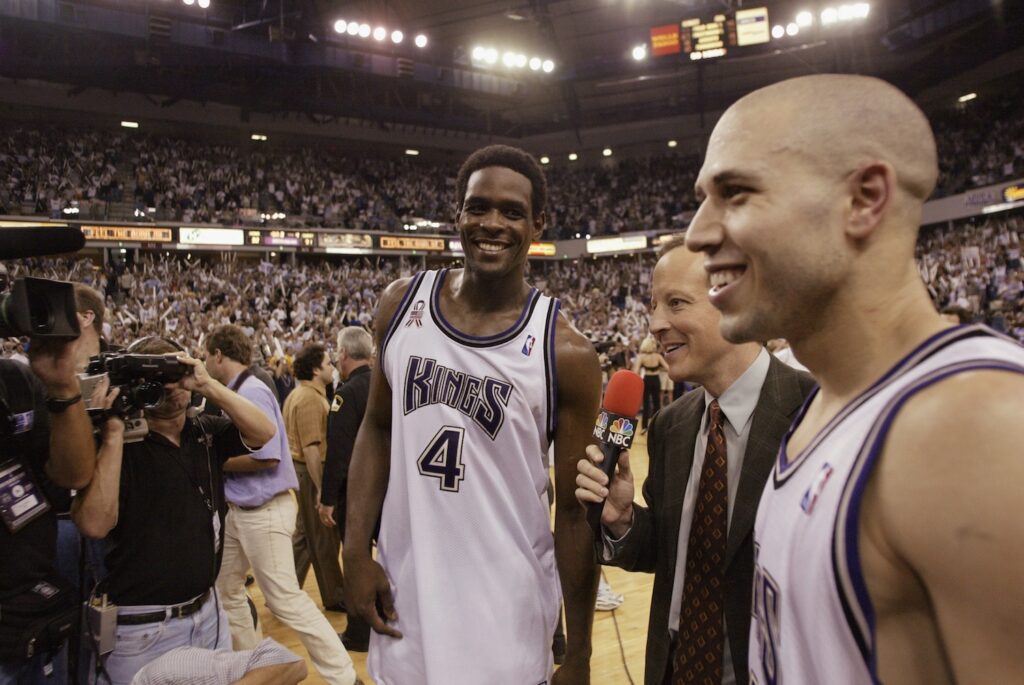
Photo by Jed Jacobsohn via Getty Images
No, it was a great answer. How about historically? Are there any moments in the league from the past that you’d like to go back and cover in depth?
When I was at Grantland, I wrote an oral history on the Penny/Shaq Orlando Magic team. I’d love to do a book on that one day. That era, that team. It’s always a team that had the potential and didn’t win it all, or broke up too soon, and there’s a few of those scattered across NBA history. There’s the 1980s Rockets when they had Ralph Sampson and Hakeem Olajuwon. The early 2000s Sacramento Kings…
I was going to say that if you didn’t. Those were my guys. I loved the Webber Kings.
Those types of teams were really intriguing.
The broad scope of your work is really interesting in how diverse it is. When you look at your work across your books and your journalism, is there a particular quality that unites it?
I pursue my interests, stories I find interesting. In the beginning of this conversation you brought up David Halberstam, and there’s no modern day journalist that’s going to be his equivalent, but if you look at the range of what he wrote about in his books—from sports to politics to Civil Rights—it spans everything. So early in my career, when I worked at the LA Times, I was able to work across different sections. Not just sports, even though I wanted to be a sportswriter. That helped open my eyes in the sense that I realized I didn’t want to be pigeonholed and wanted to be able to do a lot of different things.
And within those interests, from The Wire to the Thunder, is there a common thread?
Well with those, and I guess in the book I wrote about hip-hop and the book I wrote about the high-school-to-pro generation, the common thread would be underdog stories. Whether it’s a show facing cancellation every season, or guys leaving their proms to become the face of a global league, or if it’s this genre born by teenagers in the Bronx that takes over the world, I think that’s what unites them. Because if you’re an underdog that wins, it makes a heck of a story, no matter what it is, right?