Courtesy of Aaron Potts
Aaron Potts Wants Fashion to Lean into Its Humanity
Catching up with the Detroit-born designer to discuss his Project Runway experience and an expansive vision of fashion, centered on empathy and inclusion
Clothing has always been about more than what we wear to Aaron Potts. The Detroit-born fashion designer, who competed on the latest season of Project Runway, spent years on design teams at some of fashion’s most notable names—Escada, Tamara Mellon, Anne Klein, Ellen Tracy, and Badgley Mischka—before ever having to contend for the attention and/or approval of Law, Heidi, Nina, and Christian on the perennially spicy Bravo hit.
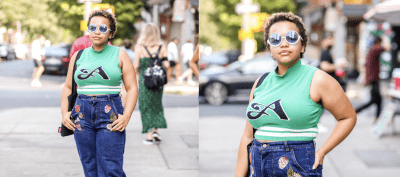
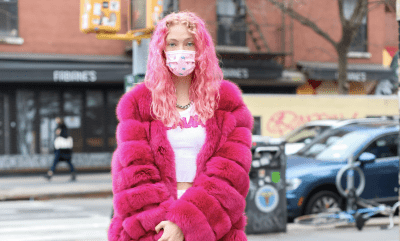
A New Yorker since his Parsons days, and a Brooklyn resident since 1993, Potts has spent more than three decades watching the city evolve. In 2019, he launched his own label, A. Potts, centering sculptural silhouettes, all-gender design, size inclusivity, and, above all, community, in his approach. Today, that NYC-based label reflects his belief that fashion can be a powerful connector between people of different ages, sizes, backgrounds, and gender expressions.
So, we caught up with Potts, not long after parting from the show, to discuss his label, the Project Runway experience, his journey from Detroit to Brooklyn, and an expansive, human-first vision of the fashion industry.
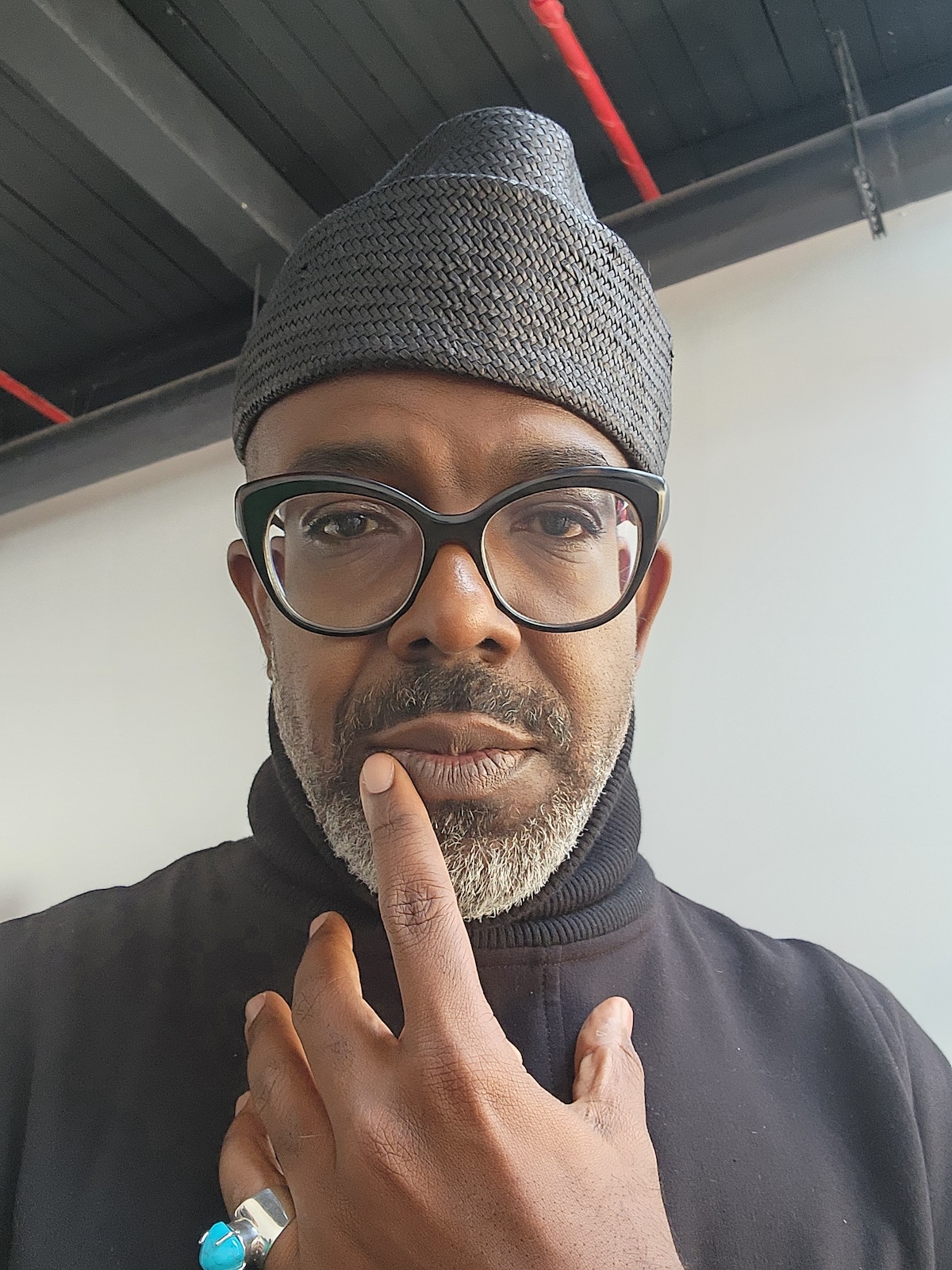
Courtesy of Aaron Potts
Tell us a bit about your background in fashion design prior to launching A. Potts.
Aaron Potts: I’m originally from Detroit, Michigan, and I discovered fashion in high school. I was always an artistic kid—I was drawing, painting, making collages. My mom loved gossip magazines, and they had these sections about what celebrities were wearing. That really got my mind hooked into fashion.
In ninth grade, I had a journalism class that I loved, but I got a grade I didn’t think I deserved. I went to my guidance counselor and transferred into the only class that was available, which happened to be fashion illustration. After about three weeks, I had what felt like an epiphany. This is it.
I went to Parsons and moved to New York without ever having been here before. While I was at Parsons, I interned with some really amazing brands, including Marc Jacobs at Perry Ellis, Donna Karan, Tracy Reese, and Byron Lars. After graduating, I worked for Emanuel Ungaro, Anne Klein, Ellen Tracy, Victoria’s Secret, and eventually Escada in Munich. Escada was really a dream job. I had incredible resources and freedom to create, and I traveled a lot.
I eventually came back to New York and worked for Badgley Mischka, Ellen Tracy again, and Tamara Mellon, who started Jimmy Choo. I was her ready-to-wear director. So I had a very long career working for other people before I started A. Potts.
What led you to launching A. Potts?
I had been working in the industry for years, and after one job ended, I took some time to really think about what I wanted to do. I started sewing for myself. I was making simple things: overalls, elastic-waist pants, things that I had always wanted but could never find.
People started asking me about what I was wearing. Then one day I looked in my closet and realized that all the things I had made for myself were in the center of the rail; the things I reached for every day. Everything else was pushed to the sides. I had this light-bulb moment: “I need to be making the stuff that’s in the center of the rail.”
As a designer working for other brands, you’re always wearing someone else’s hat. You have to immerse yourself in their world, their dreams, their vision. You can lose a little bit of yourself, and you’re always trying to find ways to get pieces of yourself into the work. At that point, I was in my 40s, and I thought, “When am I ever going to do this again?” So I decided to go for it.
I launched A. Potts around 2019, and it’s been an incredible journey.
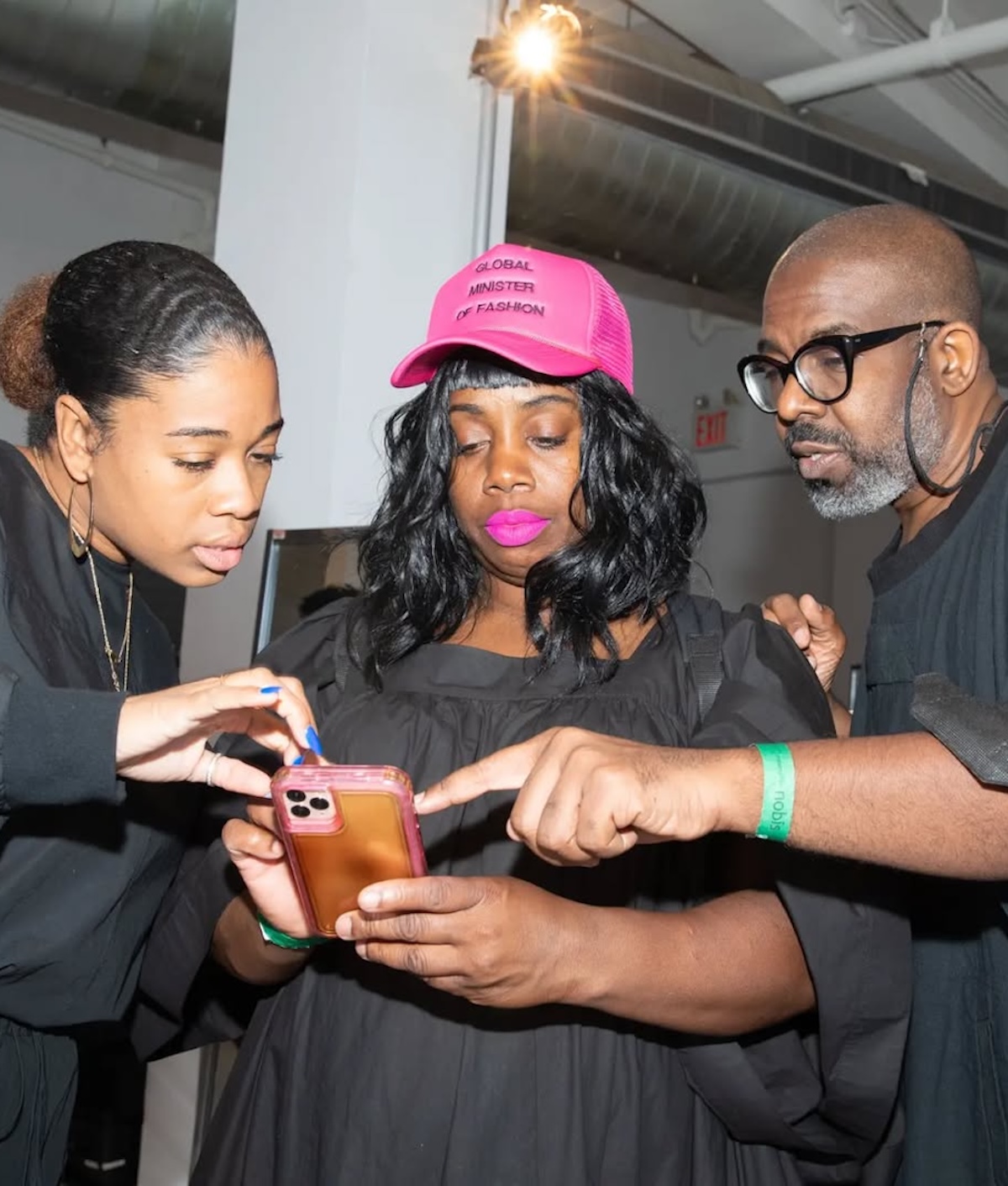
Photo by Ned & Aya
What made you focus on all-gender design?
When I started making those pieces for myself, I was really thinking about cool silhouettes. I think about clothes almost as sculpture that you wear, and a lot of the silhouettes and volumes I like naturally lend themselves to an all-gender aesthetic and to size inclusivity.
My girlfriends would see what I was wearing and say, “Oh my God, those pants are so cute,” or “I love those overalls. I need that.” That stuck with me. I thought, “Let’s work on silhouettes that work on every type of body.” For me, it’s also about centering people who were never invited to the table. I’ve worked with people who are 16 or 17 years old and people in their 70s. I work with people of all sizes, colors, and gender expressions. That’s what makes the work exciting.
I think really good, smart fashion can appeal to a broad group of people. There’s so little great fashion for larger people, and I’ve always believed there’s an opportunity to create clothing that makes people feel seen and valued.
How long have you been in Brooklyn?
I’ve been in Brooklyn since 1993. I first lived in the East Village when I came to New York for Parsons. Then I lived in Chelsea. Eventually, I started looking in Brooklyn because I couldn’t afford the East Village anymore. I looked in Williamsburg and Greenpoint, but ultimately found my way to Fort Greene. At the time, I found an apartment for $500 a month. I ended up living there for about four years, then moved to Clinton Hill, where my partner and I eventually bought a house.
I was a huge Spike Lee fan, and I knew about the amazing Black artists and creative people who were living in Fort Greene. It felt like a really cool neighborhood, and I just fell in love with it. I’ve stayed in the area ever since.
Has Brooklyn influenced your work at all?
I think there’s a psychological thing about Manhattan where everyone looks at it as the crown jewel. But Brooklyn is really about neighborhoods and people. It’s about trees on the street. For me, Brooklyn gave me a way to have New York City while also being really grounded in reality.
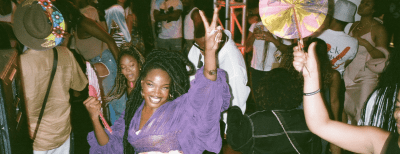
I’ve seen Brooklyn change dramatically over the years. But change is part of life, and you have to learn how to adapt. You have to find your happiness, your peace, and your community within the world you find yourself in. That sense of being rooted and grounded is important to me. It’s part of the philosophy behind my work, too. I want A. Potts to be a place where people feel connected and where there’s a sense of community.
What are some of your favorite things to do or places to visit in Brooklyn?
I love the Brooklyn Botanic Garden. Sometimes I’ll pack a lunch, take some books and my sketchbook, and spend the whole day there. I especially love going during the week when it’s quiet and you feel like you have the place to yourself. I’m also a huge fan of Kum Kau in Fort Greene. It’s an iconic local restaurant and, in my opinion, some of the best Chinese food in New York City.
And then there’s The Good Batch in my neighborhood. It became my satellite office. I’d get my gluten-free cookies and coffee and set up shop. It’s one of those great neighborhood spots where you become friends with the people who work there and they look out for you. I once left an Issey Miyake coat there and forgot about it. Two or three weeks later, one of the guys said, “I think you left this here.” It was a priceless vintage coat from the ’80s, and I would have been heartbroken if I’d lost it. That’s the beauty of community.
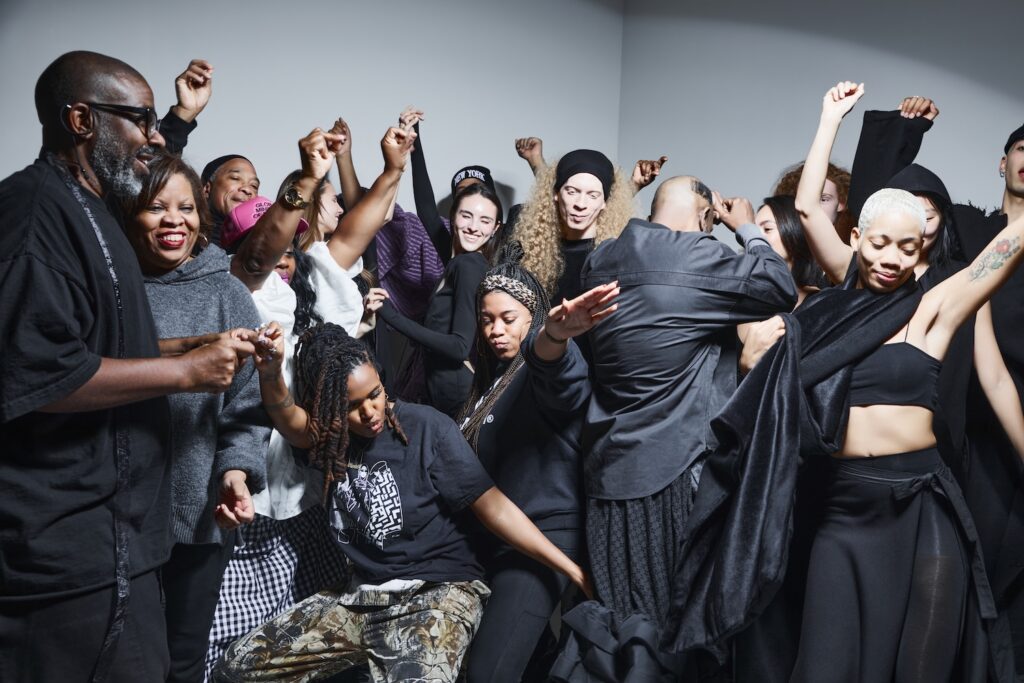
Photo by Ned & Aya
Tell us about your participation on Project Runway. How were you cast for the show? What was your experience like, and what did you learn?
My PR company approached me and asked if I would consider doing it. At first I thought, “I don’t know if I want to go on Project Runway.” But I had never done anything like it, and I thought, “Why not? New experiences.”
I’ve been in the business for a long time, so when I got there, I realized that some of the judges were actually my peers. That was an interesting experience for me, because I’m used to being in the industry and having those kinds of conversations from a different perspective. The biggest thing I took away was the people I met. I made some great friendships, and those relationships will extend far beyond the show. I also think the experience gave A. Potts more exposure. You get an uptick in people looking at the brand, and it brings more eyes to your work.
I also learned a lot about myself. I’ve been a boss, a professor, and a teacher, so I understand what critique looks like, but I also understand what support and mentorship look like. Those ideas are really foundational to who I am. That experience reinforced my belief that I want to create a space in fashion that’s about support, creative community, collective creativity, and collective advancement. I think fashion desperately needs that. People want to feel connected and rooted, and I believe the business of fashion can be stronger when we lean into that humanity.