Courtesy of Brooklyn Org
Three Organizations Changing Brooklyn From the Inside
These nonprofits are turning community, creativity, and connection into meaningful change
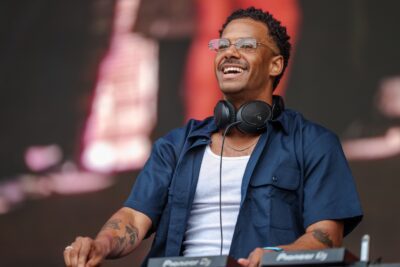
By his own account, Ezra Abdullabekov grew up in a “mountain village in the middle of nowhere in Russia.” It was not a safe place to be queer. After he was arrested and charged with spreading gay propaganda during a vigil in memory of the victims of the Pulse nightclub shooting in Orlando, he sought asylum in America.
Abdullabekov, who now lives in New York, draws on that experience in his work with Qaravan, an organization that assists LGBTQ immigrants from Eastern Europe, the Caucasus, and Central Asia in adjusting to life in America. “We help them get oriented in the city and find the resources out there to start their lives,” Abdullabekov says.
Qaravan is just one of the organizations supported by Brooklyn Org, a donor-supported platform creating lasting change by investing in community-driven nonprofits across the borough. In addition to Abdullabekov, we spoke to leaders from two of Brooklyn Org’s partners—The Octavia Project, which helps young women and trans and non-binary youth explore the intersections of creativity, technology, and social change; and United for Brownsville, which works alongside Brownsville residents to strengthen systems and expand opportunities for families—about their missions and the part Brooklyn Org plays in them.
To become a member of Brooklyn Org, click here. For $42 a month, you’ll receive invitations to members-only gatherings and experiences across Brooklyn, early and discounted access to Brooklyn Org signature events, and more.
Courtesy of The Octavia Project
The Octavia Project: “Show up for our young people”
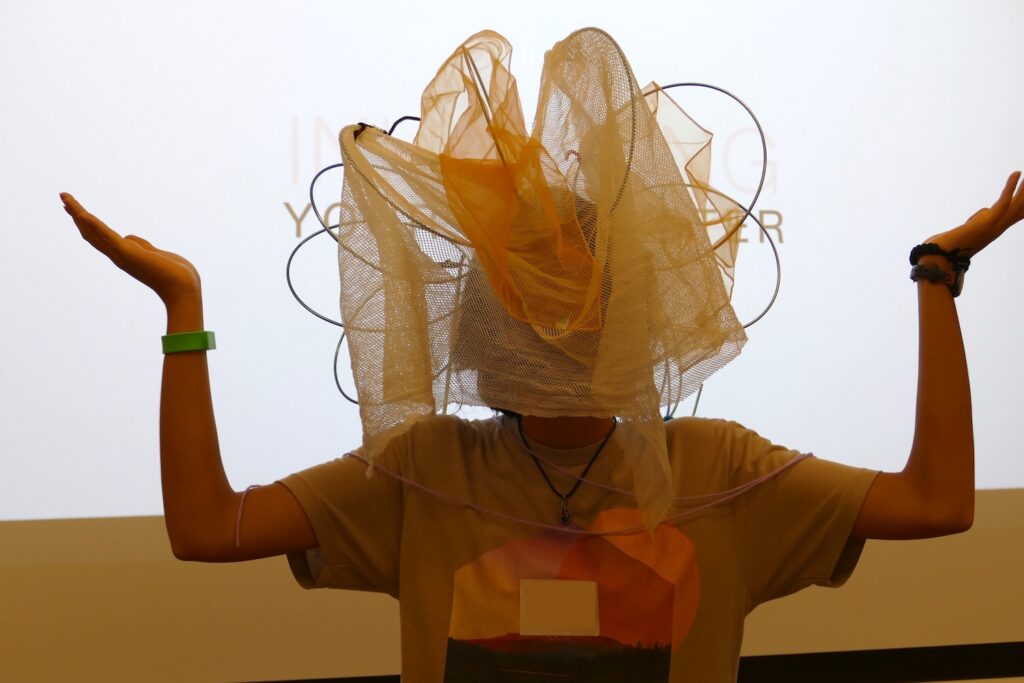
For the past 12 years, The Octavia Project has helped young women and trans and non-binary youth explore the intersections of creativity, technology, and social change. Through free programs in STEM, art, and writing, participants build skills, explore careers, and develop as leaders. Co-founder Meghan McNamara, who’s worked in education and youth development, helped shape the organization’s interdisciplinary approach. We spoke with McNamara about The Octavia Project’s origins, its programs, Brooklyn Org’s support, and how the community can lend a hand.
Tell us about The Octavia Project and how you got involved.
The Octavia Project is a youth development organization based in Brooklyn. We provide skill-building, leadership-development, and career-exploration opportunities in STEM and the arts for young women and trans and non-binary youth through free, out-of-school programming.
I co-founded the organization 12 years ago with author and playwright Hannah Porter. The idea came from a creative writing workshop Hannah was teaching on speculative fiction—science fiction and fantasy. I came to observe one of the workshops, and I was struck by how engaged the young people were and by the way speculative fiction allowed them to question and rewrite the world around them.
At the time, I was teaching computer programming in Brooklyn middle schools and was frustrated that girls weren’t signing up for my after-school programs. I suggested that we use creative writing and science fiction as a way to bring young people into STEM. That became the foundation of The Octavia Project: using art and writing as a pathway into science and technology.
What programs and opportunities does the organization offer?
Our flagship programs are free summer programs for middle and high school students. We also provide continued support and leadership opportunities for our alumni.
A core part of our programming is showing young people that STEM and the arts don’t have to be separate. For example, in our creative coding unit, students write their own stories, and then use HTML and CSS to turn them into interactive games. We also explore subjects such as urban planning, architecture, and climate through a creative, interdisciplinary lens.
Our high school program also has a fellowship program, where returning students take on leadership responsibilities, mentor younger participants, and help facilitate workshops. Our middle school program is taught in part by alumni who return as teaching fellows.
This year, we also launched a spring break program, Spring Studio Lab, hosted at the Brooklyn Museum, and we’re piloting a new after-school program this fall.
Talk to us about how Brooklyn Org has supported The Octavia Project.
We’re a very small organization, with just two full-time staff members, so the multiyear support we’ve received from Brooklyn Org has been huge for us. It provides foundational funding that we don’t have to raise from scratch every year, which takes a significant load off our fundraising efforts.
It also gives us confidence to take bigger steps. With this support, we’ve been able to move into our first-ever office, hire a part-time program coordinator, and launch our after-school program. Brooklyn Org’s support also raises our profile with other funders and helps validate the work that we’re doing.
How can locals and beyond support The Octavia Project?
One of the best ways is to show up for our young people. Every summer, we hold a showcase where participants share their work publicly, and it’s incredibly meaningful for them to see people come out and cheer them on.
People can also volunteer, join our advisory board or board of directors, spread the word about our programs to young people and schools, or become donors. We’re also always looking for schools and community-based organizations to partner with and bring our programs to their communities.
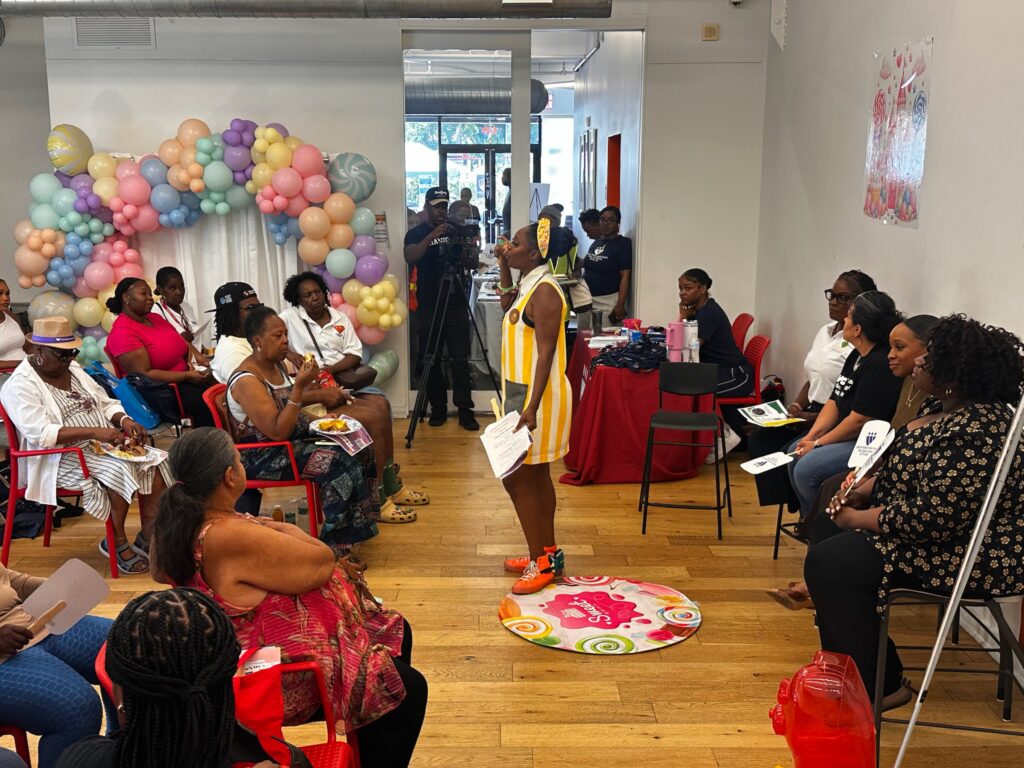
Photo courtesy of United for Brownsville
United for Brownsville: “A stronger and more equitable Brooklyn”
For more than a decade, United for Brownsville has worked to help Brownsville families thrive and build stronger, more equitable systems. The community-driven organization connects families with resources spanning early childhood, housing, food access, health, and community leadership, while giving residents a direct role in shaping its work. Tiera Mack, executive director, told us about the organization’s roots, its programs, Brooklyn Org’s support, and how Brooklynites can get involved.
Tell us about United for Brownsville and how the organization was created.
United for Brownsville is a community-driven organization working to help Brownsville families thrive by improving the systems that impact their lives. Our work grew from the Brownsville Partnership, founded in 2008, and United for Brownsville, which launched in 2018 with a focus on early childhood. In 2024, the two organizations united, allowing us to expand our work across a broader cradle-to-career spectrum. What makes our approach special is that residents are not just participants; they help shape priorities, identify challenges, and develop solutions alongside providers and partners. We believe lasting change in Brownsville must be built with Brownsville residents.
What programs and opportunities does the organization offer to participants?
United for Brownsville offers programs focused on early childhood, family advocacy, housing, food access, health, and community leadership. Families can receive support navigating Early Intervention services, participate in parent connection and advocacy programs, and access community resources and events. Our Family Advisory Board gives residents a direct role in shaping our work, while our Provider Action Team brings local organizations together to improve coordination and services. We also support healthy housing initiatives, the Brownsville Community Land Trust, WIC outreach, food-access programs, and community programming at the Gregory Jackson Center. Our goal is to connect families with resources while building stronger systems around them.
Talk to us about how Brooklyn Org has supported United for Brownsville.
Brooklyn Org has been an important partner and investor in United for Brownsville’s work. Their financial support has helped us strengthen programs focused on families, early childhood, health, housing, and community well-being. Just as importantly, Brooklyn Org understands the value of investing in organizations that are deeply rooted in the neighborhoods they serve. Their support gives us greater flexibility to respond to what Brownsville residents are telling us they need while continuing to build long-term solutions. Brooklyn Org has also helped amplify our work and connect us to a broader network of organizations and leaders committed to creating a stronger and more equitable Brooklyn.
How can locals and beyond support United for Brownsville?
There are many ways to support United for Brownsville, and several are completely free. You can follow us on Instagram and Facebook at @unitedforbrownsville, share our work with your network, attend our community events, and help connect Brownsville families to our programs and resources. You can also volunteer at events and initiatives throughout the year, including community gatherings and food distributions. For those who are able, donations can be made directly through our website and help us continue expanding programs for Brownsville families. Most importantly, support can simply mean showing up, sharing information, volunteering your time, and helping us build community.
Courtesy of Qaravan
Qaravan: “We are as diverse as Eurasia”
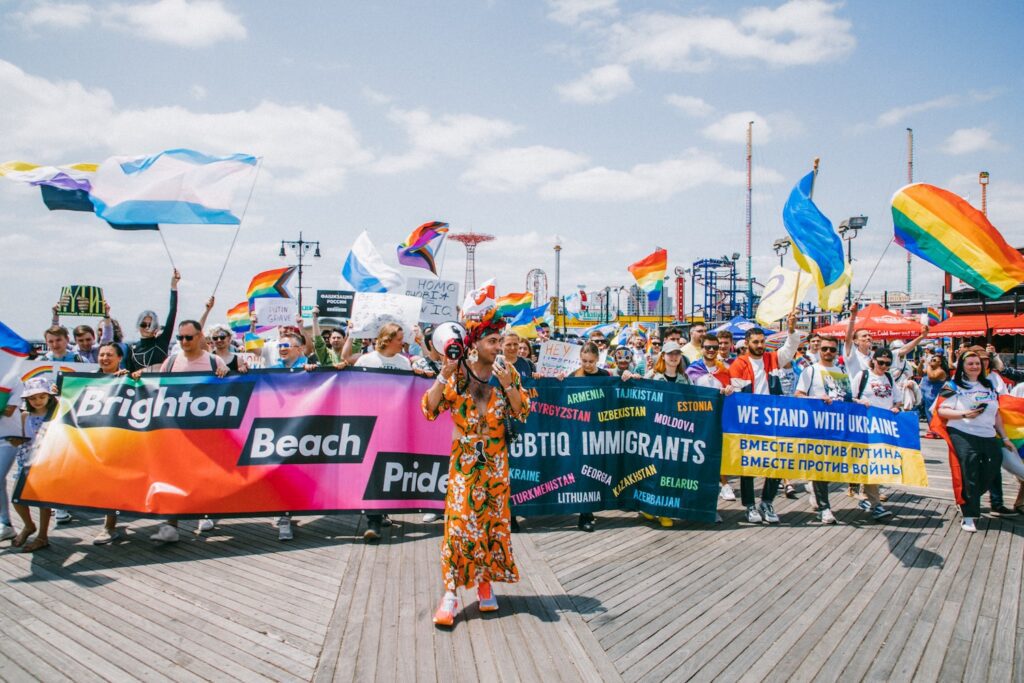
For LGBTQ immigrants from Eastern Europe, Central Asia, and the Caucasus, building a new life can mean navigating isolation, uncertainty, and the challenges of starting over. Qaravan, an immigrant-led organization, provides community, connection, and resources to help people find their footing in the US. Ezra Abdullabekov, vice-president of the board, is an asylee from Russia and a member of the Dargin community. Abdullabekov explained Qaravan’s work, Brooklyn Org’s support, and how the community can get involved.
Tell us about Qaravan and how you got involved.
Qaravan is an organization of immigrants and for immigrants. We are open to all immigrants, but we are specifically focused on working with LGBTQ immigrants from Eastern Europe, Central Asia, and the Caucasus. I am Dargin; I grew up speaking the Dargwa language in a remote mountain village in the middle of nowhere in Russia. Many of us speak Russian and use it as a bridge language, but it’s not a requirement by any means. Beyond Russia, we have a lot of people from Uzbekistan, Kazakhstan, Tajikistan, Ukraine, Georgia, Turkmenistan, Latvia, and other places. We are as diverse as Eurasia.
Some don’t feel comfortable being fully out because they are coming from incredibly collectivist societies where whatever you do reflects on your family. I relate to that because my desire to live my truth openly is the reason I am in the United States as an asylee. But it was an incredibly difficult journey, and I recognize that people have to do it on their own terms. That’s why we strive to make sure they find understanding and support in Qaravan.
What programs and opportunities does the organization offer to participants?
We help people who are just arriving in the country from places where it’s not safe to be queer, people who are fleeing for their safety and dignity. We help them get oriented in the city and find the resources out there to start their lives. We don’t have the capacity to provide legal or medical services ourselves, so we work with partners and refer people to those who can.
The most important function we perform is a social one: helping people fight isolation. Unfortunately, the immigration system in the United States is nothing short of tortuous. After applying for asylum, I waited five years before I received my asylum interview, and another year just to get the decision. Can you imagine what it’s like being stuck in limbo, without clear legal protections or the ability to leave the country?
Talk to us about how Brooklyn Org has supported Qaravan.
For the longest time, Qaravan existed as a volunteer group formed by people who just got together socially. We only became an IRS-recognized nonprofit four or five years ago. When we did, we realized how challenging it is to become fully professional, because you have to hire staff and find funding. We only have one part-time coordinator and struggled with funding. After the war in Ukraine broke out, there were a lot of new people coming in. We had hundreds and hundreds of people go through our organization, and it was incredibly draining. We are 98 percent run by volunteers, but even to coordinate volunteers you need staff.
When you look at big foundations, hardly anyone is willing to fund operational expenses, pay salaries; everyone wants to give money for specific programs. Brooklyn Org has been different. They are supporting our general operations, and it’s incredibly valuable to us because it allows us to focus on what matters to our community. We are experts in our own experience and the experience of our community members, and, for that, we are incredibly grateful.
How can locals and beyond support Qaravan?
We need a predictable stream of revenue every month. It doesn’t have to be a huge amount of money, but we need funds to support our work and pay baseline salaries for two people. We haven’t met that threshold yet, so the most valuable thing anyone can do right now is just sign up and give $10, $20, $40—whatever you can afford at qaravan.org/donate.
If you are not in a position to do that, or if you would like to meet our community members and practice the languages we speak, you are welcome to come volunteer with us. There’s a form for volunteers on our website as well.