Courtesy of Magnolia Pictures
How to Make a Movie with John Wilson
"If you borrow someone for long enough, something's gonna happen. Something happens to everybody all the time."
When people ask me what it’s been like living in New York for the past 20 years, I tell them about the ship. One day, in the mid-2010s, I was walking down Bowery, as I would often during that period in my life, stopped to take a call, and, pacing around on a block between Houston and Prince, suddenly looked up and realized there was a 30-foot sailboat hanging two floors above me, stuck to the facade of the New Museum. It was an installation, from the artist Chris Burden, I’d walked past God knows how many times without ever noticing a giant fucking sailboat suspended in the air.
I bring this up because it is an example of how living here can affix horseblinders to your field of vision, narrowing focus by necessity and inuring you to all the nonnessentials, even all the profane and miraculous human spectacles that make New York the greatest city on Earth.
It is also why the work of the documentarian/TV show host/magician John Wilson resonates. His superpower is presenting mundane topics that take profound turns by finding profundity in their mundanity. He does not just notice the giant ship; he notices the gum stuck to the pavement beneath it, then finds the guy whose job is to powerwash it off the sidewalk, as well as that guy’s odd tics and mannerisms and hopes and dreams and how, in some ways, we’re all the guy power washing gum off the sidewalk.
Wilson told Vulture recently he “takes pride in knowing there’s a thing happening that nobody else knows about,” and for three seasons of his HBO show, How To With John Wilson, there was much to take pride in. Wilson walked the streets of New York channeling the animating spirit running just beneath the veil of the city, his camcorder serving the same function as the metal detector retirees tread Floridian beaches with, but for story. The master collagist compiled a bottomless vocabulary of images he could disassemble and reassemble for narrated-in-the-second-person short films that have more in common with Adam Curtis or David Attenborough or middle-period Goddard’s movie essays than Michael Moore’s documentaries.
His new film, The History of Concrete, is a scaling of ambition but not function. It’s an hour-and-a-half-long episode of How To that loses nothing in its unabridged form. The title is classic Wilson, daring the audience to yawn at its utter banality, then be amazed by how many of our daily concerns can be found in the material we lean on and literally walk all over without ever considering. The film is also a searing critique of the film industry; it resents the profit imperative and capably presents entertainment as a cheap, crumbling, wasteful, and corrosive industrial product we are also taking for granted, begging us to pay more attention.
It is revelatory, necessary work that leads a wave of films coming this fall from Wilson’s cohort, including projects by his “Fairy Godmother” Nathan Fielder (You Can See Everything) and Lance Oppenheim (Primetime); narrative films that interrogate “documentary” entertainment and documentaries that employ narrative devices, both blurring the lines and pushing back on the nature of filmed “reality.” It’s work that taps into this age of artificially generated media, the shit we are complicit in distracting ourselves with while it kills us.
Last week, I got on Zoom with John Wilson to discuss many of these concerns, The History of Concrete, and much more. Thanks for reading.
(This conversation has been edited and condensed to make me sound like less of an asshole.)
In a 2023 interview, post-How To, you said you were working on another project, but it was a shift in genre. Is this the project? And do you consider the film a shift in genre?
John Wilson: No, this is pretty similar to How To. I don’t know what the fuck I was talking about then (laughs). I have this other project I’m still in the middle of working on that I am not gonna talk about today.
Concrete flowed out of me pretty naturally. It was done in a similar way to the show, but with a much more sparse production footprint.
Are there any aesthetic or theoretical underpinnings in cinema that informed your work as you were figuring it out, particularly in your approach to editing?
The stuff that inspired me the most, historically, is just stuff that looks like I could also make it. I worked in commercial editing on and off for a lot of my 20s, and I just wanted to make stuff that I couldn’t in that environment—stuff that was either too scatterbrained or too crude to satisfy the people that were my bosses at the time.
So my work was a sandbox. I like to make collages, physical collages, and I tend to think of the work pretty similarly. I’m taking an awning sign, or something like that, and I’m trying to reinterpret its context and quilt it into a larger thing.
I’ve come to think of your narrative approach as a kind of exquisite corpse exercise. There’s this sort of “Yes And” progression to everything. I was wondering, as you were developing your style for the show, if Nathan Fielder was helpful hitting on that, because you see similar escalating narratives in his work as well.
Yeah, I think Nathan is really good at story and he helped tremendously. When we were first trying to figure out what the show was going to be, I was just making things, and the narration was a stream of consciousness, more or less. I didn’t really worry about narrative as much. I just wanted to make a movie about an emotion or a hyper-specific problem that I was having.
Nathan was really good at figuring out how to take the interviews with people that I had on the street and work them into this stepladder that will eventually get us to an emotional climax, or resolution, or lack thereof. He was really good at boiling the subject down to its essential components and figuring it out. It was a great help. I was so lost at the beginning. I really didn’t think that I would have anything to say, and he was really encouraging.
I remember when we were filming the pilot for the show, we were throwing a ton of stuff at the wall. Formally, we had no idea what it was going to look like, and what the narrative there would be. Then I went to Cancun for this spring break thing, and I ended up picking a random person and spending time with them. I had this emotional heart-to-heart on the beach with them, and I came back with that footage, and Nathan said, “Okay, great. We have an ending.” And then I just had to fill in and lead up to it. And that could just be a real salad bowl of stuff, but we’re gonna try to build up to it in a certain way, with subtle hints to where we might end up, but not so much that you’ll see it coming.
His maxim was always that each episode should have at least one moment where the audience can’t believe we captured that.
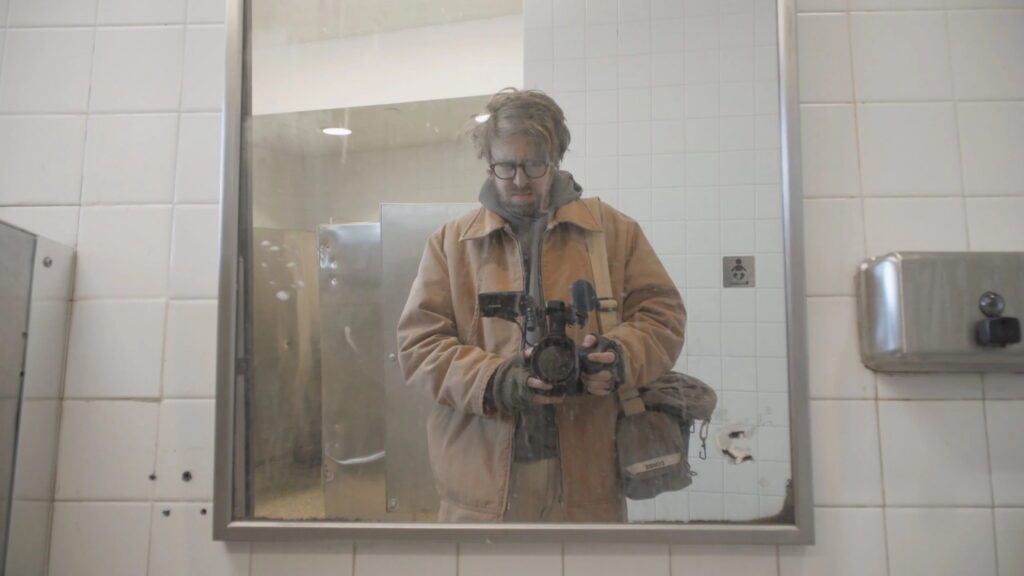
Courtesy of Magnolia Pictures
That is a great note. And that person in Cancun was great. You’ve mentioned Bresson before, so I was rereading Cinematograph, and I could really see the way you approach interviews being so informed by his philosophy: “The thing that matters is not what they show me, but what they hide from me,” “The true is inimitable, the false untransformable,” etc.
I love Bresson. That book is so amazing. I think about his work constantly. Stuff with hands, the way that people open doors, or just the subtle gestures. I like to capture this stuff on the subway when I’m killing time because there’s so much in these little tics that people have in public.
That’s kind of what I was trying to push you towards with the editing question. You always seem to have this incredible, diverse well of gestures to draw from that I think are so crucial to the logic you weave out of disparate images.
It’s really fun to work with that stuff because the farther away that you get from the initial context, the better it gets a lot of the time. If you see someone doing something in public, it’s important to crop it so that you don’t see, like, who they’re talking to or who they’re trying to hail down. You keep it fixed on whatever the interesting behavior is.
I rewatched the show in rapid succession, and what stood out to me is you obviously have this very specific cadence, but almost by the beat, it’s a repeating melody. But it’s not your speaking voice. We’re talking right now, and I’ve heard you in other interviews; you don’t talk like that. So where does that come from? Is it rhythmic? Do you think about how you perform the narration in your work?
The narration came as a response to the way I was editing. I put a bunch of shots together, or there’s a little transitional moment, and then I’ll write the line over the shot. And I’ll have one shot for one line every single time. And then, when I’m reading it back, it follows the timing of the shot to complement the visual humor. It’s the most important thing within the edit, making sure we have enough time for the audience to see what we see, or for an action to play out. So that usually dictates the cadence of the voiceover; that’s just the time that I have to fill.
I never really thought much about why it sounded that way. It turned some people off, which is fine. But I also started doing the voiceover to become comfortable with the sound of my own voice, because before I started making work in this style in 2011, I was really terrified of the sound of my recorded voice and my written word. So I wanted to try to get over both of those things at the same time, just by doing it and publishing something and releasing it out into the world.
I’ve seen people imitate the style, which kind of bugs me in a certain way, because I don’t think that people should imitate the cadence of my voice. I think that they should speak in their own cadence, whatever that is.
It’s so interesting that it’s a timing mechanism rather than a function of style, but I get why people do impersonations of it. That voice communicates a curiosity and an anxiety that really encapsulates and feels extremely “New York.”
Yeah, but you know, you can also mute the movies, and I think that the imagery is just nice. If you don’t want to hear my voice.
I’ll have to try that. What was the transition to longform like? What did you appreciate about having the extra legroom? What presented challenges for you?
It was difficult at first because I was looking down a very long hallway in the production of a film where I didn’t have the same apparatus that I did before with the TV show. I was a ball of nerves. I felt like if I didn’t go out and shoot something, I was just going to wither away. So I had to find some topic to put all my energy into, even if the world was telling me that nobody wanted to think about it. But that was just the industry trying to trick me.
It was kind of nice to be able to spend a bit more time with the subjects in the film and just watch life play out in front of me. I feel like we had a method in the show that I was really confident in, in terms of getting something interesting from people in the world. And it was nerve-wracking, following the main character in this movie, because I had no idea how it would fit into anything.
But by the end, it all started to make sense when I looked back and isolated certain ideas that seemed to apply to what happened in the third act. It’s like if you borrow someone for long enough, something’s gonna happen. Something happens to everybody all the time.
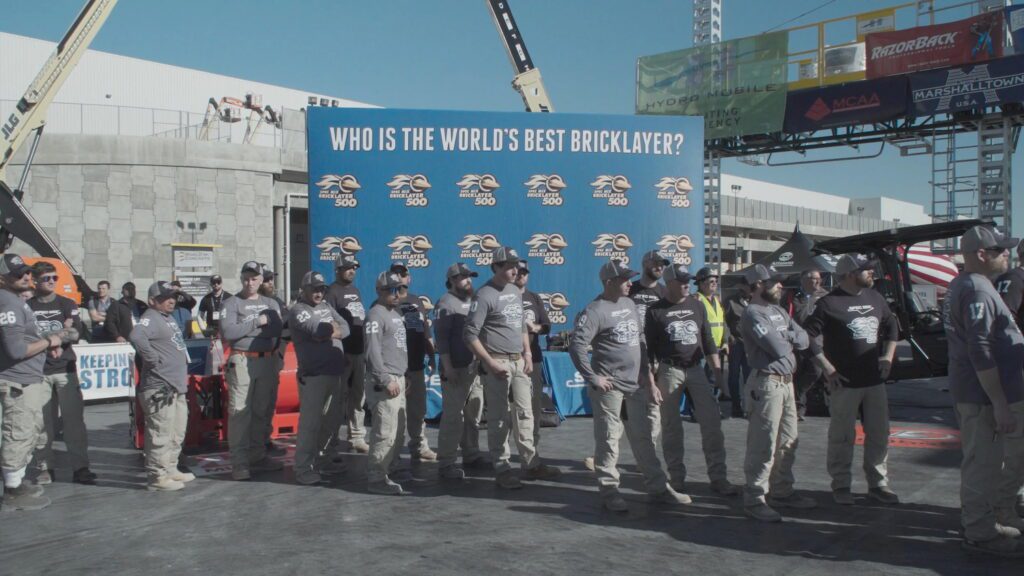
Courtesy of Magnolia Pictures
This is an angry film. Particularly, it is angry at profit coming at the expense of the ability to make the things you want to make. What would you like to see in place of the industry as it is presently constituted?
I think I was initially really bitter about the fact that nobody else could seem to trust in the confidence that I had in the piece I was trying to make. But then I also got angry at myself for asking for any money from anyone to begin with. Before the show, I historically always just made the thing and put it out on the internet the moment I was done, and that’s it.
I feel like Michael Imperioli had a nice thought, which is why I included it. His advice was just to do it cheap and get it done, and that was one of the best principles throughout this whole thing.
I’d like to see people make smaller movies that aren’t as bloated, that don’t need as much production. I would like to explode this idea of a “prestige project,” and encourage more people to just make something that they care about and really think about what they’re making, because I started to think about the question of: What is a viewer? Why do I care? What is that? Is a viewer a dollar amount? Is a viewer a person who you’ve made happy or sad?
I think that having the show contorted my idea of what I want out of an audience, in size or in terms of its pop cultural impact. None of this stuff mattered to me before, so why am I obsessing over this now?
I just needed to go out and make the thing, and if it’s bad, it’ll suck. And if it’s good, then people will share it with their friends. I like the idea of experimenting with word of mouth, and I think that’s the best way that anything can get circulated. That’s what people trust. So if you can make something that people do that organically with, I think you’re in a good spot. But you can’t force it.
I saw Primetime last night, and to get ready for it, I watched Predators, and I was thinking about how Lance [Oppenheim] has a movie coming with Nathan, and how Josh Safdie is a producer for Concrete, and there’s this soup you’re all a part of that incorporates real life into fiction and fiction into real life and blurs the lines of narrative and documentary. What do you think the success and prominence of all this work represents in terms of what people want?
So, “What’s going on? Why is that stuff popular?” I don’t know. I think people are just really tired of bloated, overproduced cartoon movies; I think people are hungry for some kind of reality, even if it’s really personal, distorted, and kind of manipulated in certain ways.
I can only speak for myself, in that I like this imagery, and I think that other people across the world really like this kind of imagery, because there’s something very primal about our relationship with it as a species. We like watching other people. That’s the number one activity when people sit down in a park; they just look at other people. Or it used to be that way.
I’m glad that people are watching it, I guess, but this is what I’m trying to find and to watch: a decent record of a specific time in history, because everything’s just such a performance these days, and I want to make something that isn’t the dance, necessarily.
Cutting through the artifice of Court TV, if you will.
I think that people are just tired of being talked down to, tired of their intelligence being insulted by the kind of slop that they’re being fed by media. It’s sanding down all edges and making people feel the same, like they have the same smooth brain.
And I think that if you make work that starts on a higher platform—where you’re actually meeting people where they are intellectually, or maybe even where they want to be—I think it makes the audience feel better. And I think that raises all ships.