The Little Bookshop. Photo by Matthew Ritchie
Why That Small Clothing (or Record, or Book) Store You Love Also Sells Coffee
In a challenging climate, independent retailers are turning to an item New Yorkers buy every day
Mary Jones had a clear goal as she entered her mid-70s. For many who dream of entrepreneurship, the gap between the kernel of idea and the final product is too daunting, permanently stalling a project before it can get off the ground. But for Jones and her co-owners at The Little Bookshop, her daughter Ashley Jones and Ashley’s husband, Hans Palacios, the spark of inspiration was more than enough.
“I think all of us had an idea inside of us of what we wanted to do,” Mary says. “And it just so happened that all of us were able to make this one thing. I wanted a bookshop. I just wanted a little book shop.”
When the time came to open The Little Bookshop—which sits directly above the Montrose L stop on Bushwick Avenue—just over a year ago, they had no doubt about how they’d use their space. Walking into the store feels like you’re intruding in someone’s home, a living room adorned with wooden shelves and beaming with natural light from the street. Ashley, a book lover who works in afterschool programs in the city, curates the store’s shelves. But the essential and unique part of The Little Bookshop—in addition to the books, of course, and Mary’s food menu and Palacios’ drinks menu—is the coffee.
The Little Bookshop is among the legion of retail businesses that have popped up across Brooklyn over the past decade that incorporate the coffee shop into their model. Anecdotally, it seems hard to walk a couple of blocks without seeing a flower shop that’s staffed by a barista at the front or a bookstore with an espresso machine hooked up in the back. The allure is simple: A patron purchases a coffee, and then slowly moves around the store, potentially making purchases, while the business has the bonus of an all-day draw and revenue stream. Ashley describes The Little Bookshop as “a place where…you can come in, have a coffee, you’ll browse the books and see if you find something.” On the surface, the spread of businesses like these can seem like another trend. But for many who want to turn their vision into a reality, the presence of coffee is not only a matter of survival. It’s a chance to combine one passion with another.
“When we started doing stuff together, we started talking about involving [a] cafe, and then beer and wine,” Palacios says. “When I did art events, it only worked because we worked in a space with beer and wine, and then the cafe I opened was to have another income source.”
Neither, he says, he could stand alone. For most businesses like this, coffee and beverage sales will often make up the majority of daily revenue, keeping storefronts afloat as interest in books, records, and furniture fluctuates.
“It’s the same thing with these kinds of spaces—you need different layers for it to make sense on paper, or it’s gonna die out, eventually,” Palacios says.
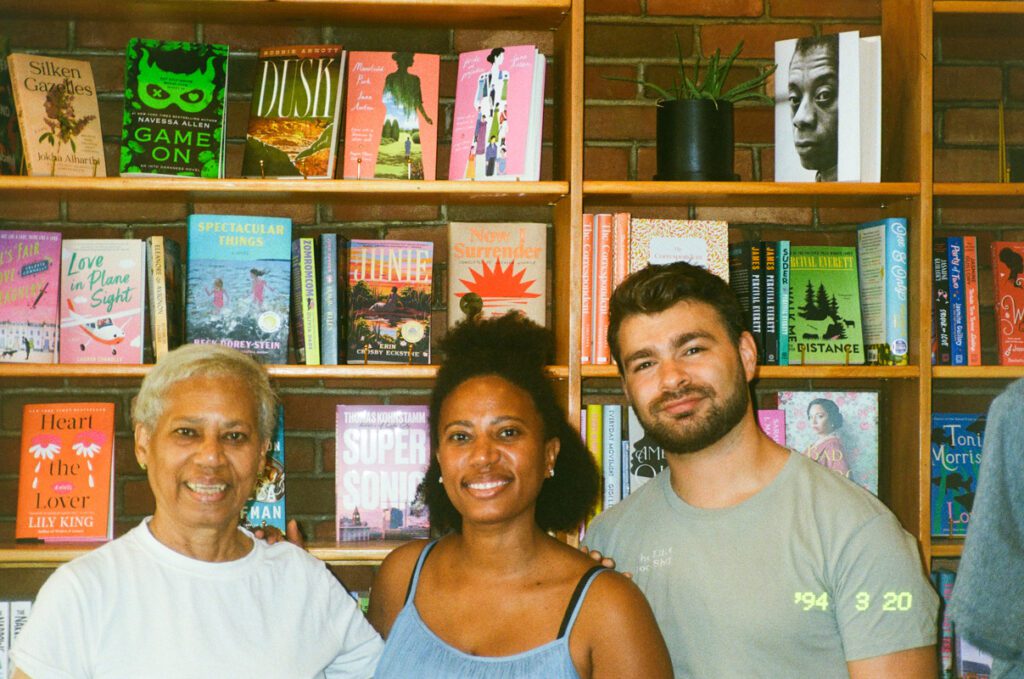
Mary Jones (left), Ashley Jones, Hans Palacios of The Little Bookshop. Photo by Matthew Ritchie
Chyelle Milgrom, the co-owner of vintage furniture store Chyelle Studio, wasn’t new to furniture when she started her business. Milgrom had amassed a large following on Instagram as “fbmarketslut,” posting content about her dual lives as a Facebook Marketplace fiend and a 9-to-5 UI/UX designer. With her background in fine arts and curiosity about how interior design shaped history (and vice versa), she started to work at a vintage furniture store after being unemployed for a little over a year. But after a couple of months in what she describes as a toxic workplace, Milgrom felt that there was a better way to run that kind of business, so she set out to open her own shop.
Milgrom began to pitch the network she’d built in New York. When she finally secured investors for Chyelle, the concept of including coffee was already swirling in her head.
“That part came pretty much at the genesis of the idea,” Milgrom says. “I didn’t meet [former partner Minji Um] until later, but two months into working at this vintage store, I started thinking, ‘Oh, I can open up my own vintage store. I was like, ‘How can I make this a little bit different and more sustainable?’ Because there are definitely lulls in the season when people are, in my mind, not as inclined to buy furniture.”
The remedy was to place a miniature cafe bar in the center of Chyelle, which is filled with neatly arranged mid-century-modern tables and quietly luxurious sofas sourced from estate sales and houses throughout the northeast. Milgrom turned her store into a coworking space, allowing patrons, with the purchase of a drink, to sit for as long as they need. In her mind, it allows someone to fall in love with an item that they’re sitting on or near, whether it be a couch, or an old art piece commemorating the Alvin Ailey dance company, or a particularly pleasing shade of blue ceramic plates and cups.
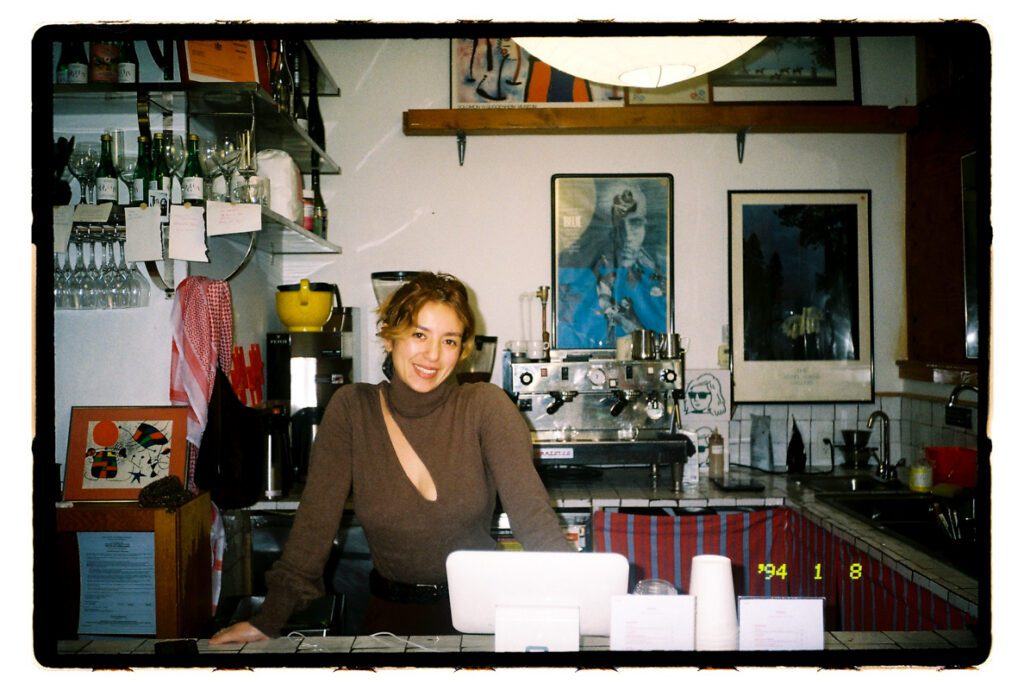
Chyelle Milgrom. Photo by Matthew Ritchie
“It gives the people an opportunity to sit in here longer, to really observe the furniture and take a look,” Milgrom says. “Hopefully, it gives them time for items to resonate with them. Because I really don’t want to encourage overconsumption or impulsive consumption.”
Record store veterans Jeff Ogiba and Mike Polnasek, the owners of Black Gold Records in Carroll Gardens (which recently celebrated its 16th anniversary), have weathered a full spectrum of ebbs and flows. The childhood friends started their business as a mail order operation in New Jersey 20 years ago; eventually, they took over a beloved local record store in Somerset County. “We decided to buy in on it, did some sweat equity, got involved and threw some cash down,” Ogiba says. “[We] donated a bunch of our collections and learned from other people’s failures, essentially.”
After he and Polnasek split amicably, Ogiba started the Carroll Gardens staple with a married couple who wanted to launch a service-industry business in Brooklyn. When the couple wanted to move on from Black Gold to start a family, Ogiba knew the exact person to call—someone who had been around since the beginning and had kept up the love of records as a hobby the entire time.

Black Gold Records. Photo by Matthew Ritchie
“[Jeff] called me and was like, ‘Hey, my partner is vacating. You want on board?’” Polnasek says. “I cashed out my 401K, and at that point, it was like, ‘OK, let’s do it.’”
Black Gold has withstood the ups and downs of music retail, and made it through the COVID-19 pandemic. Coffee has helped keep the shop stable.
“We know that coffee, chocolate, and alcohol are apocalypse items—they say people will buy them when they have no money, buy them no matter what,” Ogiba says. “Records, we just don’t know. We can’t control the economy. We can’t control the market. We watch it sway, we watch it blow up.”
It helps that the pair consider themselves to be coffee guys. Ogiba and Polnasek were drinking coffee at diners in New Jersey well before they could imagine walking into a bar. (Don’t call them coffee “snobs,” though). But just as they’re obsessed with digging through record collections, they know how they want the coffee they sell to taste and smell. They take immense pride in their locally roasted, proprietary Black Gold blend, which is also sold in 12-ounce and five-pound bags on their website.
“We really went in making the blend,” Polnasek says. “It was a process that took a year. We had a local, third-generation local roaster, and Jeff and I had a very specific idea of how we wanted this thing to taste. And we are very particular about getting as close as we wanted.”
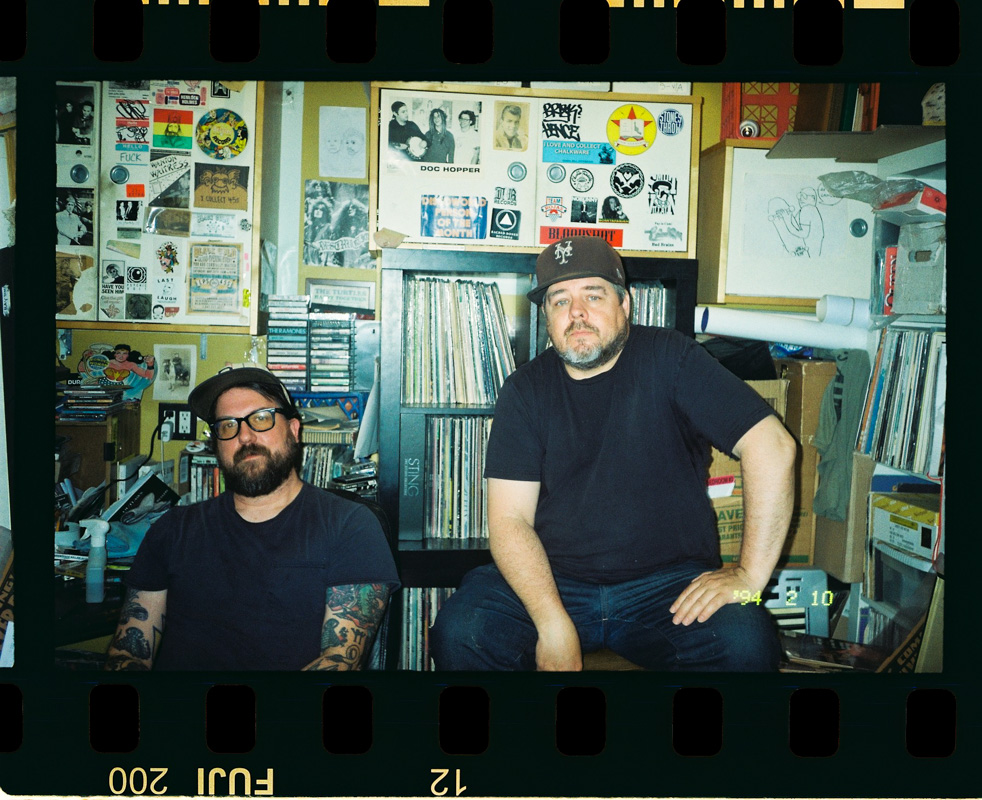
Jeff Ogiba (left) and Mike Polnasek of Black Gold Records. Photo by Matthew Ritchie
Almost any small-business owner will say that it’s a tough time for retail. You know, with the tariffs and all that. But the addition of the coffee for the two-in-one experience introduces another set of plates to juggle.
Milgrom had to take on the role of barista Cheyelle Studio. The Little Bookshop’s three owners are still working to balance the day-to-day demands of their business, administrative tasks included. And that’s before the high-wire act of customer service. “It’s very easy for someone to write a bad review,” Palacios says. “So if you’re doing a lot of things, it’s very easy for one of them to bad and have someone focus on it and go, ‘You have the best book selection, amazing soups, but wow, this coffee is shit!’”
“It’s just about being spread thin, and the focus being redistributed all the time,” Polnasek says, “or having a certain employee that’s focused on the cafe part. And then another employee on handling some of the collections that come in and whatnot—I mean, it’s really difficult.”
There’s a resounding pride, though, that comes from creating a space in Brooklyn for people who love the same things you do.
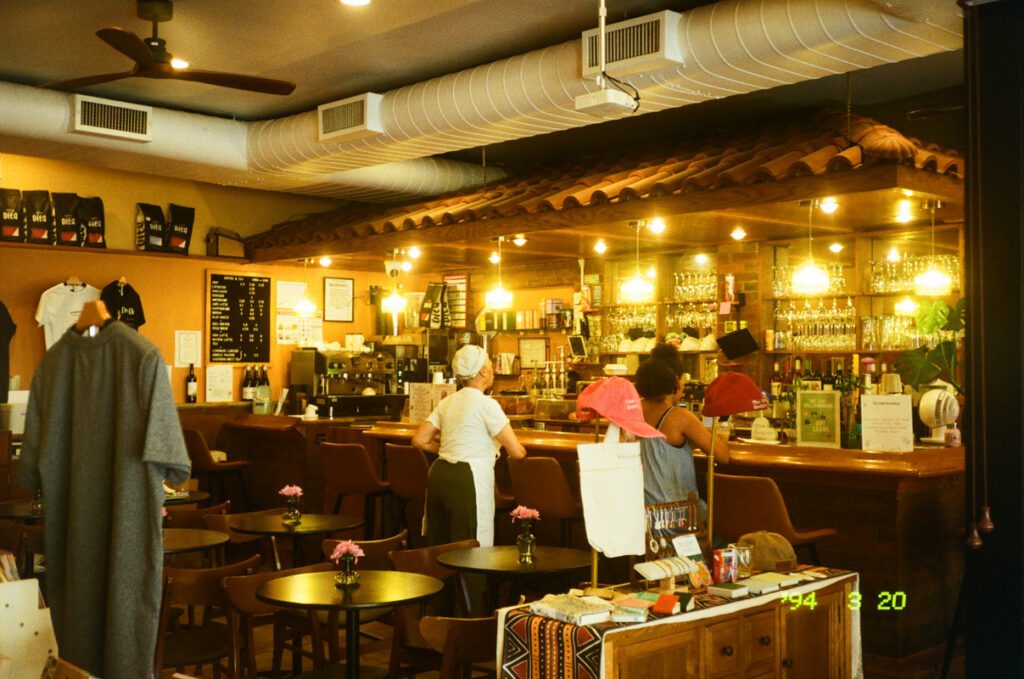
The Little Bookshop. Photo by Matthew Ritchie
It doesn’t take Mary long to start rattling off names and stories of Little Bookshop regulars who have moved away. (“There was always a ton of people in our house—my son called our home Mary’s Home for Wayward Boys,” Mary says.) Milgrom has held drawing nights and listening sessions with light and sound bouncing off the high ceilings in her unit. Polnasek and Ogiba from Black Gold are willing members of the Court St. Street Fair, flooding the sidewalk with their “Massive Dollar Record Sale,” all for the love of sharing music.
“It feels awesome,” Ogiba says. “Coming in and seeing people out there, looking at the record they bought and drinking coffee and being on the computer—it’s like, ‘All right, we did it.’ We want people to come find a place where they feel like they fit and can relax, discover something new, while also having the consistency of good coffee.”
“We’re lifelong flea-market people, so I think we both have that curiosity built in us, and I think that it comes through in the shop,” Polnasek says. “ We want people to come in, have a coffee, hear a song they’ve never heard before, and then, up on the shelf, there’s some weird robots or whatever, and they want to talk about it. We want a neighborhood, community-type vibe in here. Where people can get on with each other, have conversations, learn from each other—and we can learn from them.”
And with coffee on offer, there’s less pressure to sell records in the process.