Photo by Felix Lücke
“A Melting Pot of Dance Music Cultures”: How Archivio Records Became a Hub for Electronic Music in Brooklyn
The beloved shop gets a second life in East Williamsburg
As one of the few record stores in New York City devoted to electronic music—and stocked with rare, vintage underground vinyls—Archivio is a regular hit for some of the world’s top touring DJs when they’re in Brooklyn. From hometown heroes The Martinez Brothers to international selectors like tINI, Desyn, and Dyed Soundorom, the store has become a destination for everyone from casual collectors to dedicated diggers.
Archivio is a record store, of course, but it’s also a music label, party series, art studio and cultural space. At one point, it even housed a barber shop and tattoo parlor. But for all its acclaim—including the New York Times naming it one of six hidden shops in New York worth visiting—Archivio’s biggest challenge may have been just that: It was hidden.
For five years, Archivio operated by appointment only out of an unassuming building in DUMBO. With no signage and virtually no foot traffic, it was easy to miss. That model demanded a certain kind of endurance, one built on word of mouth, according to Pablo Romero, a Queens-born DJ and Archivio’s co-founder.
“Given the fact that we were in DUMBO, logistically, it’s quite the stretch to get there,” Romero tells BKMAG from Germany, a stop on a multi-city European tour. “DUMBO’s an amazing location, very historic neighborhood, but we were on a fourth-floor loft. We had to be found.”
When Archivio announced it was closing in April, many in the scene grieved. The news felt, to some, like a natural endpoint for a space that had always existed slightly off the map.
But instead of disappearing, Archivio shifted course entirely, ultimately moving inward from the fringes. The decision came quickly. When John Dimatteo, co-owner of Refuge nightclub, called Archivio co-owner Daniel Dutts with word that a storefront had opened right next door, the team went to see it. Within a week, the lease was signed.
“We’ve always aspired and dreamt of having our own storefront location,” Romero says. “It was the perfect moment for us, and with Archivio turning five, we felt it was finally time to evolve.”
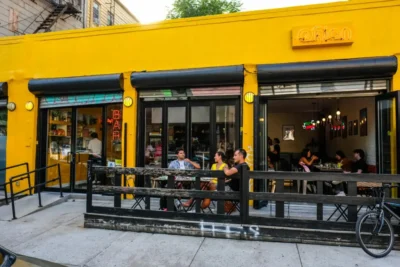
Their new shop in East Williamsburg, near the Bushwick border, sits along a stretch that has steadily become a corridor for underground house music. Just a stone’s throw from Signal and Green Room—and physically attached to Refuge’s courtyard—the warm, light-filled space pairs a Funktion-One sound system with ample room to dig, reminiscent of the famed Yoyaku record store in Paris.
The move to 55 Meadow Street, catty-corner to Secret Futebol Club, comes at a moment when vinyl is proving remarkably resilient in an increasingly digital world. Record sales grew nearly 10 percent in 2025, reaching $1 billion for the first time this century, according to an industry report cited by Forbes.
It also arrives as New York appears to be settling into a golden era of electronic music, with new clubs opening seemingly every month and half of Bushwick apparently moonlighting as DJs.
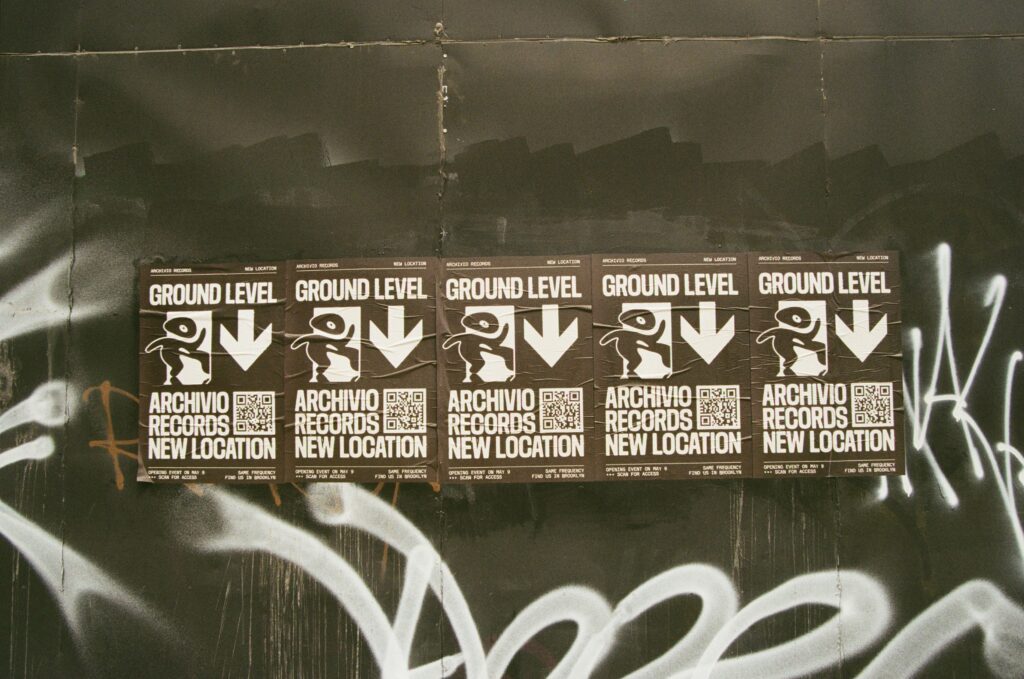
Photo by Felix Lücke
Archivio—Italian for, yes, “archive”—is a fitting name for a shop whose bins are filled with coveted, hard-to-come-by records that rarely surface on Discogs.
They’ve got everything from deep house and dub techno to UK garage and Romanian minimal. The shop’s inventory runs from rare Madonna records to obscure test pressings priced at $300 and up, as well as dubplates with only 10 to 20 copies believed to exist.
“You can always count on coming out with a few gems there,” says Steve Martinez of The Martinez Brothers, noting that it’s one of their favorite record stores.
Look hard enough and you just might find some reggae and hip-hop scattered about—unexpected but ripe for sampling. It’s not electronic music, per se, but “if it comes our way, we know a good song,” Dutts says with a wry smile.
Desyn, a vinyl DJ known for his eclectic sound, has seen Archivio’s obsession firsthand. He once joined Dutts on a cross-state digging trip through “dusty old warehouses” in search of vinyl treasures, later describing the team as “men on a mission.”
“Keeping the spirit alive, it takes hard work and passion to run a vinyl record shop in an age of USB DJs and digital streaming,” he says. “As a vinyl DJ myself, Archivio are men after my own heart. They hold deeply curated stock of ’90s and 2000s electronic vinyl gems. They even source some of their stock from associate legend DJs.”
Finding the right record can be daunting, especially with so many obscure labels and artists. The Archivio team helps cut through that noise, curating stacks for highly specific tastes and often pointing clients toward the B-sides and deeper cuts that might otherwise be overlooked.
“People come in with a certain [expectation],” Romero says. “World-touring DJs will say, ‘Oh, you know, we’re feeling a bit of a progressive, techno trancy vibe, but with house grooves. Can you get me that?’ And we do.”
Part of that expertise owes to the shop’s key players, who hail from all over the globe. Romero, though born in Queens, is of Colombian heritage. Dutts grew up in London, while co-founder Lorenzo Slider (who has since left the store) comes from Verona, Italy. It’s exactly the kind of mishmash of backgrounds that gives the shop its character.
“The foundation of Archivio is a melting pot of dance music cultures, just like New York City,” says O.BEE, a local DJ who cut his teeth in Brooklyn before growing into an international heavyweight. “We’ve got Pablo representing New York’s underground legacy with a strong Latino influence spiked with sleaze and serenity.
“Daniel brings the powerful import of the UK sound from across the pond that was missing in this city, as well as Lorenzo, who brought the holy grail of the Italian ’90s dream that has become a major influence on the development of New York’s sound. With this recipe and their dedication, it’s hard to go wrong.”
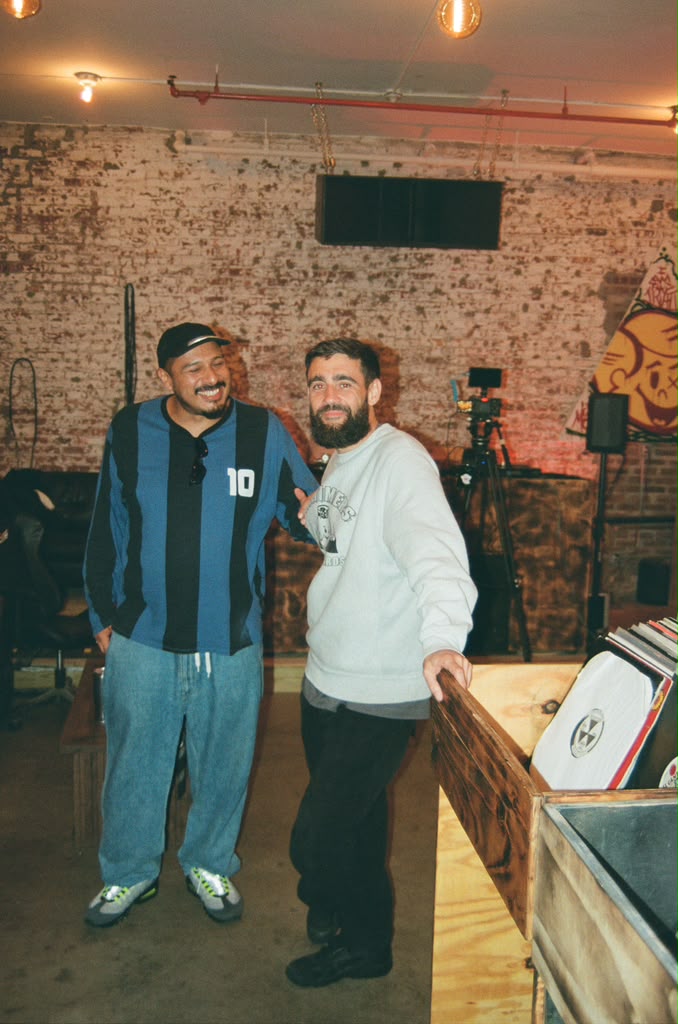
Pablo Romero and Daniel Dutts. Photo by Felix Lücke
Growing up in London, Dutts recalls a certain hierarchy within record stores that, at times, left him feeling “dismissed” and “irrelevant.”
“That really kind of stayed with me,” he says. “The one thing we’ve always spoken about is that at a place like Archivio, we treat everybody the same. If you walk in that door today, you’re going to get access to the same stock, the same product, and the same experience, support, guidance, and level of investment from us. We really try to eliminate any of that pretentiousness.”
The first time I stepped into the shop, Romero introduced himself and offered me a White Claw—and, hours later, a coffee with honey as I worked my way through dozens of LPs. They ask what you’re looking for, then let you listen freely while they move through the store, pulling records they think might fit your sound, always nudging you a little outside your comfort zone. It almost feels like having a personal shopper—except no one charges you.
“I love going to record stores where you can not only dig, but also talk shop, life, and music,” says Zeina, a DJ from Egypt who regularly plays in New York. “In time, you build a meaningful relationship where the shop staff know you, and can curate a stack for you, putting you on to new discoveries. That’s part of Archivio’s charm.”
That sense of connection is what regulars say sets Archivio apart. In a city where so many stores can feel transactional—driven by quick flips and disinterested shopkeepers—Archivio moves at a different pace, grounded in dialogue, discovery, and trust.
“We obviously curate piles for guests, but we also talk about music, talk about life, talk about philosophy, talk about the scene, talk about past gigs, upcoming gigs, new projects,” Romero says. “It’s not only a digging session, but it’s more of a hangout, just a time-and-a-half with the homies.”
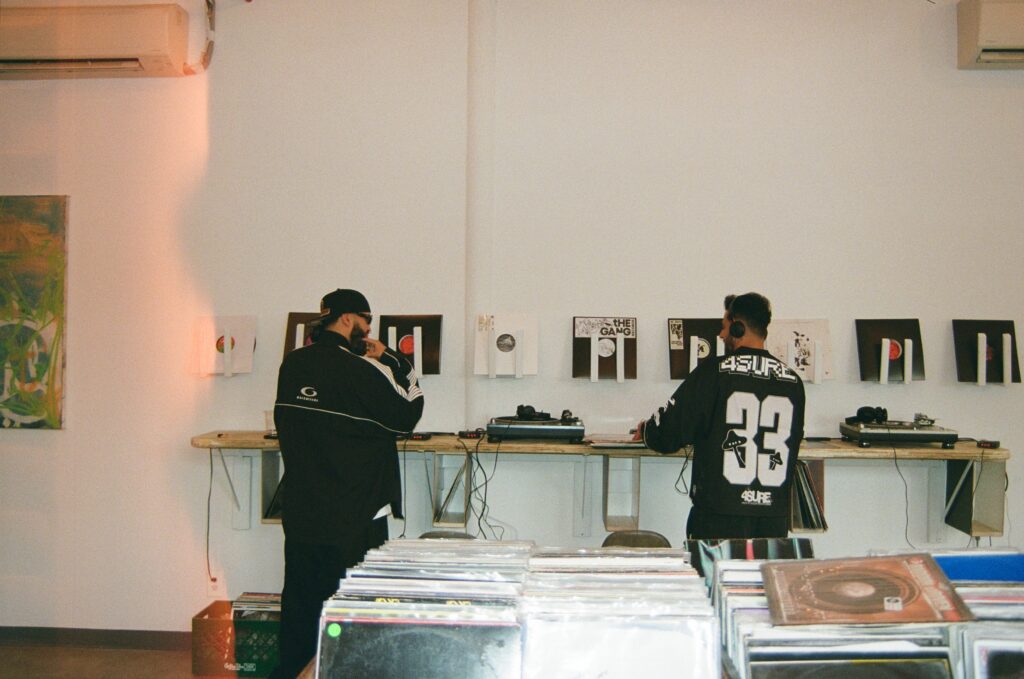
The Martinez Brothers. Photo by Felix Lücke
The shop has been settling into its new rhythm since moving. Dutts says they’ve been refining stock strategy, building out a more consistent in-store session series, and steadily expanding their record collection.
“It’s a continuous improvement process, but we’ve been really focused on trying to keep it fresh,” he says, noting they’ve been traveling to Europe to source records directly from distributors since opening.
Archivio operates by appointment on Tuesdays and Wednesdays, with regular hours Thursday through Monday. On select weekends, it stays open late for in-store DJ sets where locals and touring artists mix and mingle.
Across conversations with those who pass through, a common narrative emerges: Archivio’s personable approach, deep roots in the scene, and tightly curated selection have built a reputation extending well beyond New York into the global electronic music community.
Nonetheless, Archivio remains in many ways a passion project.
“It’s not for the faint of heart,” Dutts says. “We’re doing this for love. Neither one of us is going to retire from this.”