Photo by Sarah Stier via Getty Images
In a Rebuilding Year, The Brooklyn Nets Lost for All The Right Reasons. Did it Work?
How the noble 2026 Nets challenged the very notion of a “meaningless game,” using the season to develop a group of electric rookies even if it, at times, defied conventional wisdom
About two-thirds of the way through Martin Scorsese’s The Color of Money, Paul Newman’s grizzled pro “Fast” Eddie Felson walks into a pool hall to find his hotshot mentee Vince Lauria (a young Tom Cruise), wiping the floor with the local competition. In any other sports movie, the scene would feel triumphant; it’s hard to watch Vince, wearing a t-shirt with his name on it, victoriously howl along to Warren Zevon’s “Werewolves of London” and not punch the air. Yet Eddie, for his part, looks like he’s at a funeral. Vince, his shark-in-training, has violated a sacred hustler’s commandment: scaring away the big money by winning the meaningless, small games.
Each year, the stretch of the NBA season from the All-Star Break to the beginning of the playoffs invites a moral panic about the purportedly existential specter of “tanking”: the practice that dates back most infamously, and brazenly, to Sam Hinkie’s “Process” in Philly in the 2010s, by which teams take active steps to lose games to better position themselves in the NBA’s draft lottery. Insofar as the competitive spirit constitutionally ingrained in professional athletes dictates that NBA players, the Washington Wizards notwithstanding, are loath to, well, lose on purpose, tanking is a strategy largely engineered by the front offices and coaching staffs empowered to decide which of these players actually see the floor. Each year, when the calendar turns to Fraudulent February and Mickey Mouse March, the Association’s least winningest teams tend to indulge their increasingly brazen forward-thinking instincts. They pull their starters, shut down their stars, green-light superfluous surgical procedures, and hold their noses as they race to the bottom for the best possible odds at a franchise remaking superstar, the widely agreed-upon cleanest path to resurrecting a franchise in a small market.
All this, for even the most casual NBA observer, is by now an old hat. And yet each year, the discursive void that 24/7 sports media attempts to fill between the Super Bowl and the start of the MLB season inevitably leads to another round of pearl-clutching about the ramifications of tanking on the NBA as a product. Voices of the commentariat, high and low alike, join in a chorus of critique: tanking undermines competitive integrity, sets a bad example for the kids, contributes to falling viewership numbers, causes the sky to fall. Whether these critiques are made sincerely, in bad faith, or from a place of abject boredom, becomes at a certain point irrelevant; Commissioner Adam Silver has already convened league-wide calls and floated a number of radical anti-tanking proposals to stamp out the seemingly unkillable bogeyman.
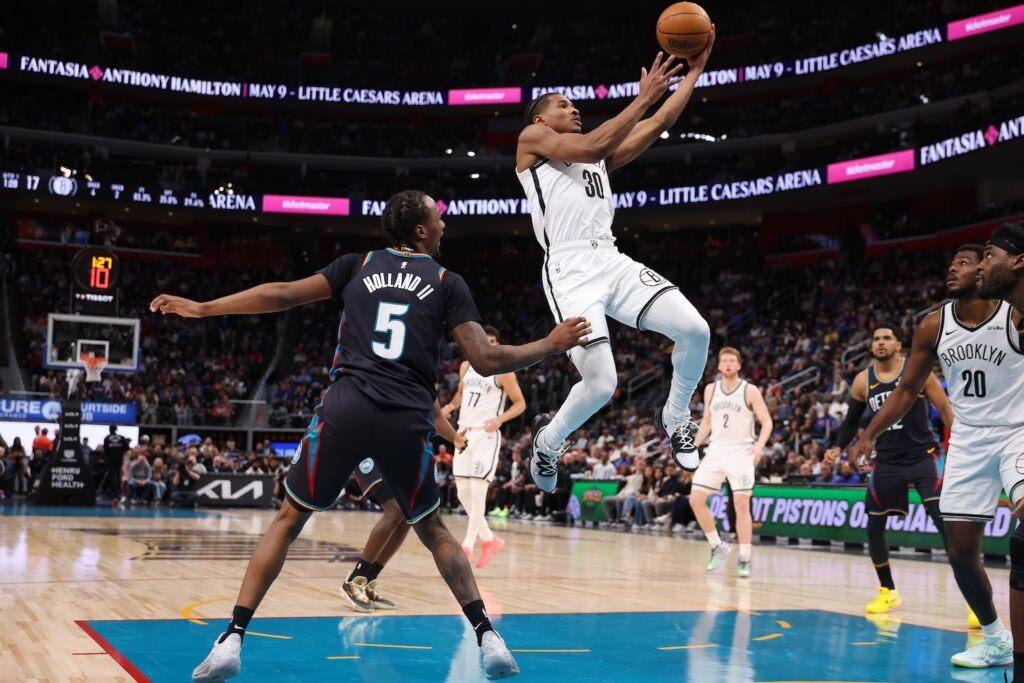
Photo by Gregory Shamus via Getty Images
Among fans of the Brooklyn Nets, one of the frontrunners in the final stretches of the lottery-position sweepstakes, this season saw its own share of hyperbolic panic. The irony, of course, is that Nets World’s consternation comes from the team not tanking hard enough. The Nets, whose scant 20 wins on the season are good for the third-worst record in the league, are extremely likely to land top-four draft lottery odds (the bottom three teams in the league all have a 14% shot at the #1 pick). That notwithstanding, fans have greeted almost all wins—a triumph over the Freak-less Bucks, a come-from-behind thriller against the Eastern Conference-leading Detroit Pistons, beatdowns of the short-staffed Memphis Grizzlies and Sacramento Kings, and a tank-off eeked out against the hellbent-on-losing Washington Wizards—with scowls that make Newman’s Fast Eddie look elated by comparison. The near-universal fear across the Nets fanbase—that their favorite team may win too many games—complicates the commonly accepted notion that tanking pushes fans away. Rather, the base is upset and offended that general manager Sean Marks and head coach Jordi Fernandez appear to have adopted the radical, tank-maximalist, wisdom-defying position that the best way for a team to get good at winning games is by trying, repeatedly, to win games.
It is no mistake that some of this season’s most brazen acts of non-competitiveness came during a year in which three such elite prospects in Kansas’s Darryn Peterson (whose infamous part-time availability positions him nicely as the banner athlete for the work-from-home generation), BYU’s AJ Dybantsa, and Duke’s Cameron Boozer sit at the top of what is projected to be a generational draft class. The two teams leading the league’s standings, the Oklahoma City Thunder and the Detroit Pistons, each endured their own depraved stretches of losing basketball as they filled their draft coffers, serving as a kind of tanking proof of concept: With guys this good on the horizon and teams that used to be that bad running their respective conferences, it makes sense that many organizations might try to lose themselves to greatness. The league’s recently-flattened lottery odds, which were changed to disincentivize organized losing, have introduced a great deal of randomness as to which playoff shut-out will actually win the first pick in any given year (unless they trade their franchise player for a pouch of magic beans and are in danger of a city wide revolt), but the built-in cap for just how far a team can fall nevertheless make the case for tanking quite compelling for those teams within reach of a bottom-three record.
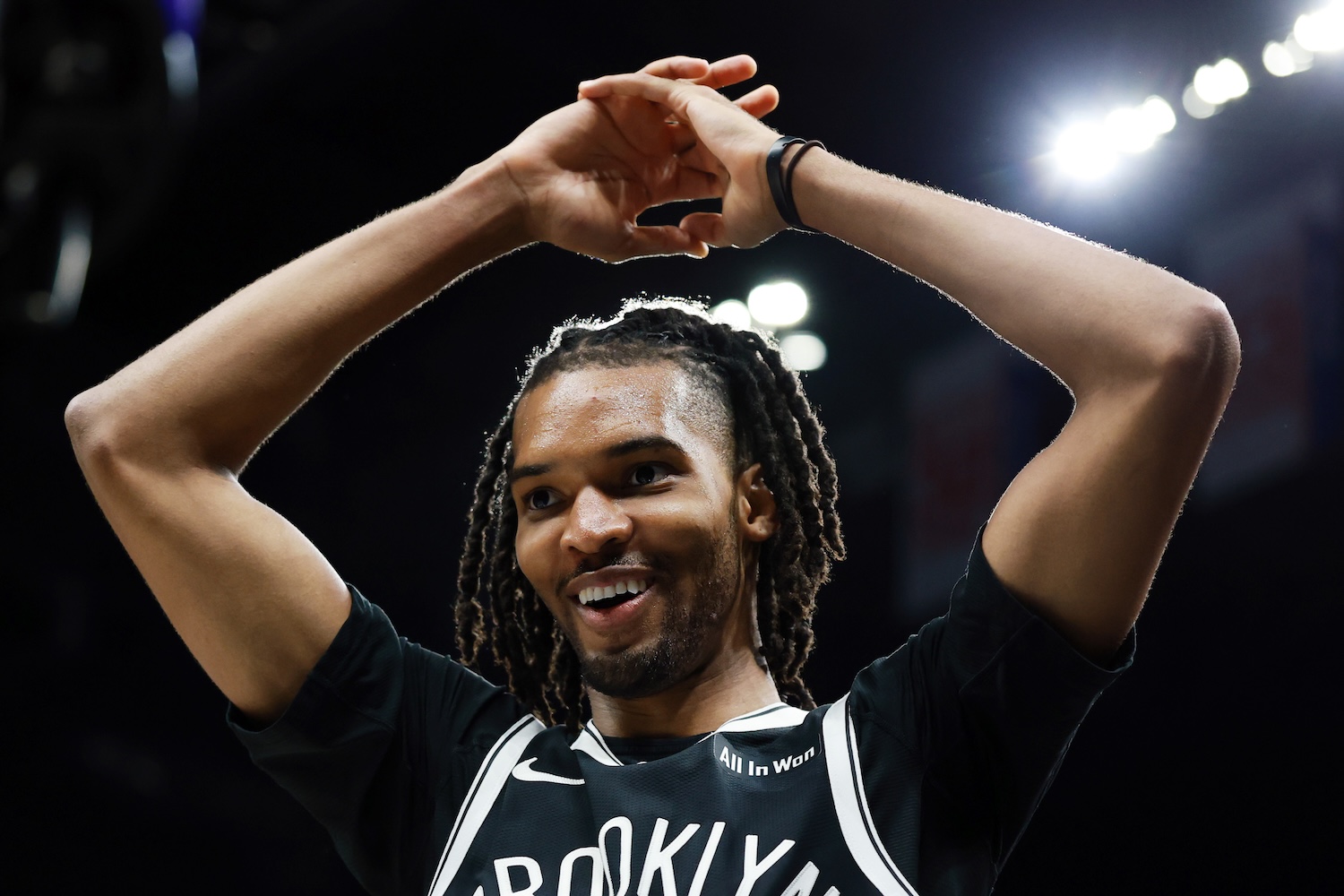
Photo by Sarah Stier via Getty Images
Within this context, Fernandez and Co.’s near-season-long reluctance to trot out lineups filled with A.I.-generated journeymen feels almost like an act of protest. Though March, as with the rest of the season, has included its fair share of strategic rest spots for their best players, the overwhelming majority of Brooklyn’s lineup decisions and in-game decisions have been geared, within reason, toward winning. When the Brooklyn Nets lose, it is almost always because the players on their team were not quite good enough to beat the players on the other team, not because team decision-makers resolved that it would be in their best long-term interest to lose on purpose. One would think that, in a logical talent-distribution system meant to maximize league-wide competition, this would make the Nets a shoo-in for a top draft pick, but these Nets operate within illogical systems. Therein lies the controversy. Are the Brooklyn Nets suckers for refusing to succumb to the draft position race’s most unethical impulses, or is there a plan, karmic or developmental, guiding their relatively prideful approach?
It’s in many ways fitting that the Nets would be the team throwing a bit of a wrench into what has established itself as the consensus approach to rebuilding through the NBA draft. For as many years as not since their move to Brooklyn, the Nets’ organizational identity has hinged on their collective competitiveness outpacing the collective talents of their individual players. Insofar as the team’s tenure at the corner of Flatbush and Atlantic has thus far been bookended by two trades involving nearly all of the team’s draft capital, the Nets have endured their fair share of losing seasons without the prospect of draft consolation to orient their struggles. As such, this season marks only the second in more than a decade in which the team actually stands to benefit from losing games; where other organizations have seen their fates ebb and flow with the whims of the league’s draft lottery, the scrappy if snakebitten Nets have long had to turn to higher notions like habits and culture to visualize their path to salvation.
To the extent that the Nets’ demonstrated unwillingness to throw games is a story of an old dog’s resistance to new tricks, their pride could be fairly critiqued as short-sighted inflexibility. And yet it still runs afoul of certain tenets of common sense to criticize a group of ultra-competitive athletes, coaches, and executives for their competitive spirits. A recent tweet from Dejounte Murray, the New Orleans Pelicans guard who recently returned from injury to find his team, like the Nets of years past, among the league’s worst without control of their own draft pick, articulated the sentiment capably. “Are we a contender? No. Can we reach top 6 spot? No. Can we build some momentum playing together and build winning habits rest of the season? Yes. Can we treat every game like a championship game and win win win? Yes. Can we get in them last spots in the play in??? Duhhhhh,” Murray wrote. The Nets challenge the very notion of a “meaningless game,” arguing instead that the term is oxymoronic: the entire structural premise of organized sports is that games are meaningful when people decide that they mean something.
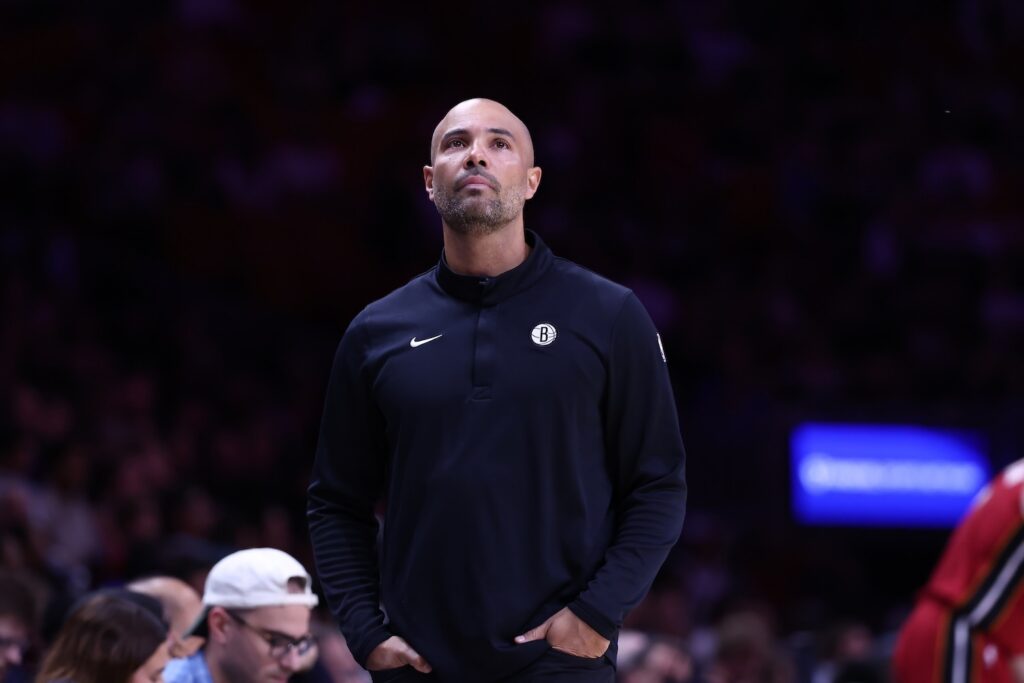
Photo by Peter Joneleit via Getty Images
And it does not appear to take much persuading to convince coach Jordi Fernandez that every Nets game matters.
Fernandez, whose guard-development prowess, knack for earning player buy-in, and fluid offensive system make him the closest thing to a cornerstone of Brooklyn’s future, is the sort of fiery competitor that is ideal for creating culture, but would make a terrible pool shark.
Fernandez’s analytical bent—only a dissertation away from receiving his PhD in sports psychology and standing alone among NBA coaches for having published a peer-reviewed academic journal article on the efficacy of various offensive sets—suggests a professorial bent. His in-game demeanor alternates between the cool English professor straddling a backward chair and a continental philosopher ranting about the pernicious tendrils of global capital. Fernandez is fiery, proud, and driven; to paraphrase Junior Soprano, he never had the makings of a varsity loser.
To the extent that Fernandez exercises some level of control over the Nets’ injury report (the primary weapon in any tanking team’s arsenal), it feels safe to say that his competitive spirit has severely limited the extent to which Brooklyn has manipulated player availability to ensure losses. Where other teams, eager to game the lottery odds, might elect to sit established players on the thinnest of pretenses, Brooklyn this year got a combined 119 games out of their two most known quantities, Michael Porter Jr. and Nicolas Claxton, despite each veteran playing through significant nagging injuries. In the case of Porter Jr., one is able to see a method to the madness; despite playing the entire year in an ankle brace designed for stroke victims, MPJ thriving within Fernandez’s pindown-heavy offense transformed his league-wide perception from a distressed asset into a fringe All-Star. Fernandez’s is a trickle-down tryhardism: for all of this year’s losing, the season has also featured Day’ron Sharpe’s continued growth as one of the league’s best reserve big men, fiery identity-building showings from first-round cast-offs Ziaire Williams, Josh Minnott, and Ochai Agbaji, and at least one impressive monthlong showing for each, or most, of the Nets’ five rookies. Some habits, it appears, can only be built by sincerely trying to win even when one’s opponent is not.
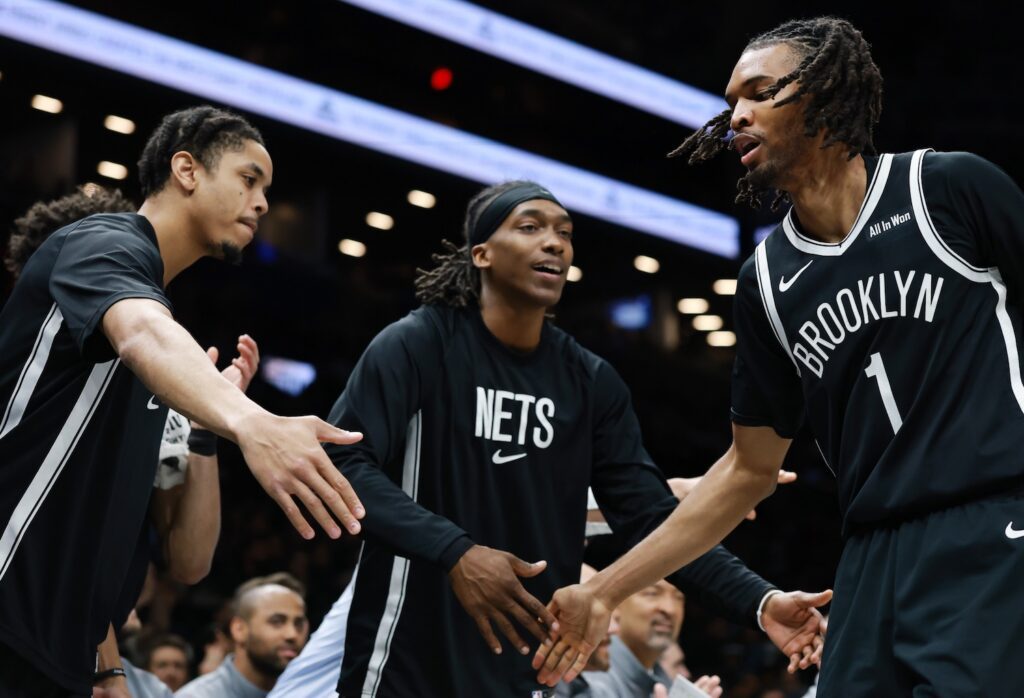
Photo by Sarah Stier via Getty Images
Perhaps, then, it is not so much that the Nets are too stubborn to properly rebuild as it is that the dominant paradigm of rebuilding an NBA team is myopically concerned with losing as many games as possible. Tanking was once considered a radical strategy in service of a rebuild; the two words are now used interchangeably. Is it impossible to believe that this rapid paradigm shift marks an overcorrection toward bad teams prioritizing draft position at the expense of player development, pride, and the karmic ledger?
The NBA’s aforementioned flattened lottery odds introduce a level of randomness that ensures each tanking success story is matched with its fair share of cautionary tales of teams stuck on the treadmill of mediocrity wading through the muck of the league’s permanent underclass; a year spent cynically playing the odds can be undone by the whims of ping pong balls that appear ontologically compelled to keep sending budding superstars across the state of Texas. Tank maximalists operate from the belief that this randomness makes it all the more important to lose out and control for one’s worst-case scenario, but that position dramatically underestimates what else a team controls about its future: the way it sees itself.
In The Color of Money, Eddie laments his young understudy’s refusal to pick his battles, sell himself short, and wait for his moment to hustle the real big spenders. Vince just wants to be the best. Who would you rather root for?