Photo by Ryan Murphy via Getty Images
101 Days in Mamdani’s New York
The early wins, losses, and stalemates of a mayor and media maestro trying to excite New Yorkers about competent and compassionate local governance
Depending on who you asked last year, the prospect of Zohran Mamdani’s victory promised either catastrophe or utopia, but after 100 days in City Hall, the lights are still on at the David Dinkins municipal building, the buses still cost money, the garbage still gets picked up, and the L-train still doesn’t run on time.
In the wake of Eric Adams’ nightlife antics, crypto curiosity, unabashed cronysim, the subsequent year of indictments, and the high-drama mayoral election that completely reshaped Democratic politics, it can feel almost underwhelming to cover the new man in charge, who appears dead-set on municipal efficiency and political discretion.
The firebrand socialist who won against the forces of capital seems to have accepted the harsh realities of the job, and he spent his days with a far less revolutionary agenda. He discouraged his comrades in the Democratic Socialists of America from backing a primary challenge to House Minority Leader Hakeem Jeffries, killed progressive Antonio Delgado’s hopes of waging a primary against Governor Kathy Hochul, then declined to rally with Senator Bernie Sanders, his political hero, to pressure her to enact one of his core campaign promises—an income tax increase on the very wealthy. (He saved the Sanders link-up for a pair of events on Sunday, April 12.)
Instead, Mamdani has told reporters that he’s encouraged by ongoing discussions with the governor on that front, and it’s that same tone of polite diplomacy that has guided most of his moves in the last hundred days. In lieu of political fights, the man who vowed to be a mayor for all New Yorkers has been trying to excite them about the fruits of good governance with videos that show him fixing the 100,000th pothole of his term, or eating Taco Bell to celebrate a legal victory for fast food workers, or reading to children to promote universal childcare.
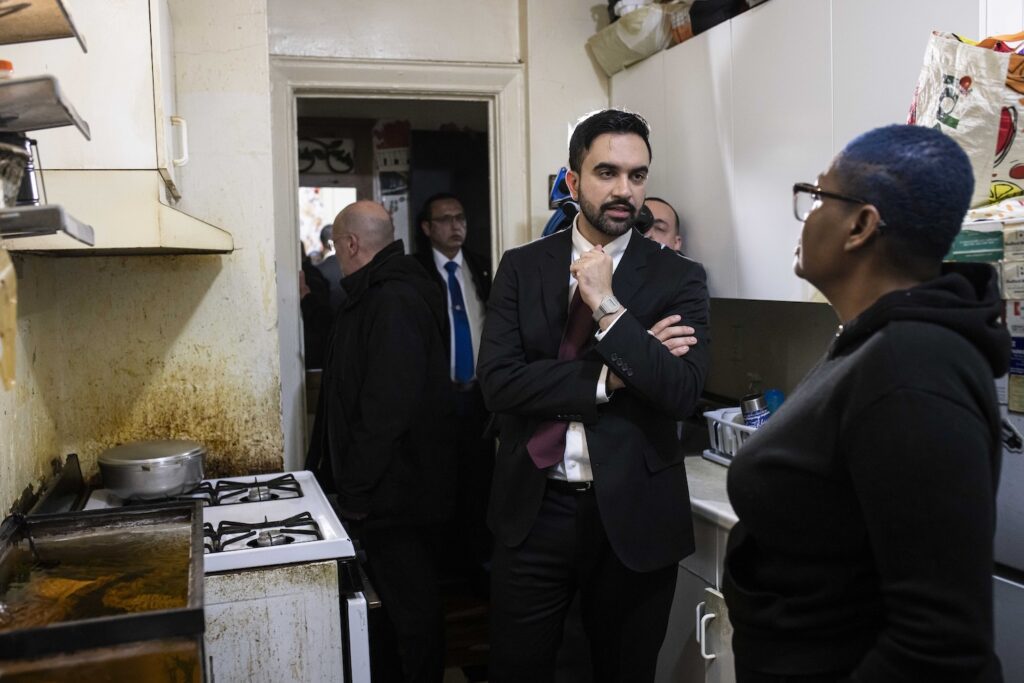
Photo by Dave Sanders via Getty Images
Immediately after his swearing-in on New Year’s Day, the mayor sprinted to a roach-infested, rent-stabilized apartment building in Flatbush for a press conference where he appointed Cea Weaver as director of his Office to Protect Tenants.
The move was quintessentially Mamdani—balancing the stately duties of the office with his allegiance to the proletariat—as were the events that followed: The press dug-up Weaver’s old tweets, his critics re-litigated their campaign grievances with fresh ammo, and the mayor not only stood by his appointment but directed her to innovate a new approach to an eternal problem, with a series of events that became known as the Rental Ripoff Hearings.
As reporters staked out Weaver’s home and his critics frothed about her old tweet calling homeownership a tool of white supremacy, Mamdani was working behind the scenes with Governor Hochul on a project that quickly eclipsed the controversy and ushered in a new era of collaboration between New York City and Albany.
On day eight of his tenure, Hochul pledged to give Mamdani the funding to deliver universal childcare for every New Yorker, with a pilot program to begin in September. The announcement was the first taste of how the mayor, a 34-year-old socialist, and the governor, a 67-year-old moderate, might get along.
It gave Hochul some cache with the city’s progressive base, signalling her willingness to work with the mayor on some things, despite her continued resistance to raising income taxes on wealthy New Yorkers, which Mamdani has called for. And it proved that Mamdani stood a good shot of wrangling resources out of Albany to deliver on his campaign promises. He promoted the plan with a press conference featuring a child-sized podium and a handful of “New York’s cutest,” as he described them.
Everyone seemed happy until the mayor announced a $12 billion budget deficit and needed Hochul to raise taxes on the city’s wealthiest to balance the checkbook.
But that kind of thing was to be expected. Far more shocking was the city’s historic blizzard, followed by a historic cold snap that tested its municipal might and forced the man who dared voters to dream to learn the nitty-gritty of the Department of Sanitation in the first weeks on the job.
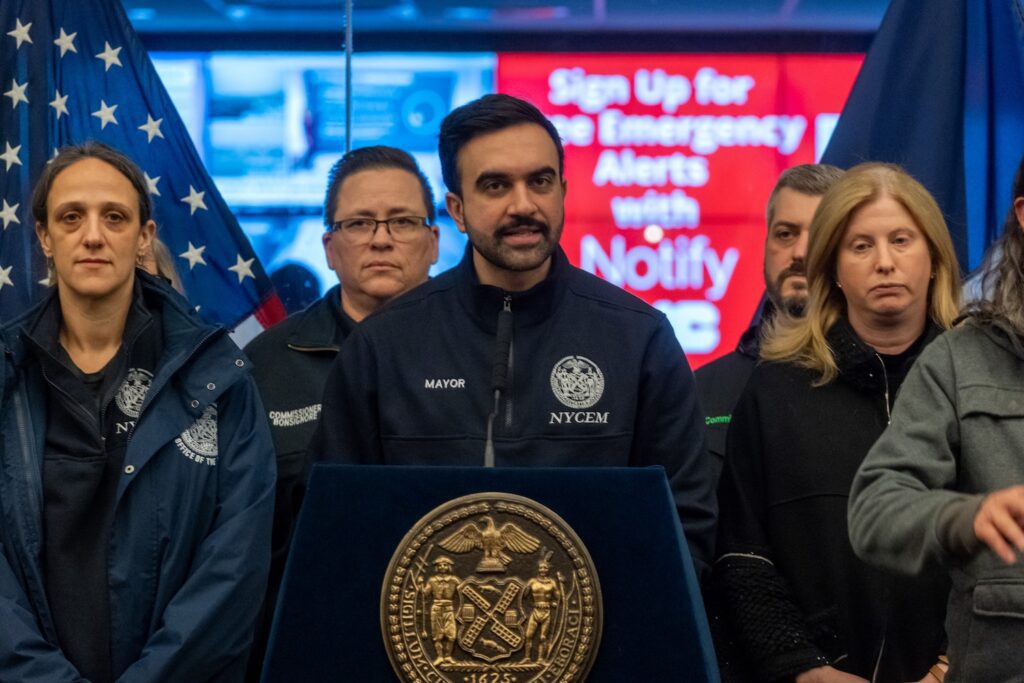
Photo by Spencer Platt via Getty Images
Wearing all-black Timbs and a custom Carhartt jacket that drove the New York Post crazy, Mamdani enlisted the same digital strategy that carried him to victory—helping people shovel snow, advertising warming stations, and urging New Yorkers to call 311 if they saw anyone who needed shelter. But the weather refused to change, the piles of ice refused to melt, and the conditions exposed the limits of the city’s core functions. By the end of it all, 15 people died from the cold, leaving in their wake a vocal set of critics who insisted it was proof the youngster didn’t have the esoteric wisdom needed to convince homeless people to trust the government.
And after that, there was a second historic blizzard, but instead of a logistical headache, it created a political one. At a snowball fight in Washington Square Park, revelers pelted police officers in the head with a glee that provoked condemnations from NYPD Commissioner Jessica Tisch, Hochul, and a slew of other Democratic electeds.
Nearly every reporter had a snowball question at the first press conference held after a video of the incident went viral. Mamdani declined to condemn it, saying that it looked like it was innocuous. It created a firestorm, and his critics rushed to fan the flames. At last, they said, the man with an archive of anti-police tweets is showing that he won’t stand by them as their mayor.
Mamdani turned to his digital strategy yet again on the following day, gathering reporters at the scenic St. John the Divine, where he built a snowman with children before delivering remarks about universal childcare. Could a cop-hater build a snowman with all these cute kids? He coupled the photo-op with a rhetorical adjustment, still declining to condemn the snowball fight but weaving in an acknowledgement that it got “out of hand.”
The episode showed the limits of Mamdani’s smile. Looming in the background was the risk of repeating former mayor Bill de Blasio’s fallout with the NYPD, many of whom turned their backs on him at police funerals. This could not be charmed away.
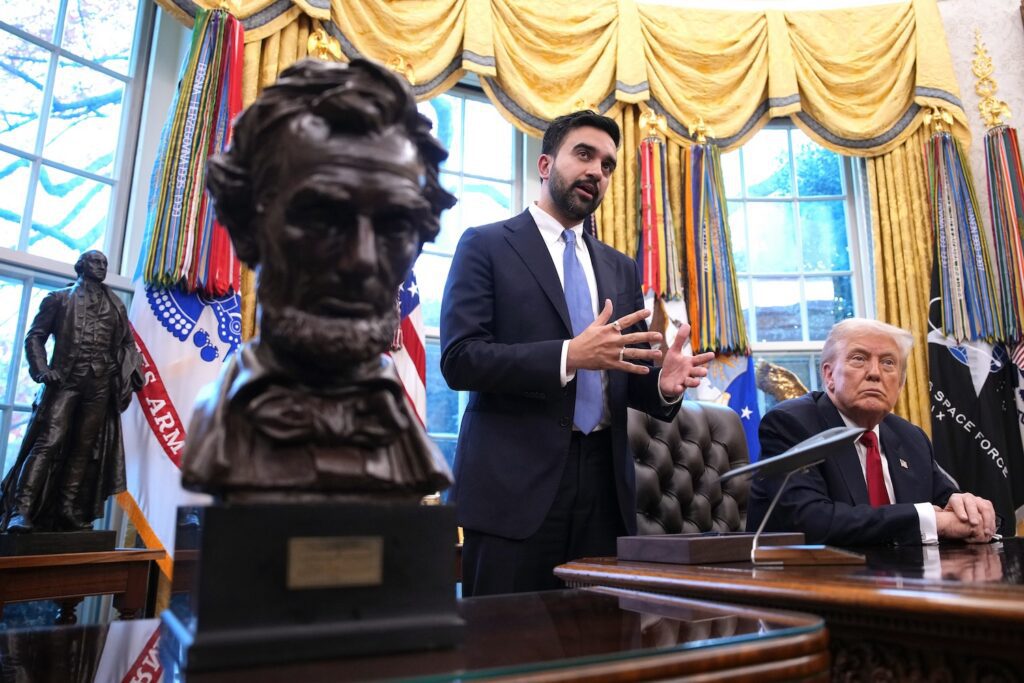
Photo by Spencer Platt via Getty Images
It required a more potent distraction.
The next day, with his public schedule blank, Mamdani traveled to Washington to present Donald Trump with a mock-up of the Daily News designed to goad the president into funding new housing developments in the city. After a rosy November meeting in the Oval Office that crushed Republicans’ plans to use him as an electoral foil, Mamdani returned to Trump’s den with more charm.
The mayor proposed 12,000 units of homes at Sunnyside Yards—a project that Congresswoman Alexandria O’Casio-Cortez once railed against because it threatened to accelerate gentrification. But since then, YIMBYs have grown their lot in Left politics. Sunnyside residents say they have yet to hear about the specifics of the plan, and the mayor’s office told the Queens Daily Eagle that they have started meeting with the relevant partners, though they did not specify their identities.
Soon after the meeting, Mamdani convinced Trump to release the Columbia student Immigrations and Customs Enforcement arrested earlier that morning. It was a 1-2 punch that pleased both Democratic officials and his socialist base. And it punctured a hole in the narratives that conservatives were still beating about the snowball incident. It’s hard to tar a guy as a cop-hater after he pals around with Trump.
But it’s a friendship seemingly constrained: Mamdani asked Trump to drop the charges of four additional Columbia students in ICE’s custody, and while one has been released on bail, three others, including Mahmoud Khalil, remain in legal jeopardy.
The mayor has also adjusted his rhetorical posture as he transitioned out of campaign mode, giving more indirect answers, hedging claims, and doing his best to avoid making news unless he was ready to do so. For a few weeks in the beginning, he didn’t make much time to answer off-topic questions after his press conferences.
Sometimes—too often for many reporters’ liking—Mamdani has labeled events on his public schedule as “closed press,” and then tipped off a handful of his favorites. At one for influencers politely euphemized as “new media,” reporters were prohibited from attending, except one from the New York Times. On the 99th day of his administration, he greeted workers at Citi Field with a caveat—”invited press only.”
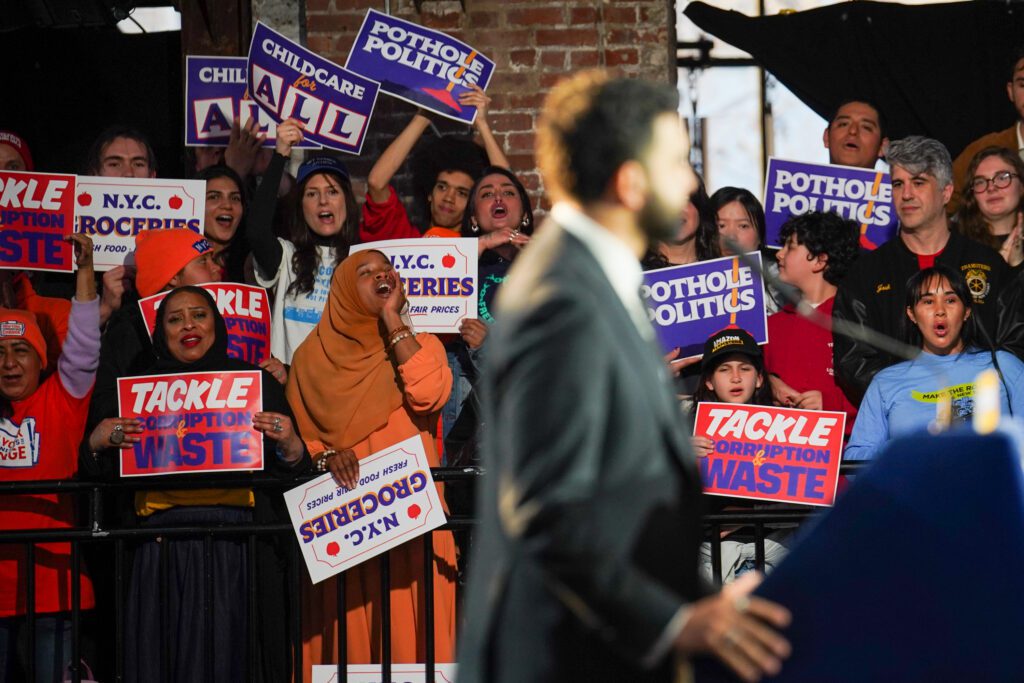
Photo by Ryan Murphy via Getty Images
In Brooklyn last month, his team advertised a Saturday event at a food pantry with congressional candidate Claire Valdez, but when reporters tried to follow him inside to see him in action, his team said there was no room for them. Soon after, the man running the charity invited the reporters in, before someone on the mayor’s team said they were not allowed.
The clash stems from the new reality of Mamdani’s digital strategy—this is not a man who is waiting for someone to publish a story about his acts of charity. He’ll show up and film a video of doing it himself. And why not? He has millions more Instagram followers than any of the local outlets, and, as he’s shown Democrats across the country, this appears to be the future.
So far, the strategy has yielded mixed results. Marist released a poll that found 60% of people across the city think he is delivering on his campaign promises, about the same as his favorability rating when he entered office.
His approval rating leaves room for growth—hovering at 48% and notably lower than Adams’ 61%. But Mamdani is a far more polarizing figure, and his honeymoon period was unlike any other mayor’s. The nature of his politics precludes many New Yorkers from ever coming around to liking him as they did with Adams. All he can do is try his best to deliver efficient and effective municipal services. And so far, it seems he generally has—65% of the city approves of how he handled the snowstorms.
Like everything else that’s happened in the city over the last hundred days, it’s far from utopian. But it’s not a catastrophe either.