“There’s Room Here”: Boris Fishman Talks Don’t Let My Baby Do Rodeo, Immigration, and the Brooklyn Eagle Prize Shortlist
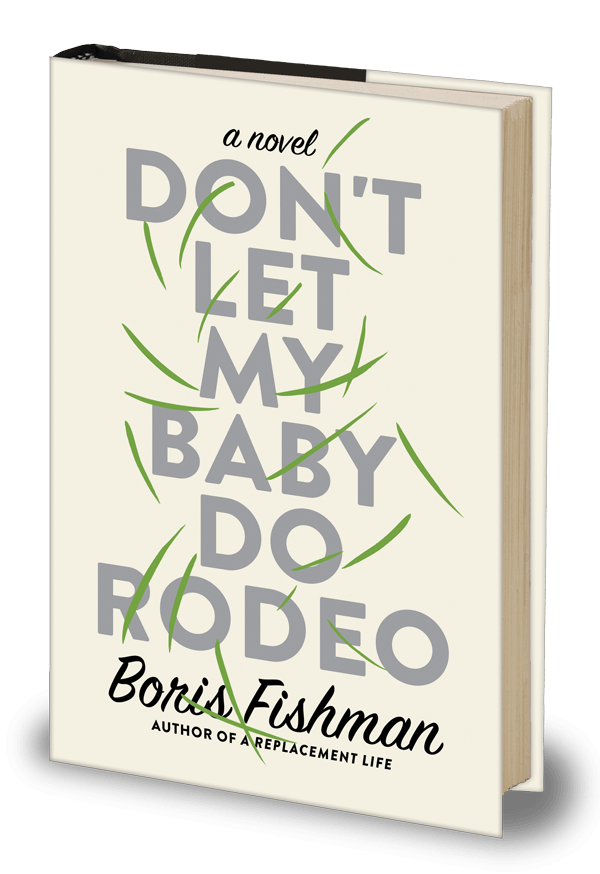
A heartfelt and complex novel, Don’t Let My Baby Do Rodeo explores what it means to belong and what it means to be moved from “home”. This multilayered fictional tale, which follows Russian immigrants Maya and Alex as they try to find out why their eight-year-old adopted son, Max, has taken to sleeping on the floor, eating grass and generally going “wild.” Maya believes a cross-country road-trip to Max’s birthplace, Montana, to find his birth parents will provide answers while her husband and his parents believe it’s better to keep Max’s adoption a secret. Brooklyn Public Library’s second annual Brooklyn Eagles Prize named Don’t Let My Baby Do Rodeo’s author, Boris Fishman, to its 2016 shortlist. Brooklyn Magazine talked with Fishman about how his personal experiences inspired his work, the best way to write a sophomore novel, and why he loves Montana.
What inspired you to write Don’t Let My Baby Do Rodeo?
I think several things. My first novel [A Replacement Life] was written from the perspective of somebody who perhaps was not that different from me, both literally and figuratively. I mean literally it was somebody who was my age at the time and struggling with the immediate surroundings that I had in my life. But also figuratively in the sense that the questions that he had were my questions. In the second novel, I just wanted to challenge myself to do something that I had no firsthand experience of. I’m not a woman. I’m also not a parent. I’m not an adopted parent. I just laid it all out and tasked myself with the challenge of “Could I write a credible story from these perspectives?”
Then there’s the actual little spark that gives you the basic premise, and that is nothing more complex than overhearing someone having adopted a kid who was difficult and they were from two very different cultures—the adopted parents and the kid—and to me that felt like a collision worth investigating, because that’s what my novels are about.
And this I didn’t realize until I was writing the book. I’m not adopted, but when you immigrate, you become so foreign to your parents so quickly because they stay Soviet—or at least mine did. I’m more Russian than American in some ways, even 30 years after coming here, but all the same, I’m an Americanized person. You become sort of foreign to your parents. The experience of the adopted kid, which was one of real outsider-dom and foreignness resonated with me. I felt at home with Max.
Were there any details from your personal experience that made it into the novel?
If somebody looks at [the novel], it’s from a perspective of a woman, an adopted mother—clearly it’s not Boris. But actually, under a thin veneer of fiction, the emotion is all autobiography. For example, in the family in the novel, it’s the husband’s parents who kind of run the show. In my parents’ family, it was my mother’s parents who guided everything. I think my father can seem like Alex in that he often avoids the details because he doesn’t want to be burdened by them and to someone who’s a bit like me or my mother that might seem like avoidance. To another person that might seem like a particular kind of wisdom to avoid sweating the small stuff.
My mother is someone who seeks out complexity, and my father is somebody who avoids it, so it sort of gave me fertile terrain to explore what those qualities might mean in these fictional characters.
Was there a specific reason you chose the state of Montana for Max’s birthplace?
I’ve had a love affair with Montana for a very long time. I came across [the state] 20-something years ago in a movie, and I’d literally never seen mountains before. The city where I was born in the Soviet Union was flat. Brooklyn, where we settled, was flat. I really was not aware that a landscape could be this grandiose, and ironically that movie was shot in Alberta, Canada, rather than Montana.
When it came time to apply for MFA programs, I applied to the University of Montana, got in, and went to visit. You know how it is with fantasies you nurse for fifteen years—they’re never as good as you imagine—but this one was even better. It was so beautiful and calm. I remember feeling like “There’s room here. New York does not need people, but here I could actually imagine being useful in some way to somebody.” I remember having a conversation with a young person who moved there. I said to him, “Don’t you miss a certain kind of intellectual vibrancy here?” He was like “You have to think about it in a different way. When you live in New York, you’re constantly bombarded by messages of who you should be and here, you look around and it’s empty. You have no suggested answers to the question of ‘Who am I or who am I supposed to be?’ You have to figure that out for yourself.” It turned my idea of what it meant to find yourself on your head. I didn’t realize you didn’t have to live in a place like the Northeast, and I just started going back every year.