A Super Upsetting Interview with Tyler Kord and William Wegman about Their Unexpected Cookbook Collaboration
With countless new titles published each year (so much for the decline of print media) it can be easy for cookbooks to get lost in the clutter; mere needles in the haystack of restaurant releases, celeb chef tomes, and gluten-free baking guides. But for Tyler Kord—of NYC’s No. 7 mini dynasty—specificity has served him well, starting with a slim volume celebrating his singular obsession, broccoli, and continuing with his newest triumph: A Super Upsetting Cookbook about Sandwiches.
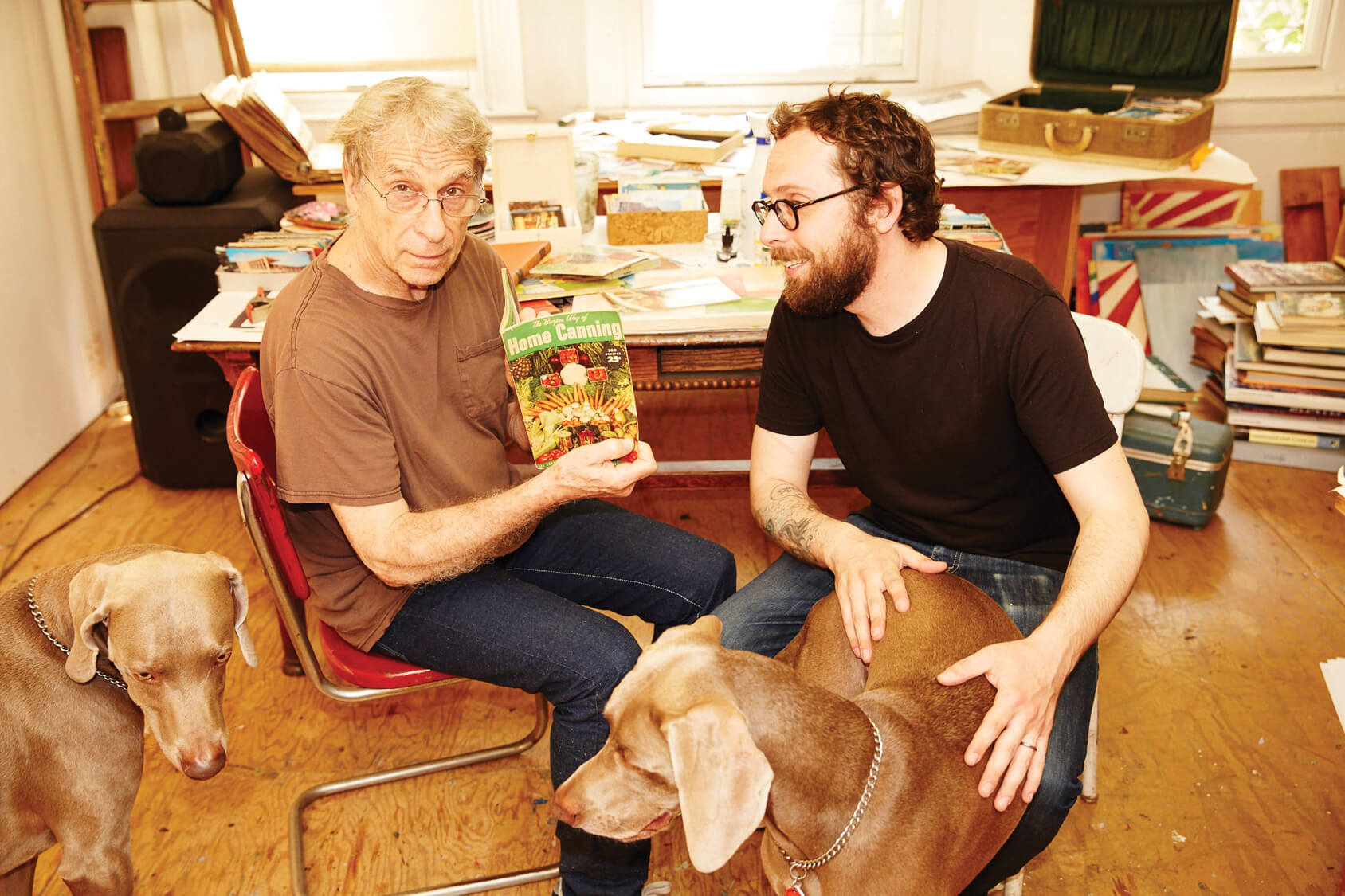
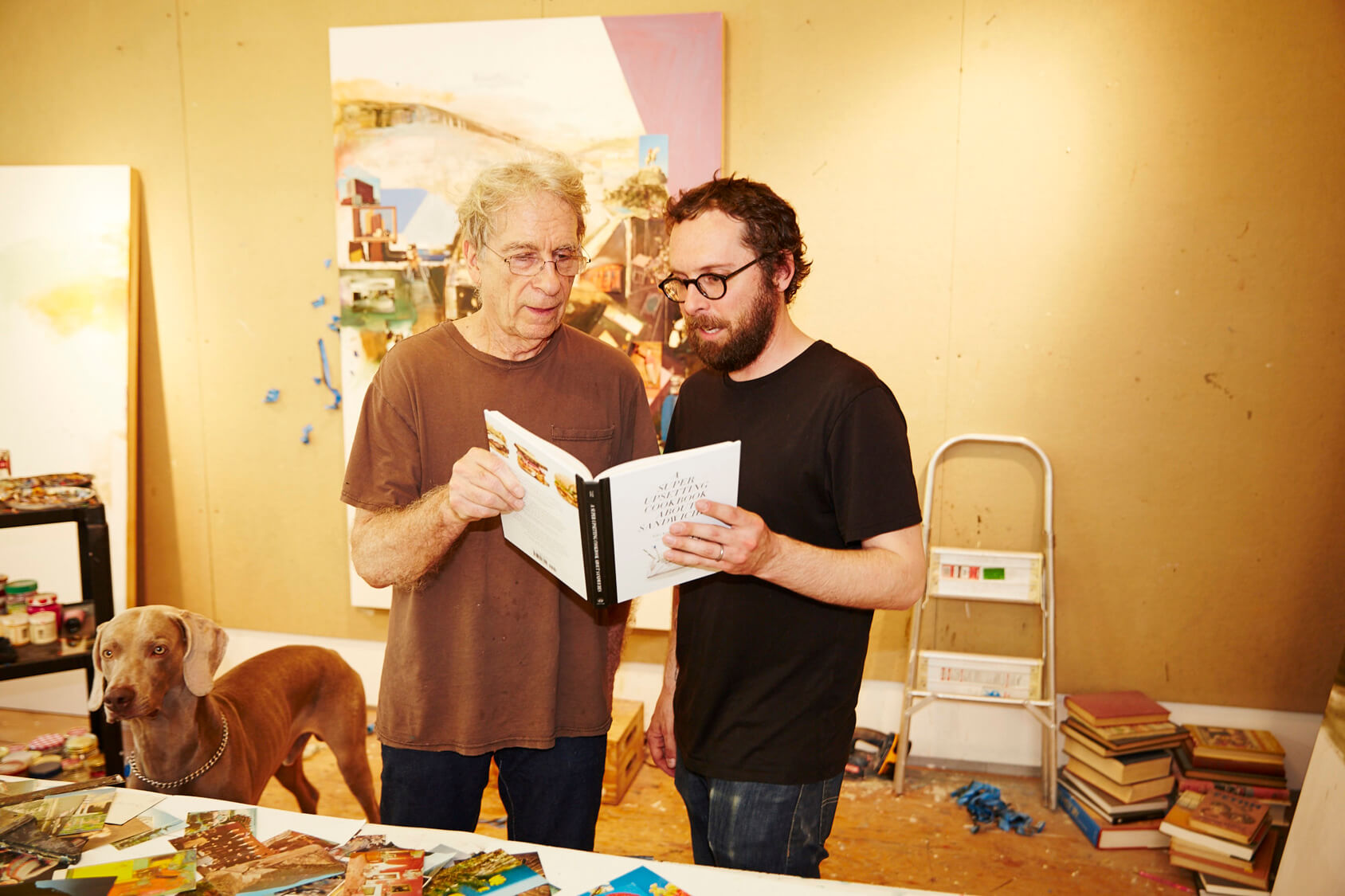
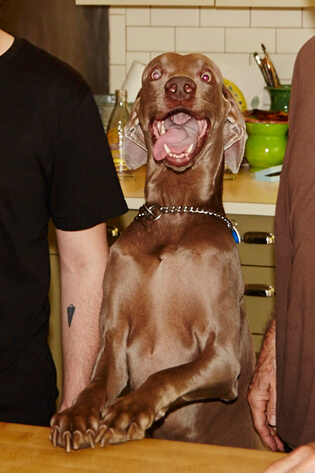
Not only has Kord shrewdly catered to an audience of between-the-bread zealots (with recipes like the “Suzanne Sugarbaker,” comprised of chicken-fried mushrooms, mayo, and peach muchim) not to mention humorists (the reliably deadpan Kord leaves no phrase unturned), he’s tapped into a few, unexpected markets as well; we’re talking artists, photographers, dog lovers, and eighties babies weaned on Sesame Street. That’s because none other than William Wegman—known for creating books, images, and videos featuring costumed and posed Weimaraners—contributed ten corresponding pieces of original artwork. So as a pair of pups gamboled around us, I had the pleasure of chatting with the improbable duo about the genesis of the collaboration, the marriage of their media, and what, precisely, makes their cookbook so upsetting.
So first off, the name. Why A Super Upsetting Cookbook about Sandwiches? It seems like such a happy subject to me!
Tyler Kord: Well, I don’t want to give away the ending. I guess because it’s filled with all sorts of overly personal stories and silly things that don’t need to be in a cookbook. So it’s upsetting in the sense that it’s not a Martha Stewart-y book. And probably because it will be the last cookbook I’ll ever get to write. I was also putting together a recipe for shrimp and I realized I couldn’t write about shrimp without talking about how incredibly upsetting they can be to the environment and people’s lives in Asia. See, I overthink everything.
Besides the fact that you own a sandwich shop (and already penned a treatise on broccoli), why does there need to be a cookbook entirely about sandwiches?
TK: I’m really not on some crusade to make sandwiches better. I just love them; they’re something I’m passionate about. And I wanted to give people something to do with them. Most of the cookbooks I’ve seen about sandwiches aren’t that exciting, or upsetting. Everyone knows how to make a reuben by now.
And just a side note about broccoli: Where does that well-chronicled passion stem from with you? You’ve remained such a champion for the vegetable, despite the fact the larger world has yet to embrace it in the same way they have brussels sprouts and kale.
TK: Maybe other chefs have kept away from broccoli because they don’t want to step on my toes. It’s my favorite food. I sing its praises as much as I can.
So William, I have to ask, how the hell did they get you on this project? Despite your varied body of work, you’ve not been attached to a cookbook before…
William Wegman: And I don’t really like food or go to restaurants or think about eating at all. But I am friends with Tyler’s father, and have known him since he was three years old. And it just so happened that a project I’ve been working on (drawing extensions on photographs from old cookbooks) worked perfectly as illustrations for these chapters. So that’s basically it—fun project, good timing, and old friends.

Although a cookbook is, ostensibly, out of left field for you, would you say that there’s some sort of thematic through-line with the kind of compositions you’re best known for? Dogs may be the subject instead of sandwiches, but they’re very much an expression of family life and a celebration of Americana; you’ve actually had your Weimaraners in the kitchen or around the dinner table on multiple occasions.
WW: I like cooking as a stage for parody. And certainly in my Sesame Street videos, we did a lot in kitchens. Because when working with dogs, if you put food in front of them, they’ll pay attention, so it’s easy to make it look like they’re cooking. If you put a book in front of them and ask them to read, that’s more challenging, unless you smear the book with cheese, which I’ve done. I also developed lots of recipes for this nature book I did back in the nineties called A Field Guide to North America and Other Regions. One of them was a method for cooking beaver, where you’re supposed to chop its tail off and put it back in the pot. Now that’s truly upsetting; I guess I predated Tyler.
While the two of you seem an unlikely pair on the surface, would you say that you share a similar aesthetic or a way of looking at the world, except that you, Tyler, express it through food, and you, William, through fine art?
TK: I’ve always been inspired by Bill and his work. I remember when his Puppies book came out, it seemed like such a contrast to the Uncle Bill I knew from Super 8 films, throwing paint on a frozen lake in Wisconsin with my parents and a bunch of other artists. That was this crazy seventies dude, and this was some grownup who produced a beautiful book about puppies. But it’s a contrast I’ve always related to; a kind of streamlined, simple package with crazy things inside of it.
WW: We’re also both very well educated and extremely intelligent. We have that it common, so maybe that’s the connection.


Full color photographs are par for the course with modern day cookbooks. But there’s something rather antiquey and nostalgic—in an entirely wonderful way of course—about drawings. Can you talk a bit about your inspiration and process for creating images for the sandwich book?

WW: I was looking through my huge library of cookbooks, and there was a period [when] they were really beautiful. Then they went through a phase where everything had to glow and glisten and be too moist. And it got really boring. I was drawn to those older cookbooks. Tyler had given me chapter titles, and I covered as many as I could, by finding an appropriate picture I thought I’d like to extend, and playing around with it. I especially liked images with people in them, rather than just food, where I could extend a hand or something.