Photo by Johnny Nunez via Getty Images
Laila!, Princess of The City
The Brooklyn-born-and-bred singer, songwriter, and producer on New York accents, the science of songcraft, and her new album, 'We’ll Never Be This Young Again'
You ever notice how “coming of age” stories about child-star-turned-adult-superstars are almost never about New York kids? They’re usually reserved for young people who hail from cities that aren’t walkable, places with no public transportation system worth mentioning, and thus no adventurous latchkey kids who have built character by going uptown to downtown, downtown to uptown, crosstown and cross-borough, interboro, and beyond by themselves, by the time they’re tweens. New York City kids be outside. Disney Channel kids? Not so much. Sure, we’ve seen children from the house Mickey built graduate into adult pop darlings and know their stories of going from boys to men and girls to women, but it’s rare that we see a kid from the five boroughs make that same transition.
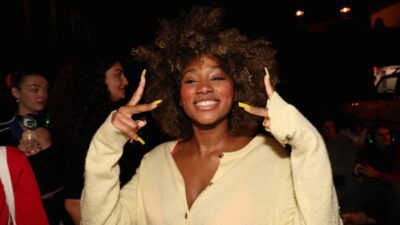
Enter Laila!, the self-proclaimed “Princess of the City.” Please note the exuberant exclamation point that stylizes her stage name. It’s honestly reflective of her demeanor. When she talks about her music, she’s excited; when she talks about herself—especially when the topic is her newfound agency and independence at age 20—she’s emphatic.
Laila! began making beats on GarageBand in 2020 during the COVID quarantine and first caught the public’s attention two years ago with the viral hits “Not My Problem” and “Like That!”—two feel-good, under-three-minute songs so catchy that they automatically lent themselves to soundtracking everything from dances on TikTok to comedy reels on Instagram. A viral “On the Radar” performance that featured the then 18-year-old singer-songwriter and producer—flanked by her equally stylish sisters as she raps and sings through a cherubic smile—was the icing on the cake. For young people, she was a shining representative of their generation: cute, cool, savvy, swaggy, smart. For older fans, her music—inspired by artists like Janet, Brandy, and Aaliyah before her—was a nostalgic reminder of the innocence of their own youth and a wholesome alternative to a bubbling NYC youth culture increasingly typified by drill music and the darkness surrounding that genre.
Signed to veteran A&R Sickamore’s Three Times Louder (IIIXL) label, Laila! blew up, released her debut album Gap Year! in September of 2024, and subsequently toured both on her own and as a support act for more established artists like Faye Webster and Kali Uchis. In the years following her breakthrough, she’s been on the road, in the lab working on her craft, overseas in places like Paris and St. Thomas, and generally stepping into adulthood. These days, she’s less modest in attitude and presentation. On the cover of her first album, she was all smiles and voluminous Afro in a yearbook-like photo. On her new album, We’ll Never Be This Young Again, she’s photographed against a beach backdrop, her hair down and her expression blank, but her gaze is direct and almost confrontational, as if to say, “You must reckon with the woman in front of you.”
It’s fitting for an album that is a clear declaration of that womanhood, replete with songs about love, heartbreak, empathy, self-regard, and the paradox of fleeting youth. I caught up with Laila! on the eve of her sophomore album’s release to talk about being a Brooklyn native and her maturation, both musically and as a person.
[This interview has been condensed and edited for clarity.]
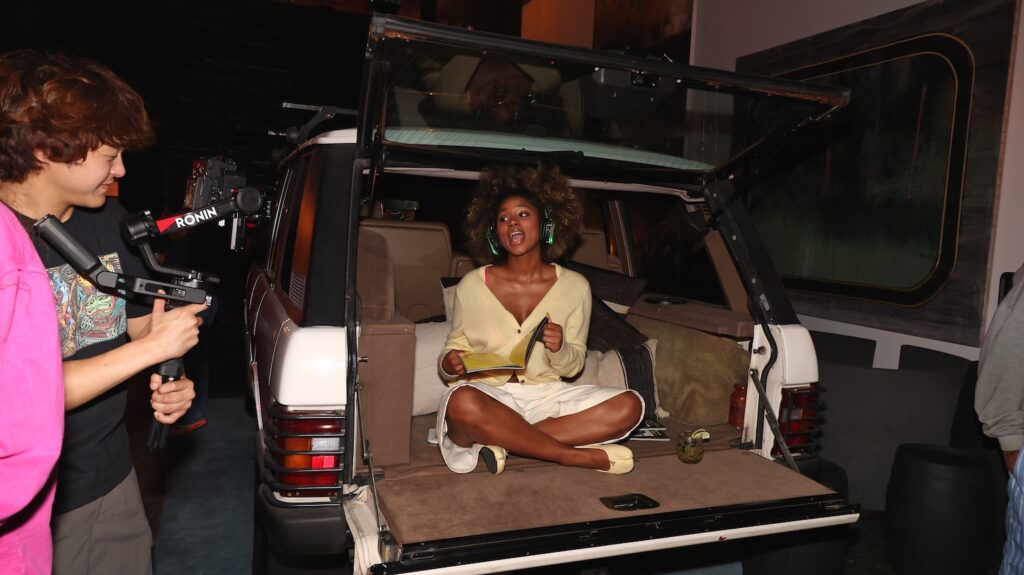
Photo by Johnny Nunez via Getty Images
How are you feeling today? It’s the big day!
Laila!: No, I can’t believe it. I’m so glad that this is finally happening. It’s been such a crazy journey, but I’m just excited.
I want to dive straight into the album because I listened to it, and what left the biggest impression on me is how much you’ve developed as an artist in such a short period of time. The songwriting, the production, the composition … I’m listening to it, and I’m hearing a bridge over here or here’s some stacked vocals over there, and it’s like, damn, you on your scientist shit! So just to start off, can we talk about how you’ve developed as a musician, like as a songwriter first and then a producer, between Gap Year! and We’ll Never Be This Young Again?
I just took more time to listen to music that I love… and kept developing my taste. I kept experimenting and just had a lot more fun. I just wanted to make a project that sounded really full. That’s what the vision was with this. Just utilizing more synth sounds. I started using my Roland Juno keyboard a lot more on this. I experimented with a Triton [keyboard] a little bit towards the end and just kind of went outside of the box of just using GarageBand. One thing I did a lot on this project was utilizing a keyboard as a guitar, playing these synth lines, a lot of synth solos. Using that and overlaying them with vocals was kind of challenging, but I just wanted to experiment with that. I feel like utilizing the synth guitar sound as a secondary vocal instrument, and playing it in a way that was unconventional, was kind experimental.
On “Better Days,” there’s a really dope synth solo. Is that you?
Yeah, that’s me. I mean, it’s all me on this album.
I’m thinking of experiments. I like that on “Woo Woo,” the Afro-Latina in you comes out. Can we talk a little bit about that song?
Yeah. So I was in Paris in January of last year [2025], and I have a homie that lives out there. His name is Abdel Malek. He’s a really, really talented producer, and he just played me this beat that he had that he wasn’t going to do anything with. And I was like, This beat is so fire. I just want to experiment with this.” I loved that it had this bachata breakdown and I’ve always wanted to do a bachata song, so it just worked out perfectly. I just wanted to write a song that felt fun. That was different. I just tried singing in a different language, ’cause, like, why not? I feel like Stevie Wonder does it a lot. I am half Dominican so I wanted to be able to do this R&B fusion with both sides being Dominican on my mom’s side, but then also being from New York, like, how can I just play on that?
There’s a quote from one of the songs, “Bitch I Love You,” where you say, I’m the princess of the city. Talk about what New York means to you, what Brooklyn means to you, what it means being a person who’s really of this soil at a time when there’s so many people who are transplants and coming here and kind of defining it for themselves. You’re really of this city and taking that into the world. What does it mean to you to be “princess of the city”? What does it mean to you to be a native Brooklynite?
I feel like there’s no place on earth like Brooklyn, and I’m just so proud to be from Brooklyn. I don’t really know how to explain it other than, like, this is just, you know, my life experience. I don’t know anything. I don’t know what it’s like to be from anywhere else. It’s just one of the biggest parts of who I am. I just wanted to, like, be able to rep that and talk my shit about that. And I also feel like I’ve been really supported by my city. I love my audience, and especially my audience from Brooklyn. I feel like everybody’s just super cool. It’s just really funny because a lot of people don’t really know where I’m from, which I think is so hilarious.
I feel like you mention being from Brooklyn a lot. [laughs]
I do! [Laughs] But I’ll be posting, and people are like, “When’re you going to come back to New York?” And I’m like, “I live here and I’m from here!” I don’t know, I think people have an idea in their head of where I must be from.
You do be in Paris a lot. [Laughs]
Maybe! But I live here! I’ve lived in Brooklyn my entire life. I went to public school in Brooklyn. Like, I went to high school here; I don’t know what to tell people. And people always just like, “Oh, where are you from?” I also think maybe it’s because I don’t have the most New York accent in the world. For some people, in order for you to be from New York, you have to be saying “deadass” or “word to my mother” every sentence.
Or “word to my dead!”
I don’t have the heaviest stereotypically Brooklyn accent.
Yeah, they expect a stereotypical Brooklyn accent. I’m from Brooklyn, and I can hear that you’re from Brooklyn in how you speak. But I feel like if I was from Wisconsin or some shit, I might have a very narrow idea of what a New York accent sounds like.
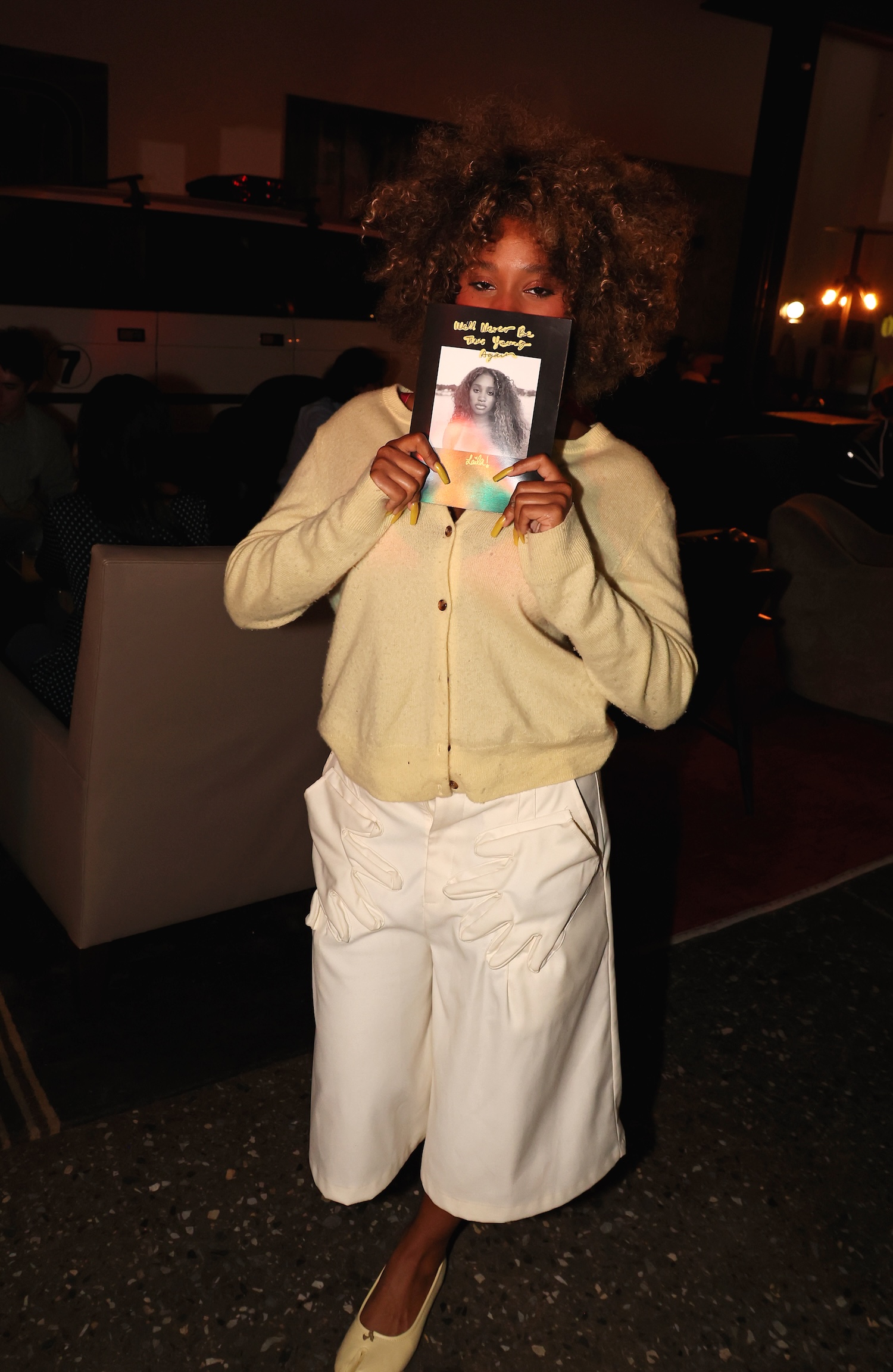
Photo by Johnny Nunez via Getty Images
Yeah, that’s true. When I meet people from New York, I don’t really get that [questioning of where I’m from]. It’s always people that aren’t from the city [who can’t place me as native]. I need people to understand that this is who I am. I don’t know why people would ask me that, but I guess I give a very global vibe?
OK! International Lalia! aura!
But like Brooklyn. Brooklyn first!
Back to that song, “Bitch, I Love You,” I really like how you’re talking your shit at the end of it. There’s a confidence in this album that’s its throughline. Talk about being confident in who you are, putting that in the record, and how that signifies your maturation into womanhood.
Yeah, I think it was really important for me. I am growing up, you know, as an individual. I’m 20 years old now, and I feel like, coming on the scene at 16, it was my first-ever songs, and then gaining traction on the internet at 18. People definitely were able to see me in my teen years just coming up as a teenager on the scene. So now I’m 20; I live on my own now. Like, I’m doing everything on my own. I’m very serious about my career. I take myself seriously, and I want people to see that, understand that. I want to go out and I want to have fun and I want to do this and I want to do that. I’m just stepping into that, and it’s cool because my listeners are growing up with me as well, so they can understand that too. Gaining a certain level of independence where—after touring for the first time, going to all these different countries, falling in love, meeting new people—I’m stepping into my adulthood in a different way, and I want that to be acknowledged and respected, from a woman perspective.
On “Apartment 419,” you say plainly, “Bitch, I’m grown now. And that’s a very important statement with a period at the end of it. It feels like you’re at that nexus of, like, yes, I know I’m young and I’m enjoying it, but also I’m grown and you got to talk to me and engage with me a certain way.
Exactly.
There is a level of depth to the songwriting that speaks to how you’ve grown and it feels like you’ve experienced a lot. Can you tell me about how, like, love, heartbreak, all those things have kind of informed the songwriting? Because those are recurring things throughout the record.
Yeah, I think everything I do is from looking at a lens of, like, my past experiences—and not only my own experiences, but things I’ve had to witness, my loved ones go through. There’s situations that maybe I didn’t understand when I was younger, or don’t even understand now. I just kind of like to collect all of it, like data in a sense. And just kind of pick and pull on the different thoughts and ideas that I want to get off my chest. “Greatest Teacher” is a really big example of that where I’m, like, exploring this tug of war between trying to meet someone where they’re at, this person that you love that’s doing wrong by you. But then at the same time, you feel this intense need to stand up for yourself and it makes you angry, it makes you upset. So it’s about, like, maintaining a certain level of restraint between your feelings and emotions and still trying to maintain grace for the other person. But then at the same time, you’re like, “But, bro, this is messed up. We could fight right now.”
It’s like a lot of raw, real emotions in that. I’m just trying to find a way to wrap it all into a neat bow. And I write a lot of songs about things and situations that people in my life now won’t even know that, like, that was about a certain situation in the past. I just feel like it helps me to not have to harbor all these emotions and feelings for past things that I want to be able to let go of. I think a lot of people can relate to it too, where it’s like, “Bro, I love you. Why are you doing this? Like, why are you acting like that?” You know?
Instead of harboring the feelings you use the music to help process, it seems like. It’s kind of therapeutic to a certain extent.
Yeah, it’s just a medium for me to say it all, and I don’t have to say too much afterwards. I can let it be up to people’s interpretation, which is the best part.
The gift of being an artist is creating art that people can interpret the way they want to. So, all right, let me see if I’m interpreting something correctly. “Anything Could Happen,” the first time I heard it, I said, Oh, this is a cool song, I like this. Then I started listening to it over and over again, and I was like, Oh, this is fly because we all exist in this world that’s so chaotic. There’s so much bullshit going on, but this is like an exhortation. It’s saying, all right, even in the midst of all this, find joy, dance! Be present in your joy. Is that a correct interpretation?
Honestly there’s no correct or incorrect interpretation, I think when it comes to my music, once I make something—which is also the terrifying part—and I put it out, it’s no longer mine. It belongs to the world [at that point] so I can’t really tell someone how it was meant to be interpreted. But I think the way you’re interpreting the song is a great way to look at it. I just wanted to make a song that felt hopeful. And coming from a place of feeling like I wasn’t enough, like I’m not gonna be able to achieve certain things in my life, feeling insecure and scared, I just wanted to write a song about that and give people a message that says you can believe in yourself. And not in a corny ass way! Because I feel like it could be corny to be like, “Just be grateful!” But I just felt like I wanted to make a cool beat that just makes you want to dance and have fun anyway. Because you’ll never be this young again.
This is an absolute fact and an irrefutable truth. In the two years between Gap Year! and this album, what have you done to absorb experience? Were there things you intentionally did to be like, You know what, I really want to inspire myself? What’s life been like for the past couple years?
It’s been so crazy. I feel like I’ve just been all over the place, doing a bunch of random stuff, partying with my friends, hanging out. Just like doing whatever, honestly
It sounds like being 20.
It’s been a really crazy experience, like making friends, losing friends…all this stuff has been character development. I think everything happens when it should, and this album definitely took time to make and put together. I’m just glad that I was able to go out and live my life as, like, the end of my teen years, being 19 and turning 20. Like, it was very necessary for me, and I wouldn’t have been able to make this album if it weren’t for that. I’m just glad that I took that time, because I was able to have a lot of fun and live.
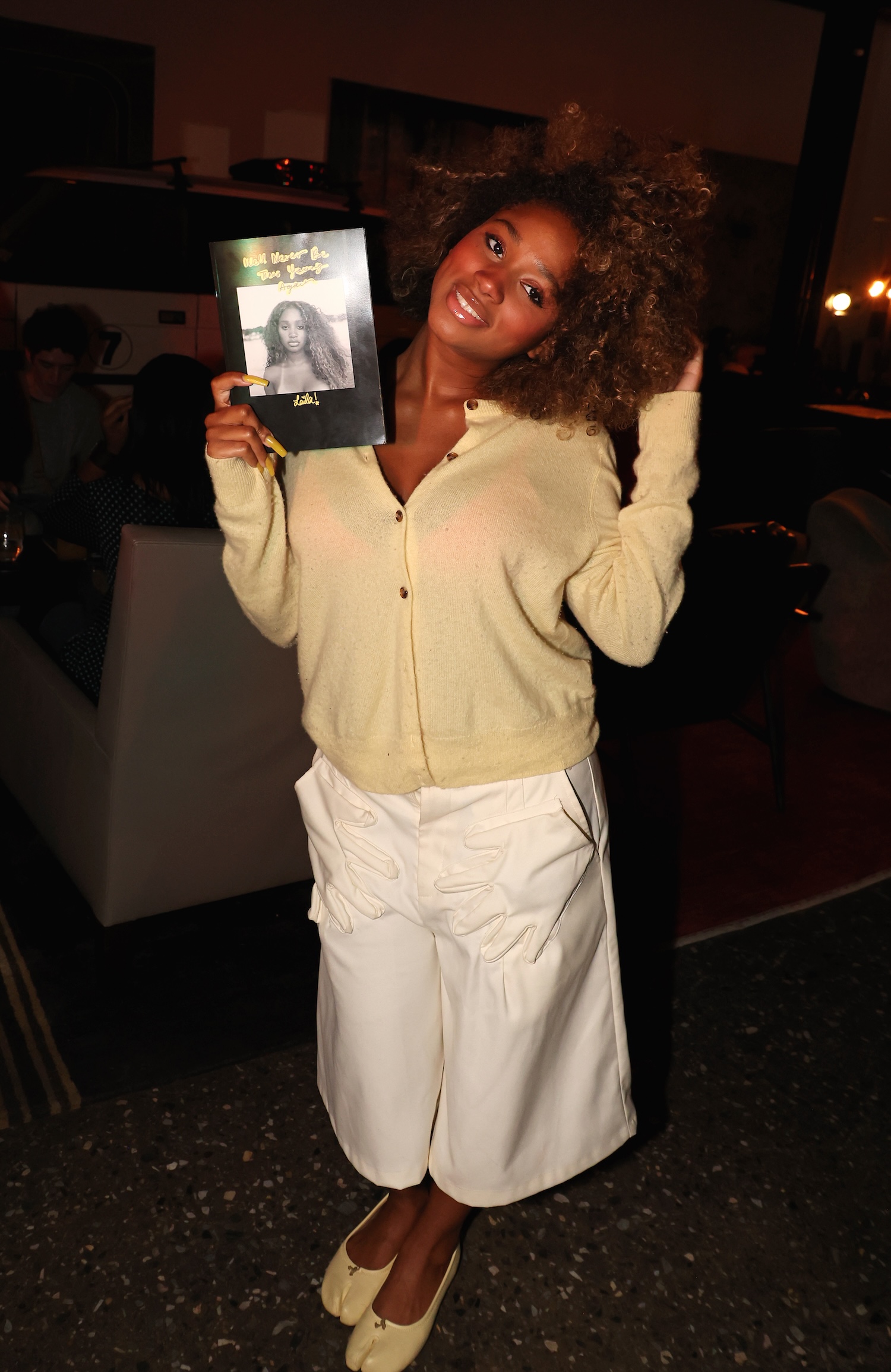
Photo by Johnny Nunez via Getty Images
I want to talk a little bit about inspirations, ’cause I remember listening to the title track and hearing Raphael Saadiq’s voice. I was like, I know this sample. Is this the [Tony Toni Tone] joint from the Poetic Justice soundtrack?
Yeah, how did you know that?!
I listen to a lot of music! [Laughs] I’m a nerd. I’m a Raphael Saadiq nerd. I have a playlist that’s like everything he produced, wrote on, played on, that’s like five hours long.
He’s incredible. Yeah, I’ve always loved that song, and I’ve always wanted to sample it. When I first started making beats in the earlier phases when I was like 15 or 16, I really had this hyper fixation on J Dilla and I really wanted to be like this sample master. And so I remember chopping up that sample, the same sample that’s on that song, like, the same way it’s chopped up. I did that when I was 16 or 15 and it sat on my computer and I never did anything with it. And then when it came to producing for the project, it wasn’t until the very end where I was like, Wait, this could be fire.
And I put these in and then I had this phase like, last year, I think it must have been 18 or 19 still, and I had this super extra hyper fixation on Southern Rap and Project Pat, Juicy J, Three 6 Mafia. I wanted to make some drums like that, and I put it on this other beat. I really like this song “Ghetto Chick.” I just like the drums on that because they were so fly. So I kind of wanted to do something similar to, but not exactly, that. I wanted to do it in my own way. Then I did that, and put those two things together. So these were two beats I had in my computer for at least three years, because that first sample, I was 16, and the second thing I chopped on my computer [when] I must have been 19. But that sample was just chopped up, kind of ready to go in my computer for years before I found a purpose for it.
I can’t believe you did that chop years ago. It’s one of the joints where it doesn’t sound exactly like the original sample; not a straight loop or whatever, but you can hear elements of it. I remember being young and hearing stuff that certain producers would do. Like the Hitmen, for instance, would sample relatively familiar songs, but when you heard the beat, it’d be like, How did the fuck did they do that? How did they make this part stretch? How did they bring this other part to the fore that was in the background? I feel like you really pulled that off with this joint.
Thank you. That makes me really happy because I’m very proud of how that chop came out.
What are your intentions for this album? Like, what statement do you want to make to the world with it, and where do you want to take it? Is a tour coming up?
Tour is definitely coming up, and with everything I do, I want it to be better than the last thing that I’ve done —the best work possible that I could put out. Songwriting-wise, production-wise, like, I’m here to compete with the big dogs in the industry. I want to stand out and I want to do my thing, and I want to produce for other artists, write for other artists, collaborate, and kind of just spread my sound as far as I possibly can, but also use that to inspire the next generation of young producers, young songwriters, young artists—especially female producers. That’s the thing I really want to push forward and highlight: the fact that I am a female producer and I do all these beats myself. It’s a very, very tough job, but it’s also really exciting to be able to do. I just want people to be able to take me and my artistry seriously, and understand I’m here to have a really long career.