Courtesy of 5th Floor Pictures
Location, Location, Location: Paula González-Nasser on Making ‘The Scout’ and Getting It Right
Paula González-Nasser's debut film is loosely based on her own career as a filming locations scout for local movie and TV productions
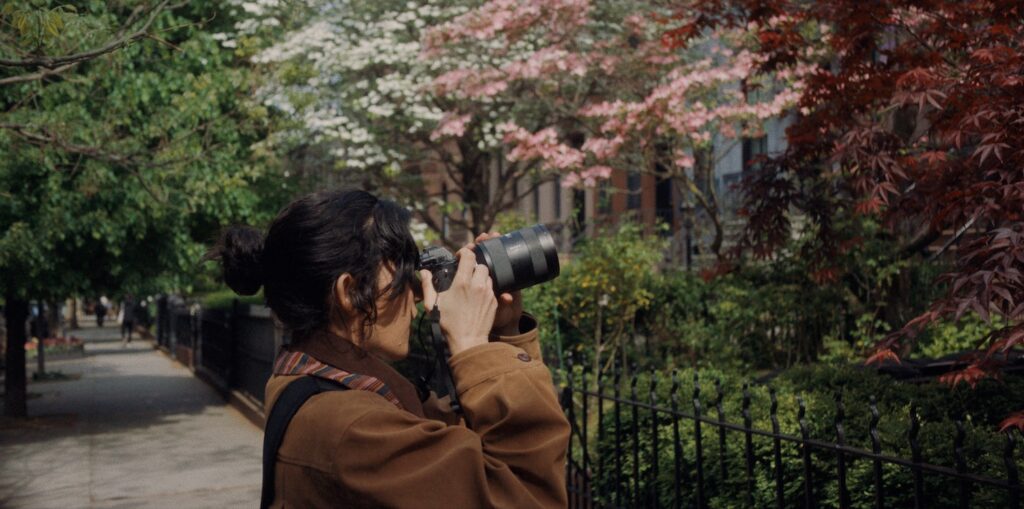
The Scout, like High Maintenance, is about a gig worker who travels around New York City, particularly Brooklyn, stepping into the homes of other New Yorkers for a brief glimpse of their lives, then moving on. The worker in question, Sofia (Mimi Davila), is a location scout tasked with securing domestic interiors for an upcoming TV pilot—work once performed by the film’s writer and director, Paula González-Nasser.
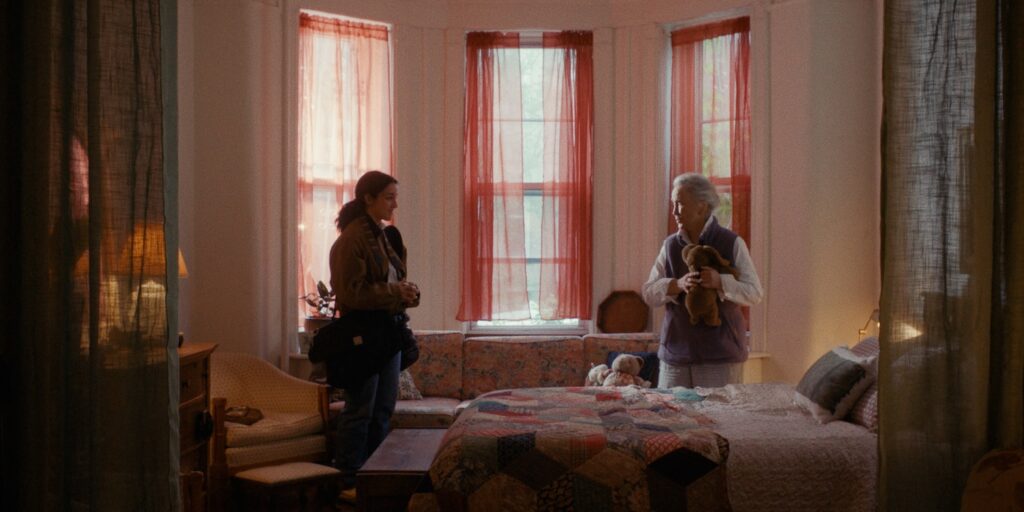
Sofia fliers doors and fields variously curious, miffed, and demanding voicemails; she photographs the homes of a lonely older woman whose children have moved far away, an inappropriately flirty stay-at-home dad, and even an old college friend she hasn’t seen in years. Overscheduled and more evidently desperate than the pilot’s jaded creatives to see the shoot succeed, she soothes egos and makes promises and double-parks all over Crown Heights, stashing each new ticket in her overflowing glove compartment; an earnest portrait of the sweated labor propping up one of the city’s most glamorous industries.
González-Nasser began working on professional sets about a decade ago, after graduating from Florida State, also the alma mater of her partner and The Scout’s producer, Ryan Martin Brown. She produced Brown’s first feature, Free Time, in 2024, and their production collective, 5th Floor Films, has become something of a nexus for New York’s alternative film and comedy scenes.
For her debut, the director scouted the filming locations herself, drawing in part on locations she had previously discovered for other shows, like Search Party and the aforementioned stoner-webseries-turned-HBO-hit, on her resume. Every exterior matches its interiors in the film, except for a Crown Heights bedroom window that opens onto a Gowanus rooftop, over Public Records, and the geography is accurate with one exception we’ll get to below.
“People are excited to do something that they’re passionate about,” she tells me, explaining how The Scout came together across a ten-day shoot, with a cast including legendary New Hollywood character actress Rutanya Alda as well as colleagues met across other projects, and a seven-person crew, all masters in the art of getting in and out of apartments without making much of a mess. She knew from her scouting days that, as long as fire lanes are kept clear and no trucks are parked on the street, a film production doesn’t need a permit to shoot on the sidewalk, and inside a private residence, of course, “you can do whatever.”
How did you get your start?
Paula González-Nasser: I had never been to New York before I moved here. I graduated December 2015, and I looked at where my favorite people in my class were moving. My roommate at the time, who said we could room together in New York, had interned for Broad City and when we moved up, she was already in that world. I set up my room without having a job, and I sold my car in Florida, so I was like, “OK, I have about a month’s worth of money to figure this out.” My parents, I think, fully expected me to come back, because I had never been in snow before. And my roommate goes, “Oh, the unit PA on this job—Difficult People, Season 1—just quit.” Do you want to do it?” And I was like, “Yeah! I don’t know what that is, but, sure, I’m sure I can do it.”
I had no idea that it was part of the locations department, and that it’s the person who basically cleans the toilets and sets up everything. So I was like, “Yeah, I mean, I know how to clean. I can clean.”
And it was 15-16-hour days, back when locations didn’t have a union. So there was no regulation; you were on a flat rate driving a Sprinter van around New York City, which I did not know how to do. It was really hard. But that location manager kept bringing me on, and then eventually asked me, “Hey, I see you take photos.” I would take little videos or photos of the set, and he’s like, “Do you want to just shadow our scout for, like, two weeks?”
My mentor at the time showed me the ropes, and I just fell in love with his lifestyle. I was like, “He’s like a nomad. Every day is different. He’s going through the city, he’s got, like, those cargo pants, the big backpack.” That’s so cool. I wanna do that.” And so I started doing it. Summer of 2016. My first credit was on Younger, the last season of Younger. I think. Unless it kept going.
The way that you talk about it now, it’s interesting; you’re quite…
Positive?
Yeah. Because the movie is…
Negative?
Well, not negative, but it captures a fairly universal New York millennial experience of being in your 20s, working for poverty wages, the quarter-life malaise creeping in because you’re entry-level in a creative career that was supposed to define you, but it seems to be mostly menial work. It’s about how melancholy it is to be paying your dues.
It’s interesting hearing myself talk about the beginning. I guess it’s important to understand how one gets to that point. Because the beginning was so fabulous and alluring. I’m getting paid to do what, back then, my friends and I would just do out of pocket, and now, you’re getting a real credit on a show people actually watch. Like, people actually watch Broad City. You move to New York with no money, and any job feels awesome. When you get that first paycheck, it’s dopamine. And you get sucked into the machine of, “Well, I’ll just do one more job, but let’s not forget the vision, why I came here.” And “one more job” turns into five more jobs, turns into five years. And then you find yourself in Sofia’s shoes, where you’re like, “Wait a second, I have not stopped to even process… Is this what I want to be doing? Am I happy? Are there any other options?”
Courtesy of 5th Floor Films
As you’re saying this, the coffee shop is playing millennial anthem “You Get What You Give,” and the guy from New Radicals is singing, “Wake up, kids/We’ve got the dreamer’s disease,” which is very good advice for PAs working 16-hour days. In The Scout, Sofia takes a lot of this on herself. There’s nobody telling her, at least within the film, “You have to work 16-hour days. You have to blow off your friends.” She just knows that that’s what’s expected of her.
It becomes self-sabotage after a certain point, where [exploitation] gets to be the norm.
When you were scouting, what kind of briefs did you get?
I’ll say, there is a big distinction in the way that scouting for TV versus scouting for a film has worked, at least in my experience. With a film, you have so much time, in the prep leading up to the shoot, to find everything. Whereas on a TV show, you usually shoot in block shooting. You’re given the scripts like three weeks before you’re supposed to be on set. The time crunch is crazy on a TV show versus a movie. On a TV show, usually there’s a prep week for the next episode, and so while the main unit is shooting, you’re going off with the next episode’s director and getting all the locations.
Coincidentally, I recently interviewed your old boss, locations manager Julie Sage, who told me that High Maintenance were the biggest sticklers for geographic accuracy. Like, if you brought them a coffee shop in Bed-Stuy or Crown Heights, they would say, “No, in the script, he’s in Williamsburg that day.” Did you know the city well when you started doing this job?
Not when I started. By the time I got to High Maintenance, thankfully, yes. I think I had been here already five years. Most New Yorkers would say that’s not enough time, but at the very least I knew Brooklyn very, very well.
I love that they were such sticklers, because I am too when I watch something. Like, when you see a shot of the Verrazano Bridge, and then suddenly they’re in Queens, you’re like, “This was not made for New Yorkers, this was made for other people looking at New York through a certain lens.”
When The Scout screened at Tribeca, there was a piece in the Times in which you alluded to finding a lot of dead birds in a home you were scouting? I’m picturing Janet Leigh meeting Anthony Perkins among all the taxidermied birds at the Bates Motel.
It’s actually not a fun story, but it did inspire, a little bit, the software developer scene in The Scout, where this guy takes Sofia downstairs. And it’s only then that she realizes, “Oh, I’m, like, fully alone with this person.”
I got a call from someone whose door I had left a flyer on, and they had a very abrasive tone to their voice. They’re like, “You left this flyer; you’re wasting my time, come see my house. And I was just intrigued by how aggressive this voicemail was. So I was like, “I’m going to go check it out.” Should have known from the voicemail, red flag. But I get there, and it’s this man who’s super nice in person.
We go inside, and it immediately becomes clear to me that this man is not doing well. He’s a hoarder. And all of a sudden I see so many cats running around this place. I’m talking dozens of cats. The smell is horrendous; also, you can tell that these cats are not being taken care of. For whatever reason, I don’t decide to leave right then and there, because I’m like, I have to get at least one appointment in today to show the team something.
Back in the day, I don’t think I even shared my location with anyone. That’s the thing about scouting: Unless you’re on the phone with your location manager and telling them exactly where you’re going, no one knows where you are. You’re just roaming around all day. So nobody knew where I was. And this guy is really keeping me there, for over an hour. He’s showing me all the different rooms, but he’s standing in the doorway to all the rooms, so I can’t just leave. And then the last room he shows me, he’s like, “Check this out.” He opens the closet, and there’s dozens of dead birds in there.
I don’t know if he killed them himself or if he… I have no idea. And that’s when I snapped back into, “I have to get out of here.” And, very politely, started worming my way out. I don’t think he meant harm, but it was just not a place where I should have been.
That is more than sufficient for the “Tell me an anecdote from your scouting days” portion of the interview. I like all the beards in the production team of the show within the film. When you were casting, were you looking for types that you remembered from different aspects of production?
My favorite part of casting the production team was doing these mood boards with Ale (Alexandra Anez, our production designer), who also did the costumes. We pulled photos of the type of gear that these guys have, the Carhartt, the overalls and the beanie that doesn’t even cover the ears. It was so fun to remember people from different sets that I’ve been on.
Jesse Ruuttila knew exactly the kind of DP that I was trying to portray. Apathetic, not even present. And Jesse’s also a DP, so he brought his own light meter—he had the hat and cargo pants and all that. For the director, I was like, it’d be awesome if he’s not even American; he just came over, and this TV pilot [that Sofia is busting her ass over] is just a stop along the way in his career.
Courtesy of 5th Floor Films
Did you scout for your script or write for your scout?
I wrote for my scout.
Or, 50-50. I wrote 50% of the script. And then I said, “Before I do any more, let’s go out and scout.” That informed my sense of what was possible, what was realistically affordable, and what was creatively not going to shoot us in the foot.
It was very liberating to do that; I’m so used to doing it the other way around, where they’re asking you to find something that doesn’t exist, and you’re trying to move mountains, trying to find that thing. Whereas The Scout was like, “Why don’t we just find this other thing, and then tailor the original thing to that new thing?” It was cathartic.
In New York in general, we’re so curious about other people’s apartments—in part because money is a great mystery in New York. You can’t really know, looking at a building from the outside, whether the same family has been living there for multiple generations and have plastic on all the furniture, or if it’s a clammy modernist gut reno. As a scout, and on this movie, you must have to do a quick net worth assessment in your head.
You can’t know what’s inside. You can get a sense depending on the neighborhood, but things have changed so much, even in the last 10 years. You think, “Oh, I can find more old-world homes the farther south I go into Brooklyn.” But even there, there’s gut renovations and brand new McMansions, and you wouldn’t even be able to tell from the outside. So you have to blindly put flyers everywhere and wait to get a call.
Often, in the moment, you have to assess: “Do I tell them immediately their place isn’t right for this? Do I do the scout anyway and tell them we’ll let them know?” Sometimes you’re shooting next week and you need to find something, so on the phone call I’m like, “Tell me right now, what kind of furniture do you have?”
How rigid were the socioeconomics in the Scout script? Did you know you needed a rich guy and an old family house, or were you flexible?
I had to be flexible, because authenticity on screen costs a lot of time and money. But I didn’t want to show a reductive side of New York. I wish I had had three more months to scout because I would have liked to build out the characters a little more, to show the socioeconomic disparities among New Yorkers. But we got really lucky—we were flexible, and some things didn’t work out, but for the most part, we got everything we wanted. And I think all the locations do match the characters and where they’re supposed to live.
You said you notice geography when you’re watching something, that as a viewer you’re sort of a stickler. How much of a stickler were you about Sofia’s itinerary when you were making this?
Such a stickler. It was kind of annoying for the rest of the team. It’s a thing I can’t help. A movie about location scouting, it would be a shame, one, if the locations were bad; two, if it was geographically inaccurate. And then, three, it wasn’t actually that hard to keep track of it. The only thing we cheated is the exteriors of her running from her car [in Hell’s Kitchen] to the fish store [actually in South Brooklyn]. That really kept me up at night. People are going to know!
Courtesy of 5th Floor Films
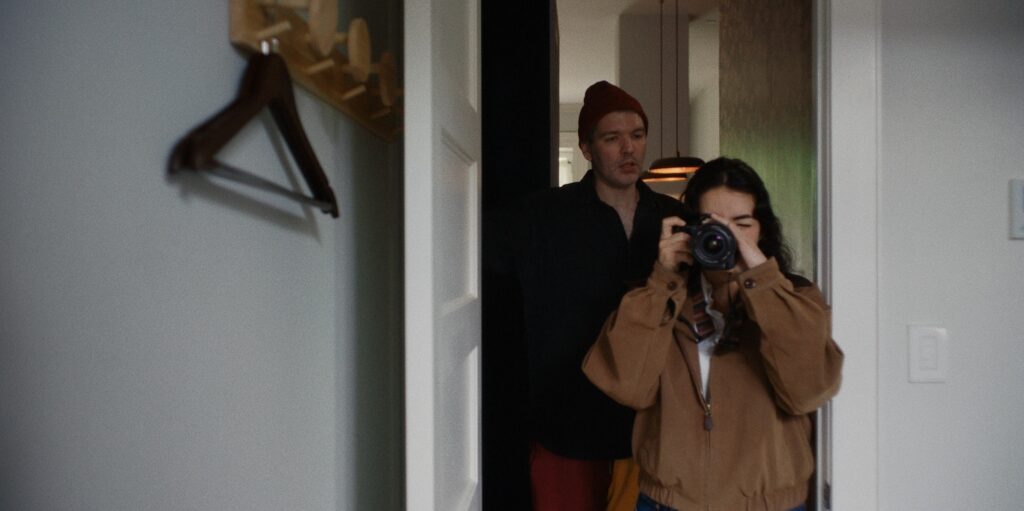
The visual style of the film, the fixed camera often filming Sofia through doorways—in interior locations you’ll rarely see the whole layout of the house, because they’ve redesigned one room to make it look like another room, or they’re cobbling together a single home from multiple locations.
It’s funny that you bring up the hallway shots, because so many of my scout photos were hallway shots connecting to other rooms. It felt so cinematic to me when I was shooting those rooms, and that just kind of subconsciously made its way into the movie. Nicola, our DP, didn’t live in New York, so I was worried. Thankfully she came a few weeks before we shot and went everywhere with me. The shorts she had shot before have that same visual language of letting the space breathe. She looked at a lot of my scout files as visual references.
The other department head who always has to come on tech scouts is the production designer. How much did you do to your locations?
I really do feel bad because we basically told [Anez], “So, listen, I’m going to scout places that are 90% of the way there. We won’t have prep and wrap time; we’ll just have the time while we’re setting up camera for you to do your thing.” She had whatever could fit in two bags worth of stuff to utilize to change the space. It was kind of nice to work with those constraints.
A lot of the work of hers was in prep, looking at photos. Sometimes I found places that I liked a lot. And she would be like, “We’d have to do a lot of work to get it all the way there.” She was very involved in those creative discussions—in my other work as a scout, you don’t get that kind of collaboration. Rarely does a designer weigh in in that way so early on. So it was therapeutic for me.
I remember interviewing an actress who told me she would never let a movie shoot in her house, that movies trash your house. What motivates people to let you into their homes?
I think it’s a combination of multiple things. One is a fantasy that you are partly contributing to an art project, something bigger than yourself. Two, it’s really cool, this idea of seeing your space on screen. Three, I think people do think, “I’m going to have some sort of interaction with the stars,” and, “maybe my kid can be in the movie.” But it’s a delusional thought, for sure.
And even people who know what it entails forget—it happened to me. Sofia’s apartment in the movie, that’s mine in real life. And I almost had a panic attack on the day when I saw all the things in my apartment moved around. Before, I was like, “Right, this is what I asked people to do, and now I’m doing it to myself and it sucks.”
Until people see it in practice, they don’t realize that it’s not glamorous at all. It’s destructive. And your house doesn’t even look like your house on screen. So it’s not even going to fulfill that fantasy.
And productions come and go as quickly as possible, so you don’t have time to talk to the talent. They’re definitely keeping the talent away from you. I don’t know why people do it. I sometimes find myself trying to convince people not to do it, even though it’s my job to get them to do it.