Courtesy of Mobius & Laurence King Publishing
Ashley Clark Brings ‘The World of Black Film’ to BAM
The British author and film programmer outlines a unified theory on curious, thoughtful, and intentional curation
Ashley Clark, the London-born, Jersey City-based critic, historian, film programmer, curatorial director of the Criterion Collection, and author, is bringing an 8-film series “back home” to the Brooklyn Academy of Music this weekend, with a project that reflects the work of his life and career.
He has put together a representative sampling of the 100 movies covered in his incredible new book The World of Black Film. The book is an impossible exercise Clark tackles admirably: Representing 111 years of global Black filmmaking in a handsome Laurence King printing that works as a performative coffee table stack, but is larded with intellectual rigor and homework and a breadth on every page that immediately places the work in an academic Black film canon.
Clark’s work in his discipline goes back, he estimates, 15 years to when he programmed his first movie, Spike Lee’s Do The Right Thing, at Clapham Picturehouse in South London, where Clark worked at the time, tearing tickets and serving popcorn. He stood in the back of the theater at the first screening he put on, watched the audience relax into the first 20-odd, warm and familial minutes of what begins as an ostensible comedy, then tense up as the film flew towards its emotional climax. By the time the credits rolled, a curator was born.
Within four years, Clark was programming series for some of the best-regarded cinephile haunts from London to Toronto to New York, and went from programming part-time at BAM to full-time within two years, before making his move to Criterion, the Harvard of film curation, in the 2020s.
There is a sense that Clark’s ascent has been perfectly timed to this moment in film and the latent recognition of entire lost histories of Black film, from the Caribbean to Africa to right here in the American independent scene. Clark has been at the forefront of reviving films—a few years old, decades old, or an entire century old—that have been coronated on Letterboxd and in film nerd discourse as classics, made by masters who have finally gotten their flowers.
His work on Spike’s Bamboozled, a 2000’s masterpiece satire of the historical mistreatment of Black American entertainment, is case in point. In 2020, the out-of-circulation film was added to the collection with a 2K restoration and an essay from Clark. Facing Blackness, a brilliant work exploring that film and providing necessary context, was published in 2022 through Jacob Perlin’s great Film Desk, an organization dedicated to the project of recovering and appreciating film through many mediums.
Through thoughtful, curious, and careful curation, Clark is pushing the film world to wake up and see there are Black masterworks deserving of the same reappraisal all around us; we need only to open our eyes to them.
Brooklyn Magazine reached out to discuss Ashley’s career, his new book, and his great series at BAM this weekend.
(This interview has been edited and condensed to make me sound like less of an asshole.)
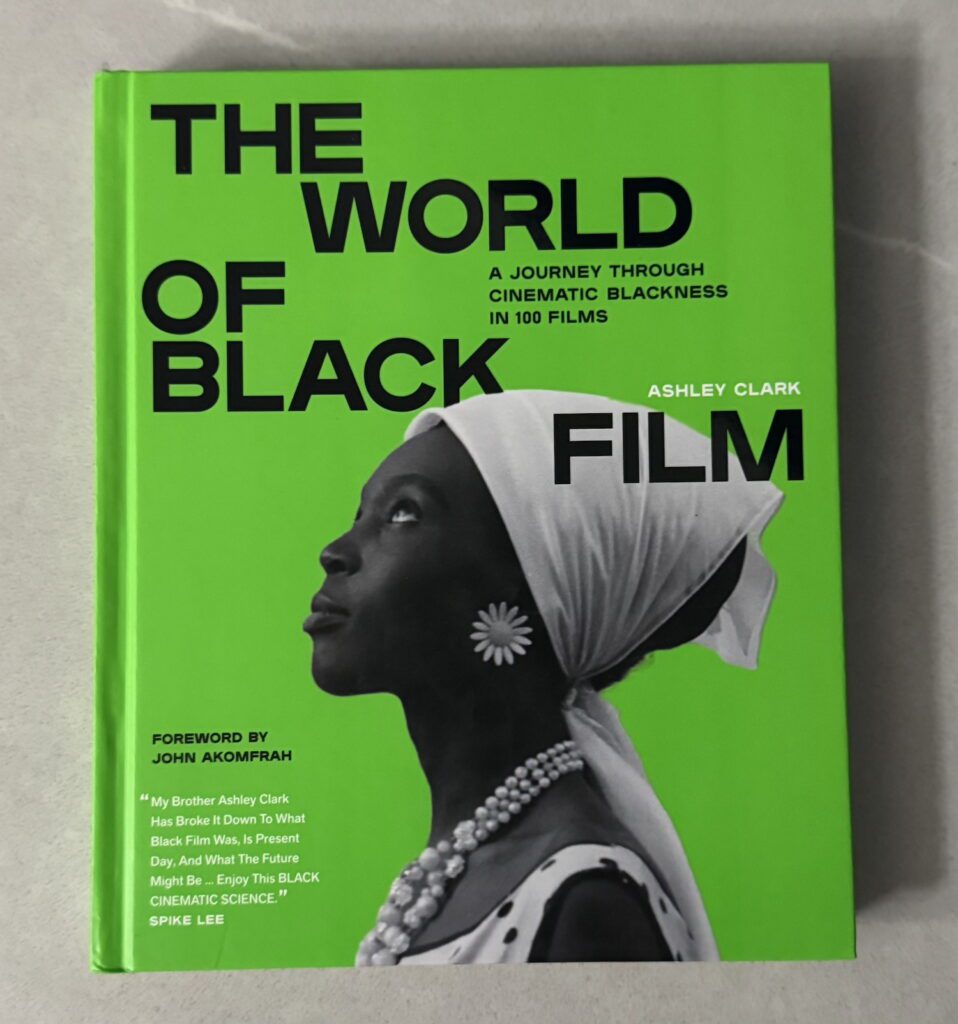
Photo by Abe Beame
I am a chronic overwriter, and while I was reading the book, I thought it must have been so hard to stop at a single page for each of these movie entries, which all deserve their own books. Is that something you struggled with?
It was a real jigsaw puzzle, knowing that I had a certain amount of space, working very closely with the designer. It was really, ultimately, a question of discipline and figuring out what it was that I was trying to say before launching in. It wasn’t exactly the most flowing process, but it was one that required a lot of discipline and thinking.
Did you come up with any particular strategies or aspects that you wanted to emphasize with the limited space that you had?
It was all in service of the wider picture. And one of the first decisions I made was to withdraw the synopsis of the films’ plots from the main text. To give you an example, when I was writing about Tyler Perry’s Madea Goes to Jail, that initially began as much more engaged with the text of the film, and it was much more of a critical piece. But then, as I sat with it and zoomed out, I realized that there were ways to connect it to the rest of the book organically, to take us back to race movies, to connect it with the things that Gordon Parks said about Shaft. Whether you like his movies or not, he is really attracting and specifically working towards an audience that has been ignored by Hollywood. So that was another one of those through lines that ran through the book. I was constantly trying to connect the dots as I went along.
To the question of representation and trying to balance the book, 1972 is the best-represented year because there are five entries. Do you think that’s a particularly significant year? Was it just kind of a coincidence?
Not especially, but that was a moment where a lot of currents were coming together, politically, socially, internationally, industrially. You’re looking at a big wave of African decolonization movements in the late 1960s and early 70s, and African filmmakers really stepping behind the camera for the first time.
1969 was The Learning Tree, it was at that late date that Hollywood finally trusted a Black filmmaker to step behind the camera. So you’re getting more and more black filmmakers in America engaged and active at that moment. It wasn’t specifically that I’m looking at years and saying, “I need to make sure I’ve got X amount from that year.” There are moments in history where there are these groundswells.
So this is a very dumb, broad question, but I also think it’s a very personal question that every programmer I’ve ever talked to has a different answer to. How do you approach film curation, and what are you looking to achieve in your curating?
There’s a few different answers to this. One of them is serving the artist and helping to contextualize and present an artist’s work in a way that is respectful to the artist and beneficial to them. And I think when we’re talking about whether it’s Black film or queer film or films by underrepresented groups and intersections thereof, there is more responsibility on the curator or the programmer to contextualize work in a thoughtful way.
And then there’s a question of access. I feel extremely fortunate and privileged to have a platform to be able to share. In my work at BAM, and now at Criterion, a big part of my job is presenting perhaps underseen, underrecognized work with wider audiences. And that brings me a lot of professional satisfaction. For example, the case of Compensation by Zeinabu irene Davis, which I write about in the book, is a wonderful film from 1999, which wasn’t necessarily lost because the distributor had kept it in circulation, but wasn’t really getting booked. It wasn’t getting written about. And I really played a part in helping that film get restored and seen. And now you look at the reviews on Letterboxd, for example. There are hundreds of presumably quite young people engaging with this film and getting really passionate about it and seeing things that reflect their own lives in a film that was made, you know, 25-30 years ago. All of those things together are what inspire me as a programmer.

Photo by Roy Rochlin via Getty Images
Because this is for Brooklyn Magazine, what are some qualities that helped you come to that definition of curation that you got from BAM, from programming for Brooklyn audiences?
I love Brooklyn audiences. I was at BAM from 2017 to 2020 full-time. And before that, I’d started doing programs with BAM as far back as, I think, 2015. And I remember feeling the energy in the room, the way that people would engage and converse with the art of film. It was really exciting. The crowds were always interested in trying out new things. They’re smart audiences that want to be challenged. I always dig speaking to them and presenting work at BAM.
For this weekend series, I thought I could see an overt theme of community and resistance against powers greater than yourself. But I started wondering if I was projecting, and maybe that’s just a byproduct of all Black film under the strictures of Colonialism, Imperialism, Capitalism, whatever ism you want to ascribe to Black oppression.
I think it’s more reflective of the themes that are driving the book rather than a specific curatorial framework to this particular series. But by all means, print the legend. (Laughs)
It is also absolutely present in a lot of these films, the collectivism and sacrifice needed to rebel and assert yourself in a society that is hellbent on oppressing you. It’s explicit in the text of Sambizanga (Author’s Note: A first-time watch for me and an absolute banger). There’s collectivity coursing through Set It Off. If you look at the films I’ve picked for the book, there is something connecting a lot of them, which is that sense of films that are explicitly political, explicitly rebellious. They are passion projects by filmmakers making “A way out of no way,” scrapping together budgets any which way they can.
It’s also there in the production of these films. The independent hustling that characterizes the making of Daughters of the Dust and The Watermelon Woman. And even a big studio film like Malcolm X, which, if it wasn’t for Prince, Michael Jordan, Magic Johnson, Tracy Chapman, etc. etc. That film would never have been finished. They literally contributed the final funds because the bond company that was keeping the film afloat in post-production collapsed. That might not be your most immediate recourse when you’re thinking of Black collective action, a bunch of famous millionaires, but they really did help Malcolm X become a reality.
To your point about community both in front of and behind the camera, Sir John’s forward in your book helped me make that same connection. He really drives that point home, that it’s not just a question of community in the films, but in the production of them. Both he and you explain that there’s a global network of filmmakers and producers and writers and actors that have all banded together and chipped in to make this living history happen.
Absolutely, and John’s forward was beautiful. I asked him, having been a fan of his work for a long time—having felt that as somebody who came to the UK from Ghana, has worked in this space, with work that investigates a diasporic experience—he felt like the perfect person to be able to tie the themes of the book together. And I think it does take the book to another level, you know, to have that endorsement and engagement from someone who has lived through a lot of the work that I write about and who knows these filmmakers. And it clearly triggered an emotional response from him. That was very moving to me.
One of my favorite directors The Criterion Channel has exposed me to over the years is Ousmane Sembéne, who you feature on the cover of your book, and are showing two films from in this series. There are so many apparently great films of his that are not on Criterion. From someone who gets the pragmatic, nitty-gritty rights issues, could you explain, using Sembéne as an example, what are the reasons why the platform doesn’t have a complete filmography of a legendary filmmaker like him?
It’s a tough question. These things are always a mixture of materials, availability, and quality. Where are they and what state are they in? And can they be restored? Chain of title, finding out who owns the rights and in which territory. It’s a process of research and negotiation, and it’s often quite an involved, particular, and difficult job.
In the case of Sembéne, I’m happy to say that a number of his films have been made available in recent years: Ceddo, Mandabi, Black Girl, Emitaï, Xala, and hopefully there’ll be more to come. Camp de Thiaroye was recently restored and has screened at festivals. That’s one that we hope will be coming back into circulation more. But, it’s so hard to speak with any specificity and certainty because, even on a per-film basis, there are unique, unexpected challenges.
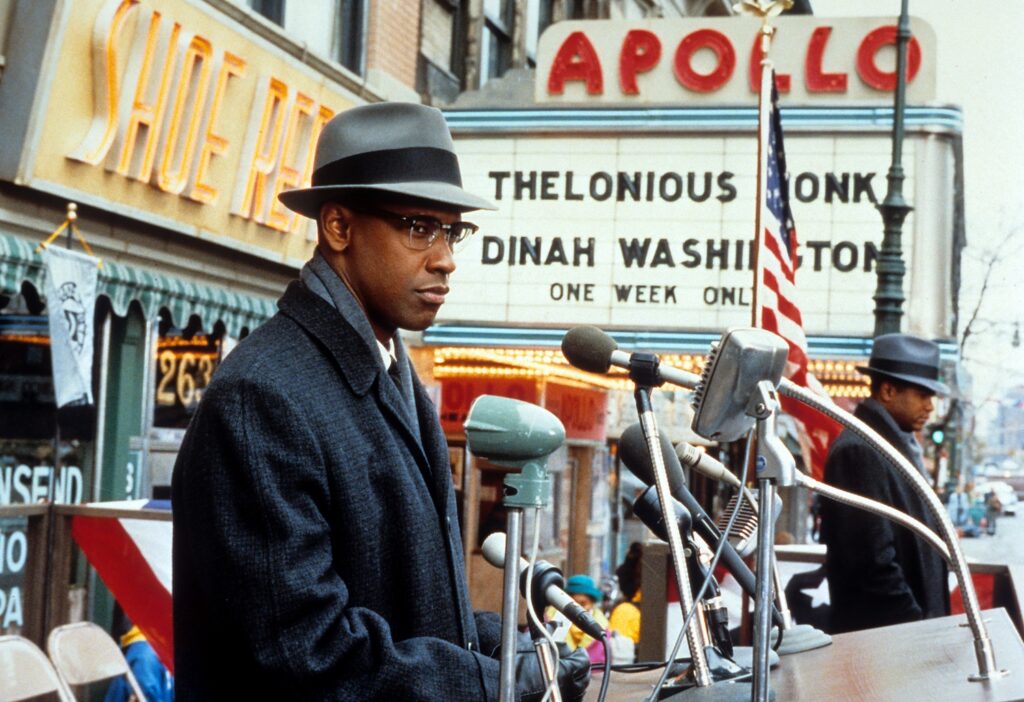
Photo by Largo International NV via Getty Images
This is a sort of random and reductive question, but since I have you, I want to nerd out a little bit.
Let’s do it.
For fun, I watched Malcolm X again, maybe for the 15th time, before we talked. And I’m sure you must be very, very close to Do The Right Thing, as it’s the first movie that you ever programmed, and as a Spike Lee scholar. But I was watching, and I thought, Man, is there a chance that this is actually his best movie? Not exactly a question but… let’s hash it out.
I mean, my sense of what Spike Lee’s best movie is changes constantly. I watched Mo Betta Blues recently, and I remember watching it a long time ago and thinking, That was pretty good. But now that I’m older, now that I have a little kid and my responsibilities are different, I was in bits by the end of it.
And I was like, maybe Blues is his defining artistic statement. There’s an aspect of the passage of time, rendering so much of this earlier work dreamlike, because the thing that Spike had when he was making Jungle Fever or Crooklyn, he was basically getting studio-level budgets to put the contents of his brain on the screen at an unbelievably high level of craft. And I find that so moving. That’s not coming back.
So yeah, that’s the long answer. The short answer is yes, on any given day, Malcolm X could be his best film. It has a ridiculous epic sweep to it and a verve, and he’s working with these top-level collaborators, and it just moves like a dream, and it just feels like a bullet from a lost world of studio filmmaking.
I became a fan of yours because we both love Bamboozled. I immediately placed it somewhere in my top five Spike films when I saw it in the theater in 2000, and I think it’s certainly his best, most prophetic late film. But even now, post critical reevaluation and re-release, I think it’s wildly slept on by a certain stripe of critic and Spike fan who prefer Spike’s—even late Spike’s—more conventional shit. So why can’t it get the recognition that we think is so apparent and obvious at this point?
Because I think it remains a film that’s easier to turn away from than truly grapple with in its provocations. I think there’ve been so many really good movies that have dealt with race and the history of racism in America, but they’ve approached them as period pieces, or a sort of vantage point, which allows you some space.
But Bamboozled is so in your face 100% of the time. Given where the culture has lurched, the outrages and madness with this current administration and the media landscape, some of it feels almost tame, which is a frightening thing to say. But at the same time, I genuinely hold to the belief that the film would have done even worse if it had come out when Obama was president, because there was a whole lot of talk about “The Post-Racial America.” And I think a lot of people really want to hold onto the idea that we’re better than this. “This isn’t us, Bamboozled is far-fetched,” et cetera. I just think it’s too spiky—no pun intended—a text for a lot of people to truly sit with. But it doesn’t surprise me that it’s a film that people are happy to turn away from.
What really makes your book special is that I was watching Sambizanga, and I was really getting Battle for Algiers vibes, and then I read about it in the book and discovered that’s because Sarah Maldoror actually worked on Battle for Algiers. Then I was re-watching Daughters of the Dust, and the credits were rolling, and there’s a card for “Kerry Marshall” as production designer. Then in the book, sure enough, it was actually Kerry James Marshall. Blew my mind, but I was wondering if there were any other really big surprises or connections you found in research?
It’s incredible. That was one of the most moving and exciting aspects of writing the book. Some of these connections I was aware of, other ones I learned about, and as I was going and finding out that filmmakers knew each other and had worked on each other’s films, in line with the forward by Sir John, it gives you a sense of the family situation happening here across the diaspora and a lot of mutual support, mutual aid collaboration, which hopefully comes through as you continue to read the book.
There is one lovely connection that I found while writing the book that was a surprise to me. There’s an Ivorian film called The Woman with the Knife from 1969. And a very early scene features a song called “Welcome” by John Coltrane, which is a very beautiful song. And I was writing about another film from 1973 called Soul in the Eye, a Brazilian film that is soundtracked to “Kulu Sé Mama”, which comes from the same album. So you have these films separated by four years, one made in the Ivory Coast, one made in Brazil, both using songs from this one John Coltrane album. And it was just one of those moments where I was like, you have this American John Coltrane, the Ivorian, Timité Bassori, and the Brazilian, Zózimo Bulbul. I don’t know if they ever met, but they’re all speaking to each other across the diaspora in this very spiritual way. Not to get all New Agey-
No, it’s beautiful.
Thanks. It felt like, yeah, okay, I’m onto something here.