Sound Experimentations: Our Chat With Vorhees
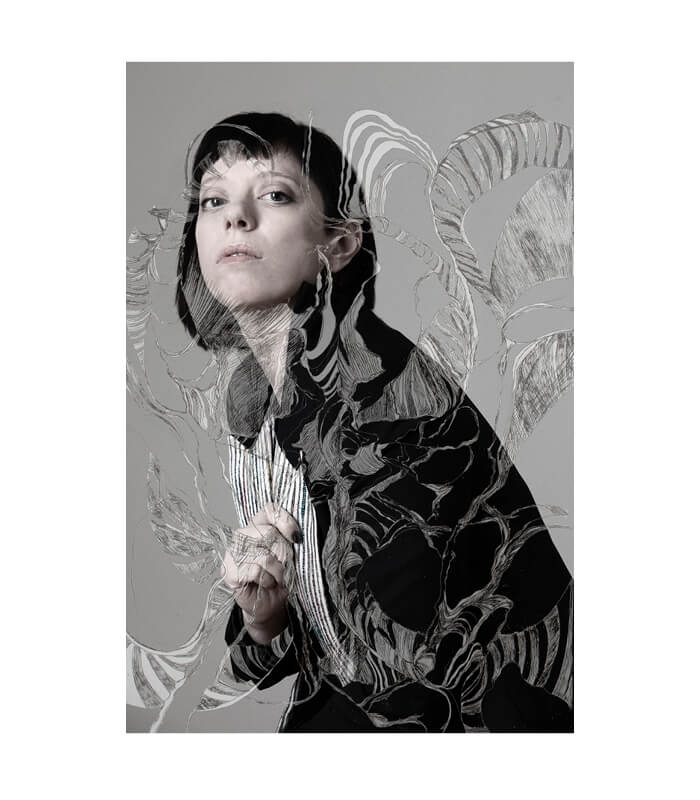
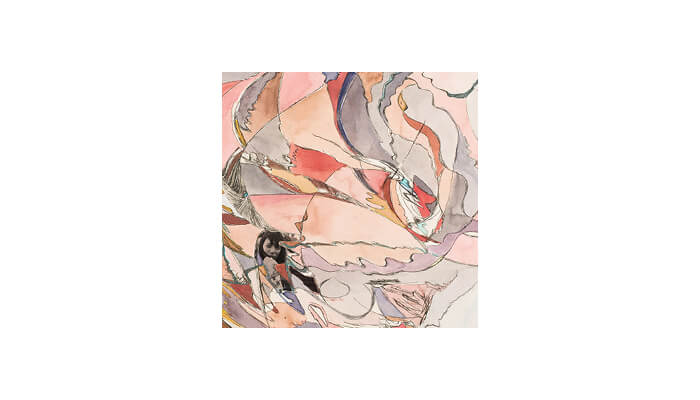 Dana Wachs has a panoramic perspective, coming to music from every possible angle. Starting cello at just nine years old (of her own volition) and taking rigorous lessons from acclaimed member of the Philadelphia Orchestra. Trading in her cello for a bass guitar when she stumbled upon Herbie Hancock’s Rock school on PBS. Joining the Dischord band the Holy Rollers, and picking up sound engineering on the road. Cultivating her engineering skills at the Black Cat in DC and over the course of 20 years touring all over the globe with brilliant musicians like St. Vincent and Deerhunter. At last, she shares her musical voice on the EP Black Horse Pike, out February 24th on Styles Upon Styles.
The album is an experimental five-song meditation on memories and sound. She plays Brooklyn at Union Pool on February 25th with I.U.D., and Faten Kanaan. I talked with her about how she arrived at this album, and what is has like growing up in rural New Jersey.
You were first on a Dischord band. How did you start playing with the Holy Rollers?
They were playing at CBGB’s, and the singer mentioned that their bass player was quitting, and I said “Well, i play bass.” My boyfriend at the time said “you know, they want a real bass player. They want a professional.” So I said I’m going to learn these songs and prove him wrong, and then I got the job. Anytime someone tells me I can’t do something I’m going to do it. I don’t like being underestimated, I guess. I like a challenge.
I had to learn them just by listening to the music, there was no sheet music. It helped me fine tune my ear. It was a great experience, I learned a lot about bass playing. I moved to D.C. and within two weeks I was on my first tour, I was 19. When you are 19 it’s the most exciting thing in the world to share one Motel6 room with four other people and travel and see cities you’ve never been to.
So how were you introduced to doing sound?
Halfway through the tour we joined up with 7 Year Bitch. I’d heard about, and was intimidated by, but they completely took me under their wing. They were so amazing to me. Their sound person, Lisa Fey, taught me how to do sound. She started teaching me the basics of doing sound on that tour. It was a lot to take in at once, but it was completely invigorating. That was the beginning of my education about everything I use today.
I would loiter by the sound booth and ask her what everything was. As a musician on stage, I didn’t know how to ask. Sound people have a horrible reputation for a reason—a lot of them can be pretty bitter and just above it all. I considered it a tool so I could get what I needed on stage. Lisa taught me how to use it creatively.
So you’ve been doing live sound since then?
Pretty much. I got back from that tour, and I started working at this club in dc called the black cat. The sound guy there at the time, Nick, ended up being Fugazi’s sound engineer. I’d come in during the day and play with the PA as long as I let the beer guys in to drop off the kegs. So I would just sit on stage and make things feedback, and train my ear.
My first job doing sound at the Black Cat, I was doing monitors on stage for Desmond Decker.