Photos Courtesy of Christy Joseph
We’re Here: How Christy Joseph Captured The Pride, Strength, and Pain of The Haitian Diaspora
In her documentary debut, the Brooklyn-based filmmaker reminds the world of Haiti's beauty and resilience
When it comes to Haiti and its people, there isn’t quite a word to describe the sacrifices they’ve made. The Haitian diaspora, which stretches across the Americas and Europe, is one of the Caribbean’s most widespread, and they have continued to build on the legacy of independence it declared over 200 years ago. The pain and joy of being the first Black republic has a lasting effect on its people. Coming to America for something different, despite the humiliation rituals and othering that come at the expense of immigrants, is no small feat.
Christy Joseph, the director of the recently debuted documentary We’re Here, describes this as a crucial component of the Haitian Spirit. “Wherever we go, we will continue to find life; we will continue to work, we will continue to be a positive force in the world,” she tells me. Yet, even on the biggest stages, Haitian identity is still too often asked to soften itself to fit what others find acceptable. But the drive for freedom runs deep in us, and that freedom is both at the heart of being Haitian and the director’s new film.
Courtesy of Christy Joseph
Joseph began her relationship with cinema at seven-years-old. She recalls a memory of visiting Cine Imperial with her father in Port-au-Prince to see Sacha Parisot’s La Rebelle. The theater would later close, and while Haiti has not had a consistent cinema infrastructure since the 2010 earthquake—even with efforts like the reopening of Ciné Triomphe in Port-au-Prince and Complexe Versailles in Cap-Haïtien—pop-up screenings and smaller projection spaces continue to sustain film culture.
The instability of Haiti’s film infrastructure and the limited global distribution of Haitian-made films were motivations for the young filmmaker. “The lack of representation of Haitian cinema and Creole, in general, was extremely important.” Beyond her project, she hopes to “continue championing Haitian films,” even imagining a Haitian cinema week dedicated to digitizing and preserving older works. “We need to cultivate a new generation of amazing storytellers,” she says, hoping to be part of that new wave.
Courtesy of Christy Joseph
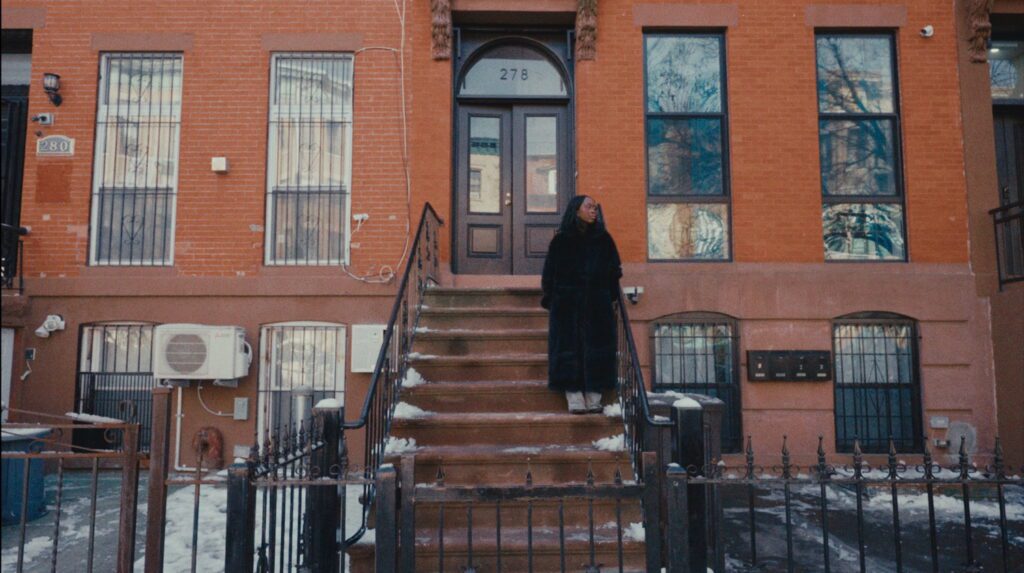
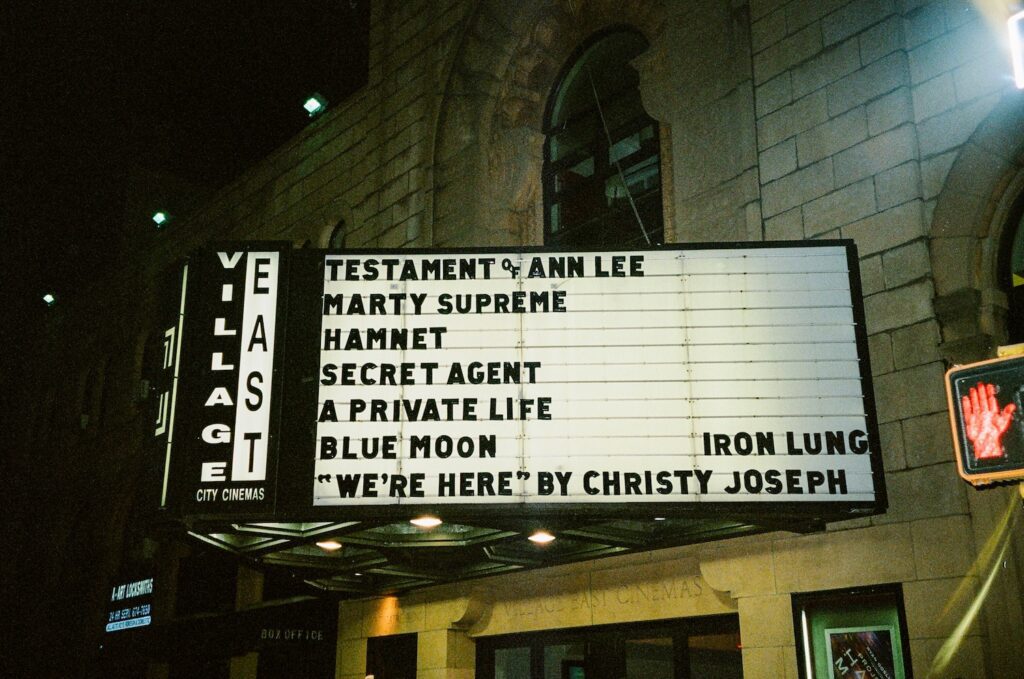
The Brooklyn-based filmmaker, part of the creative duo behind nycxclothes, premiered her film We’re Here last month at Village East by Angelika. The 22-minute short, nearly seven months in the making, marks Joseph’s first documentary and her most ambitious project to date. Production began on July 11, and what started as a desire to explore Haitian identity gradually evolved into a meditation on belonging and Temporary Protected Status as permanent residents in America.
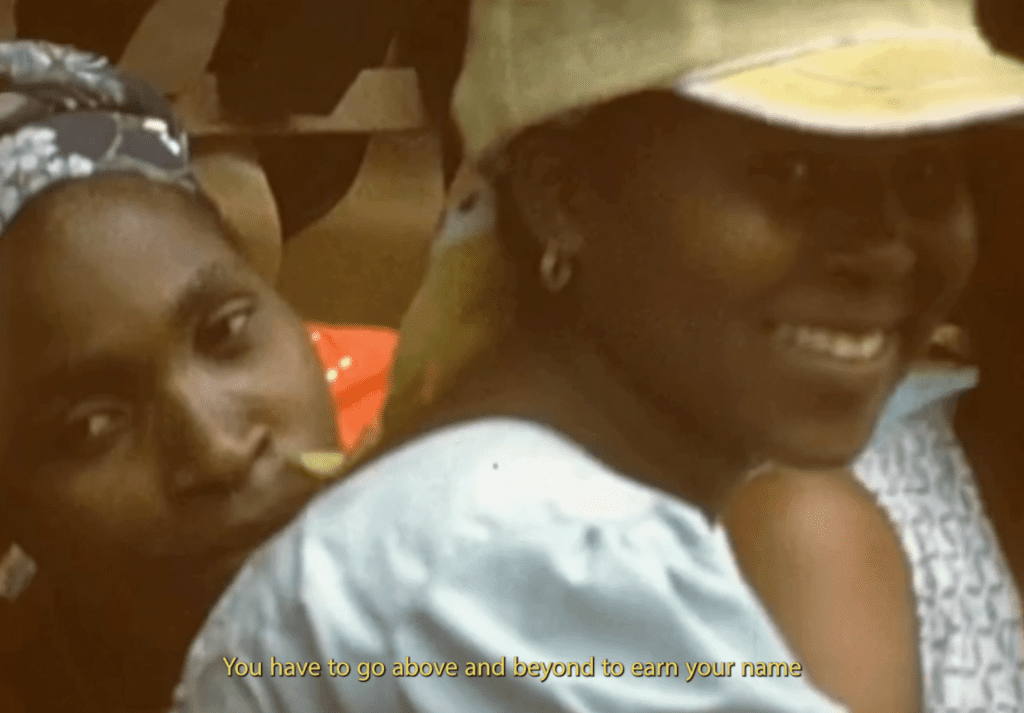
We’re Here stitches contemporary interviews and archival footage from Haiti in the 1960s, 70s, and 80s as a visual juxtaposition made possible through collaboration with Orlando Aurélien, an independent archivist who collects and digitizes historical Haitian film and photography. Joseph also drew from resources at Brooklyn College’s Haitian Studies Institute, piecing together fragments of a Haiti often absent from mainstream media.
She spent months combing interview transcripts and personally translating Creole conversations to ensure the integrity of the documentary’s many voices. Half of the film’s subjects speak in Creole, a deliberate choice she stood firmly behind. “I’m always going to be a proponent of people using their native language,” she emphasizes.
Courtesy of Christy Joseph
Though We’re Here is Joseph’s first documentary from production through premiere, she approaches filmmaking with an intentionality shaped by her influences: Haitian director Gessica Généus, Senegalese filmmaker Ousmane Sembène, and documentary storyteller Ken Burns, whose masterclass she credits with shaping her narrative patience and humility. Behind the camera, Joseph worked with a director of photography she met while studying at SVA, along with a composer who helped bring emotional texture to the film’s archival layers.
Christy talked about the energy in the room during her premiere, describing it as one of overwhelming joy and happiness. “It was really such a heartwarming moment, honestly, to just have everyone gathered in the room. We had about 105 people in the room, which was truly amazing,” she said. “The judges’ decision to extend TPS for Haitians was made on that day. It was really beautiful.”
Still, even amid the celebration, she chose to sit in the back of the theater. “I didn’t want people to see my reactions. I wanted to observe how everyone was taking it,” she said. “It was cringe at first, because I was like, Oh my gosh, it’s me. It’s my work on the big screen—I’ve seen it literally 100 times.” But after a few minutes, something shifted. She began to see “the power of just storytelling,” watching as the audience responded in real time.
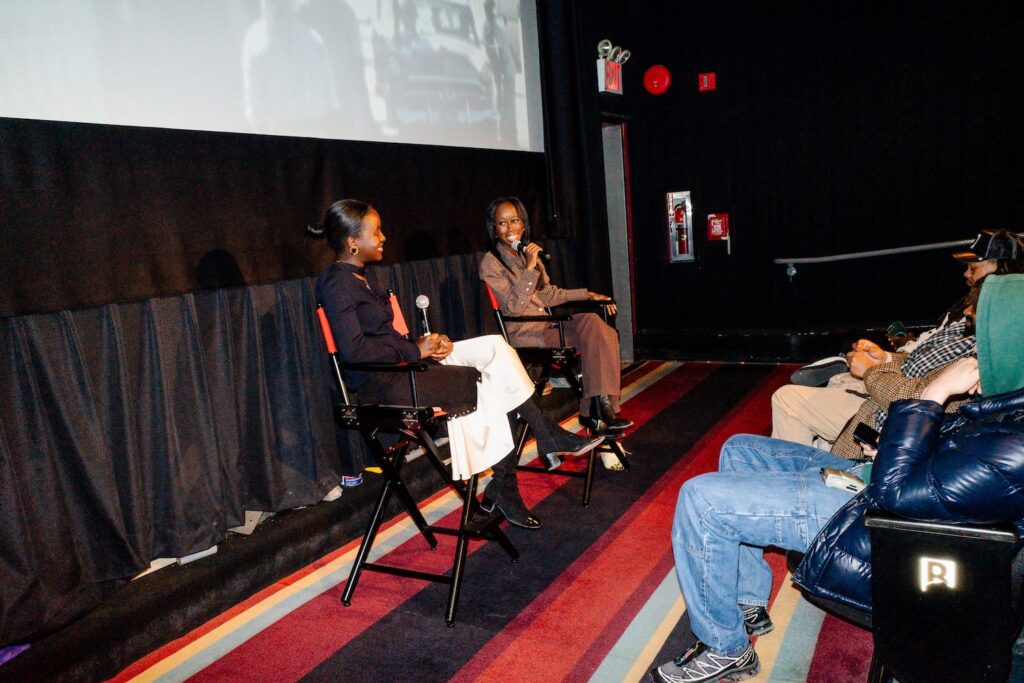
What surprised her most was the depth of engagement. “While watching the film, people were researching, they were Googling, they were trying to find ways to help in any way that they could.” After the screening, she and her sister led a Q&A, extending the moment of reflection. “People want these moments of just community,” she said. “They want to enjoy things together, and they want to reflect on them.”
The premiere was only the beginning. Joseph is planning additional Brooklyn screenings in the coming weeks, building on her success at Village East. She’s in the process of submitting the film to festivals, though she wants to stress that being validated by big institutions is not the end-all be-all. “I’m really trying to find a balance where I’m so proud of the work that I want to continue pushing it forward, but I don’t want the establishment to be the only measure of success,” she said.
Beyond festivals, she is thinking about the long arc of her craft. “I want to continue learning,” she shared, describing her desire for deeper study and fellowships that can sharpen her voice. At the heart of it all is something bigger than any screening. “I want the film to continue to impact people, even if it’s small,” she said. “I want people to understand what legal immigration is, and I want people to have a little bit more compassion.” While Haiti remains the first Black republic, creatives like Christy remind the world of the beauty of the island, embodying the spirit of “l’union fait la force”—that “unity makes strength.”