Courtesy of Amanda Perdomo
Open Kitchen: A Conversation with Amanda Perdomo of Amanda’s Good Morning Cafe
The Louisiana chef is capturing the care, comfort, and nostalgia of Crescent City cooking at her Fort Greene pop-up
Open Kitchen is a monthly interview column covering the joys and frustrations of Brooklyn restaurant operation in all its many forms. For February, we spoke to Amanda Perdomo, the chef/owner of Amanda’s Good Morning Cafe.
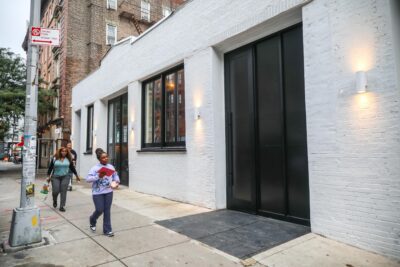
When you close your eyes and think of Fort Greene, you see the fork at Lafayette and Fulton, a block from the titular park, in view of BAM, in view of 40 Acres and a Mule HQ, and, as of 2024, in view of Strange Delight and a burgeoning restaurant strip. The seafood-focused Creole eatery is an “Only In New York” premise: An over-accomplished “neighborhood joint” executed by pros, which—in spite of its hyper-niche vision—has proven to be a day one beloved staple, near capacity at all times.
Several months ago, magic happened again at 63 Lafayette Place, when the Louisiana native and pastry chef Amanda Perdomo parlayed a wildly successful, supposedly one-off lunch event at Strange Delight into a full-blown residency that has faced several end dates, neither the chef nor owners (Ham El-Waylly, Michael Tuiach, and Anoop Pillarisetti) can bear to honor. It’s a New Orleans nesting doll, a lunch counter sharing the cuisine and values of the restaurant it resides inside.
For the last quarter, while the majority of Brooklyn food establishments keep their steel gates at half-mast so porters can mop and sweep, Perdomo has operated Amanda’s Good Morning Cafe, a playful, definitional DBA that sounds ripped off a novelty t-shirt hanging in a tourist shop window on Frenchmen Street. The moniker is fitting, though. Chef Perdomo and her simple, soulful cooking have been a revelation in the neighborhood, with all due respect to the few weekday lunch options Fort Greene has had in its recent history. At last, for the time being, this side of Brooklyn has a response to Ridgewood’s magical Salty Lunch Lady.
 You can tell a lot about a culture from how it eats lunch. In New York, the genre is widely considered an afterthought or a nuisance, utilitarian weekday afternoon maintenance, fueling in motion that must be done in a car on the highway. It can be loosely, tragically defined here as an app-ordered bowl filled with grains or greens, a checklist of macros to hit in order to max out a trip to the gym after a 10-hour workday. Most proprietors have decided the juice of revenue, with beverage sales greatly reduced or non-existent, is rarely worth the squeeze of overhead that comes with staffing and prepping another service during what are historically sleepy hours for eating out in this city. Generally, during the week, restaurants here open at five, if you’re lucky.
In the Crescent City, on the other hand, lunch is less a meal than a sub-culture- a philosophy, a religion, a way of life. There is a dedicated industry of luncheonettes that open at 11 a.m., close at 4 p.m.-ish, and, for the most part—if they’re any good—there will be a daily line to navigate because it’s in-person only, with impossibly high, consistent demand and no reservations. The meals you have at these sainted spots can’t run long, as that would mean the participants walked in with a set endpoint for the meal. The experience will involve copious amounts of fat, big flavors, and at least two martinis with a few beers mixed in. It is deliberately set-aside time to slow down life long enough to enjoy people: The friendly ones dining with you and/or the friendly ones serving you with a good book. It’s space you keep for “self-care.”
So it makes sense that Perdomo has focused her service on New Orleans’ rich, storied lunch history. “Care” is a word Chef Amanda uses often in casual conversation, and when you eat her food, you can see why. It’s a core organizing principle she incorporates into every sandwich and slice of pie. Perdomo preps small batches every day with the intention to sell out her menu, and often does. It’s likely why Amanda’s Good Morning Cafe been a success since that very first event, as popular on the internet as it is in person.
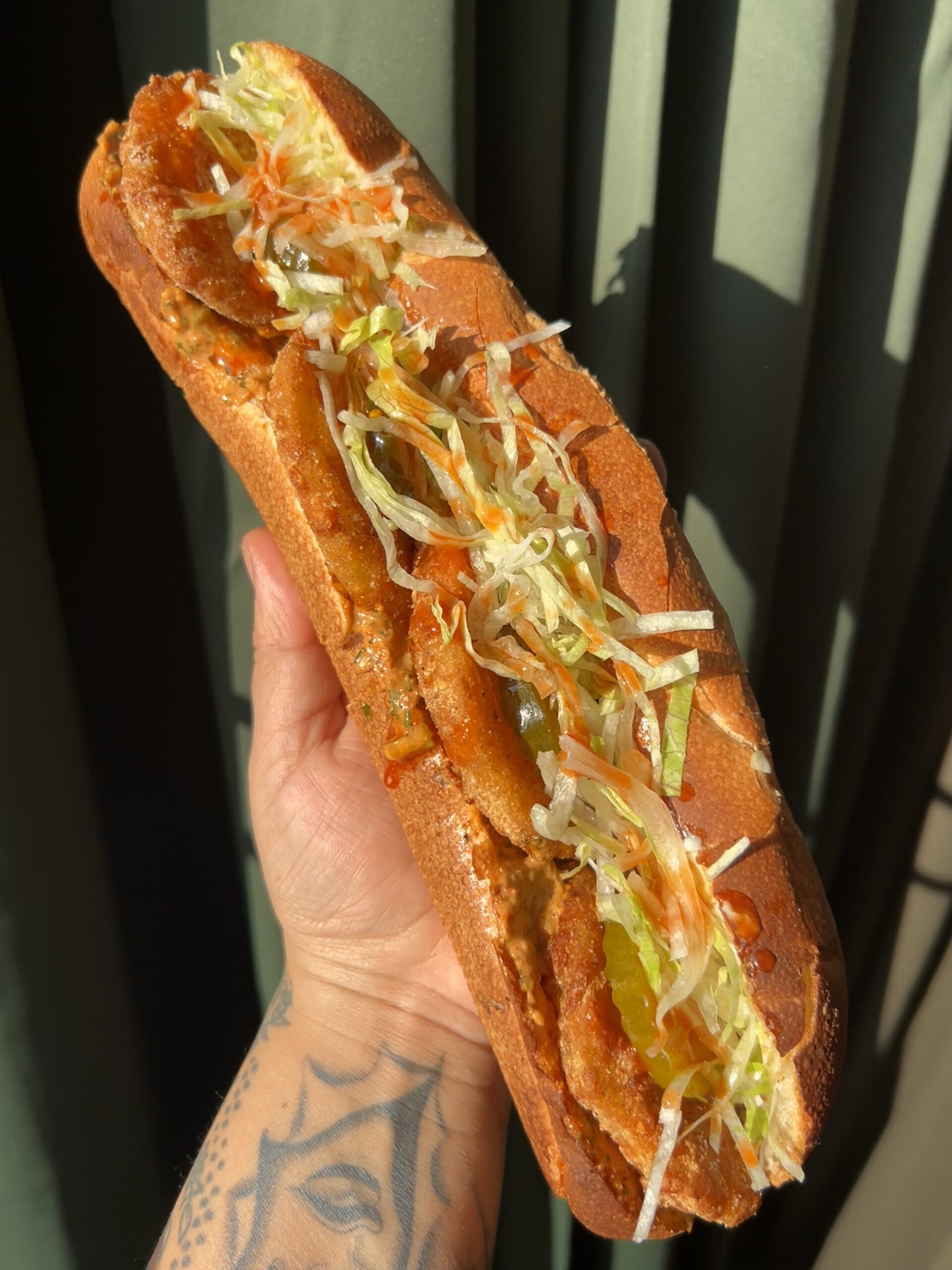
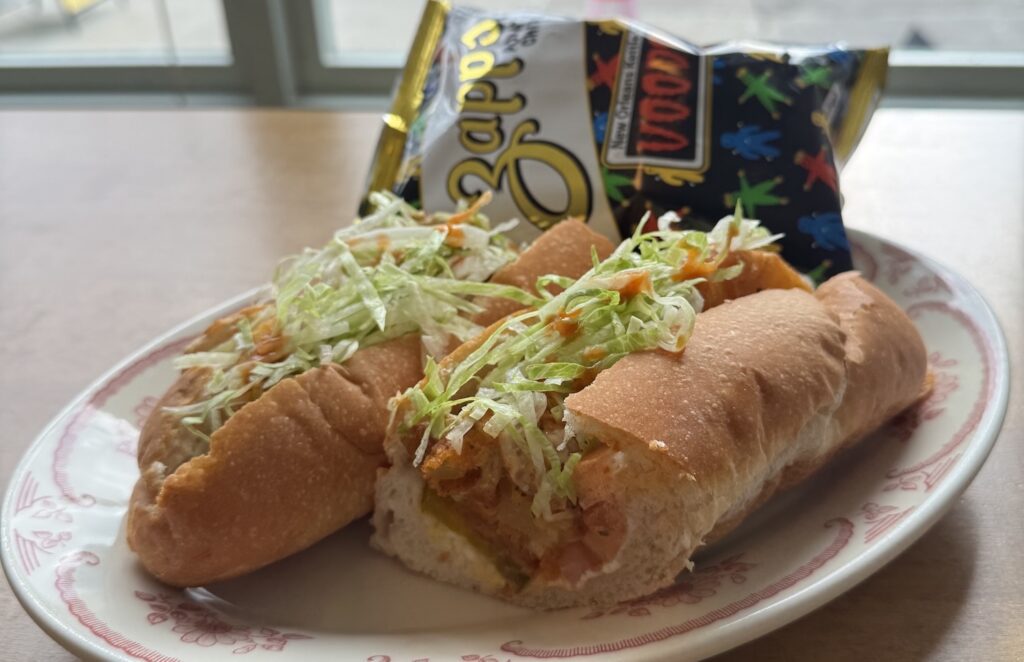
The second time I ate Chef Amanda’s food, I had already decided I’d try to convince her to agree to be the subject of the second installment of this column, and came in to sample as much as possible. There was a fried green tomato po’ boy on special, so it was an easy call.
(Photo by Abe Beame)
Perdomo curates a delicate and sturdy Vietnamese demi-baguette that is toasted in the oven to order, and arrives to the table steaming, with cracker crisp thin crust and chewy, airy crumb spread with mayo and stuffed with shredduce and discs of fried tomato halves, animated by a battle of competing tangs in the vinegar-based, New Orleans staple Crystal hot sauce, pickle chips, firm yet juicy tomato wedges, and a vibrant remoulade. It was as close to “light and refreshing” as I’d ever imagined a po’ boy could be.
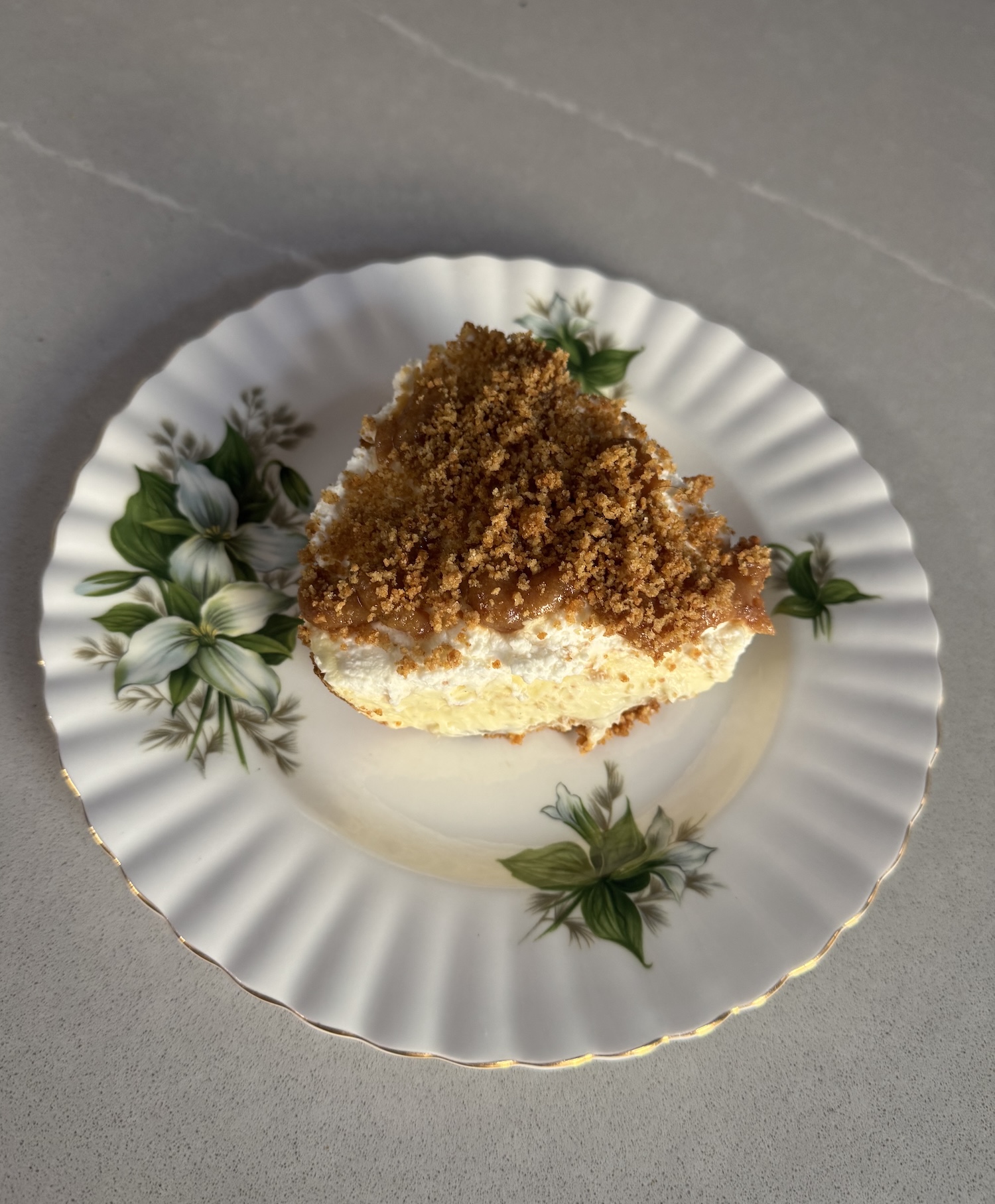
The first time I ate at Amanda’s Good Morning Cafe, I had no idea I’d be interviewing her or writing about her food, but knew of it and had an urgent need for it. It was the day after we’d learned Rob Reiner had been tragically murdered. I spent the late evening into the early morning trying to put his life and tremendous career into context, and I was emotionally tapped out. In other words, I needed a muffuletta. So, I headed downtown to Amanda’s to grab one, and threw in a slice of Chef’s Banana Foster’s Pudding Pie because, though I’m not a sweets guy, if you write some shit like “Banana Foster’s Pudding Pie” on a menu, I’m probably going to try it. I took both to go because the one obvious disqualifier at Amanda’s, the way you know you’re in Brooklyn and not in NOLA, is that there’s no beer for sale. I snagged a Maine Beer Company Lunch IPA from a nearby bodega and went home.
After the (surreal) pie, I had a heavy workload, but blew it off, laid down on my couch, closed my eyes, and, lingering somewhere between states of consciousness—because I had drowned my feelings with chef Amanda’s mortadella-stuffed bread and pie and an early PM beer, because I had honored the city and its proud customs—I briefly felt like I was back in New Orleans. And at least for the next few weeks, so can you.
(Author’s Note: This interview has been edited and condensed to make me sound like less of an asshole.)
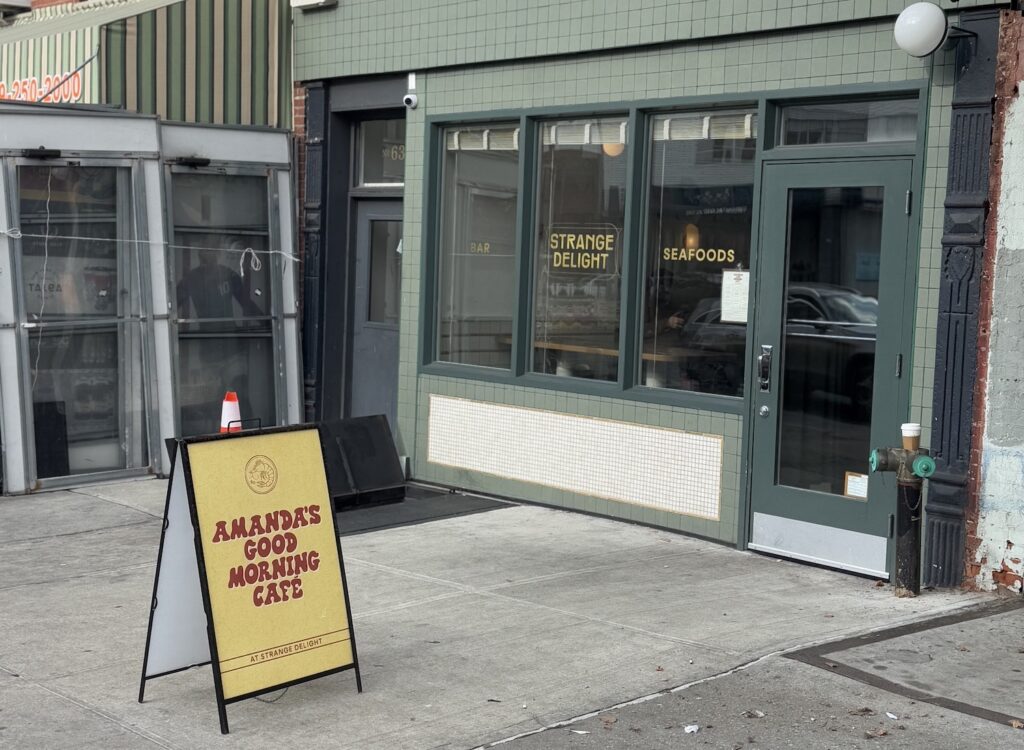
Photo by Abe Beame
So, as a chef, why would anyone ever want to leave New Orleans?
(Laughs) Well, you know, I wasn’t a chef at the time. I’ve been in New York for 11 years. When I moved here, I was still super young, and I didn’t know what I wanted to do with my life. I was exploring. I came here for fun. I didn’t really come here looking to work or to chase a path.
But I quickly figured out that people don’t live in New York for fun. People come here to chase their dreams. So it was like, okay, I’m obsessed with it here. I love living here. I’m inspired by the people here. And you know how driven people are, which at the time was very opposite from who I was. And I think I quickly realized, if I want to stay here, I have to figure out what I want to do for the rest of my life, as a career. And I thought: If I could pick one thing, I would cook.
So I immediately applied for culinary school at the French Culinary Institute, and I got my first restaurant job, and I literally have never looked back. I have been in restaurants for 11 years now.
I was able to glean some of what I think is your New York experience in research—JR & Sons, Cool World, Kellogg’s Diner, Rude Mouth, Hags—in proper work and pop-up work, but there’s not a ton of biographical information out there I could find. Could you walk me through some of your personal and professional history?
I’m from the bayou. My parents still live in my childhood home, in a rural area called Bayou Lacombe. I grew up with chickens and horses, and my dad harvested fruit, and I didn’t really live in the city until my early 20s, but it was always like a 30-minute drive. I didn’t really get to live in New Orleans proper until I was like 21.
The most important and influential place that left its impact on me, my ethos of cooking, and the way that I live life, is Del Posto. It was my first restaurant job. At the time, Mark Ladner and Brooks Hedley had just left, and it was just such an iconic era because they were still using those recipes, and it was just amazing to learn their techniques and work in that space.
Then I worked with Natasha Pickowicz at Altro Paradiso Flora Bar. And that was one of the most important cooking experiences of my life. It’s where I believe I learned how to taste food critically. Then, as you say, I developed the dessert and pastry menu for the Kellogg’s Diner relaunch. And then from there, I’ve just been bouncing around, consulting, doing pop-ups, which brings us up to this residency now.
Your restaurant evokes the great lunch counters of New Orleans. I think of Uglesich’s, Central Grocery, Parkway, Turkey and Wolf, Cafe Du Monde. Are there any other influences or references I missed?
You’re very much hitting the nail on the head. But another place in New Orleans I feel really inspired by is Ayu Bakehouse. Everything they do is perfect, and you can tell that they are making things with joy, which very much informs the way that I operate, both in my head, but also in the amount of care that we’re putting into things and the way that we’re treating food.
(Photo by Abe Beame)
Your food feels really personal. I read a lot of nostalgia, especially on the pastry side. Are there any menu items that are particularly resonant for you?
There’s a story behind everything and a reason that everything is on the menu. Everything is intentional. And to hear that that’s what you’re receiving from it, it feels really great and like we’re doing something right.
It’s funny because growing up, I used to run away from what has become my food. I remember thinking, If I eat one more sandwich, if I eat one more bowl of red beans and rice–but now that I’m in New York, I crave this food constantly. And I feel like there’s not enough representation of it here.
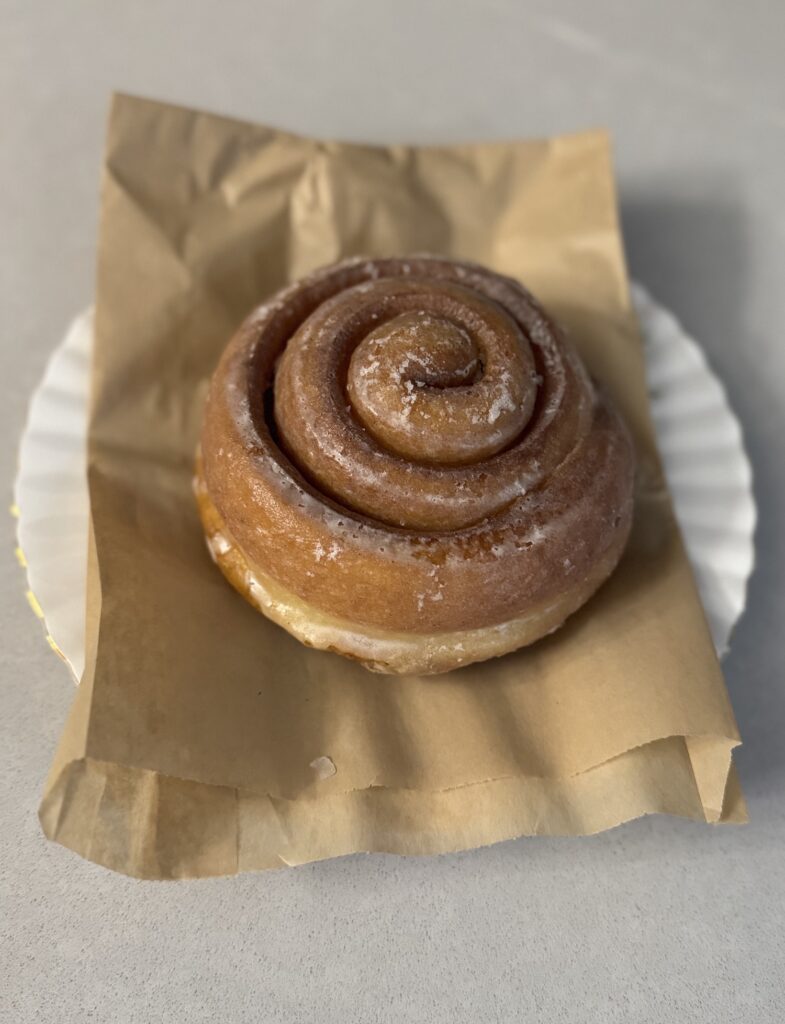
The honey bun is the big one for me. It’s special. The texture that I’m trying to achieve with that, it’s based on my mom’s inability to cook. She’s one of the worst cooks I know. But please don’t tell her I said that.
(Laughs) This is all on the record, but it’s ok. My mom can’t cook, and my wife can’t boil water. I do all the cooking in our apartment.
My dad is an incredible cook, but I’m inspired by how my mom was comfortable saying, “No, I don’t know how to cook, and your dad cooks dinner. “And I just love how out of the social norms that she was. For breakfast, my dad was a commercial driver, so he would always go to work really early, and mom would be responsible for feeding me. And looking back, a lot of what we ate was born of necessity.
My parents did not have a lot of money. They’re both immigrants from Guatemala. We didn’t grow up with much access to healthier foods because they were more expensive. And so, for breakfast, my mom would take gas station honey buns, leave them in the wrapper- not even open them- throw them in the microwave and make them lava hot. And by the time I would get to school, it would be the perfect temperature and so gooey and so delicious. And even though that breakfast seems like an afterthought, I think for her, the microwave was like an act of care.
And so, for me, when I make those, I’m transported. Later on in life, my dad was diabetic, and I spent a lot of the remainder of my childhood not being able to eat sugar or sweets, so that’s a fond memory of indulgence with my mom.
Channeling nostalgia can be lazy. Particularly in the “Camera Eats First” era, it can be weaponized as a gimmick, but I think you use it intelligently in ways that don’t feel cheap. Are there any chefs that—through reading their work or eating their food—have influenced your approach to mining nostalgia?
I really love and gravitate towards food that invokes feelings. I love food that tells stories. And I think that’s often what I’m trying so hard to do.
Throughout this residency, I was only taking like a day off a week, maybe. And that day is a sacred day. Like Saturday, don’t call me, don’t talk to me. I’m not going to cook. So if I’m going to eat something, I’m going to eat something that feels comforting and delicious, and in those moments, I always choose the same places.
I’m always eating at Superiority Burger, and I’m always eating at Yellow Rose. I’m always eating at Chrissy’s Pizza. I’m always eating at restaurants that pull you in and transport you to a different place. When I eat the food at Superiority Burger, I feel Brooks Hedley’s experiences growing up as a punk making vegan food. I don’t even think about the fact that it’s vegan food. I just feel heavily connected to what I’m eating.
Same thing with Yellow Rose. I feel like I’m sitting in Dave [Rizo]’s living room and he’s making me bean and cheese tacos in the kitchen and they come out, and you’re eating this messy thing that is– you can’t explain it, but it’s ethereal, it’s delicious and it tells a story of a guy who grew up in Texas who just threw unmelted cheese from a bag on my taco, and I fucking love it.
So I feel like I’m always chasing that. I’m always trying to emulate that level of comfort and nostalgia that my peers make me feel.
It sounds like you’re describing food that is able to relate something familiar in sense memory. Food that is full of details that feel authentic to the chef rather than the most perfect way of preparing and serving a dish: Replicating the texture of a honey bun out of a microwave, or a bean and cheese taco with the unmelted, processed cheese sprinkled on top.
Yeah, you know it’s a hard thing to fake. It’s just honest. We’re in this era, especially living in New York, where things are expensive and super fancy or unapproachable or kind of pretentious. And I’m ready for something else. Tell me where you came from. Who are you?
(Photo by Abe Beame)
When I think about your food, I think about bread. It’s the one element that New York restaurants making New Orleans food have always struggled with, and you have gotten about as close as any place I’ve eaten at here when it comes to really nailing muffaletta bread, which is impossible, as well as po’ boy bread. The best you usually can do for po’ boys is going to a Vietnamese bakery and getting banh mi bread. So, what went into the process of solving those problems?
There are only two breads that I’m not baking in-house, and it’s the po’ boy bread and the white bread that we put our pimento cheese sandwich on. Those are the two non-negotiables. It’s the Heinz ketchup thing-
If you can’t make it better, you’d rather buy it.
Yeah, let’s put our labor towards something we can actually make better. Nobody’s trying to reinvent Ritz Crackers. So with the po’ boy bread, you got it. It is, in fact, banh mi bread we order from a bakery in Philly. It blisters, and it’s crackly because Vietnamese banh mi bread is very New Orleans, because Vietnamese food is very New Orleans. You can get some of the best Vietnamese food I’ve ever had in my life in New Orleans.
Strange Delight also makes po’ boys on special sometimes, and they had a couple different types of po’ boy bread at the restaurant when I was doing R&D and testing. Ham, the owner, was like, “You should try it. I know you love making your breads, but you should try these. They’re delicious, it would save you a little bit on labor, and the quality is insane.” And I was skeptical at first, but then we started testing sandwiches on them, and I was like, “Oh my God, we have to use this bread.” We order the bread two to three times a week, and they overnight it to us.
Sometimes it’s actually a dilemma, because I’ll panic if the po’ boy bread isn’t here yet. But it’s just worth it, and it’s the nice thing about having the flexibility of a pop-up. Sometimes we have it, sometimes we don’t, and people don’t necessarily have the same expectation that you would for a restaurant to produce so much of something all the time. We can 86 when we have to.
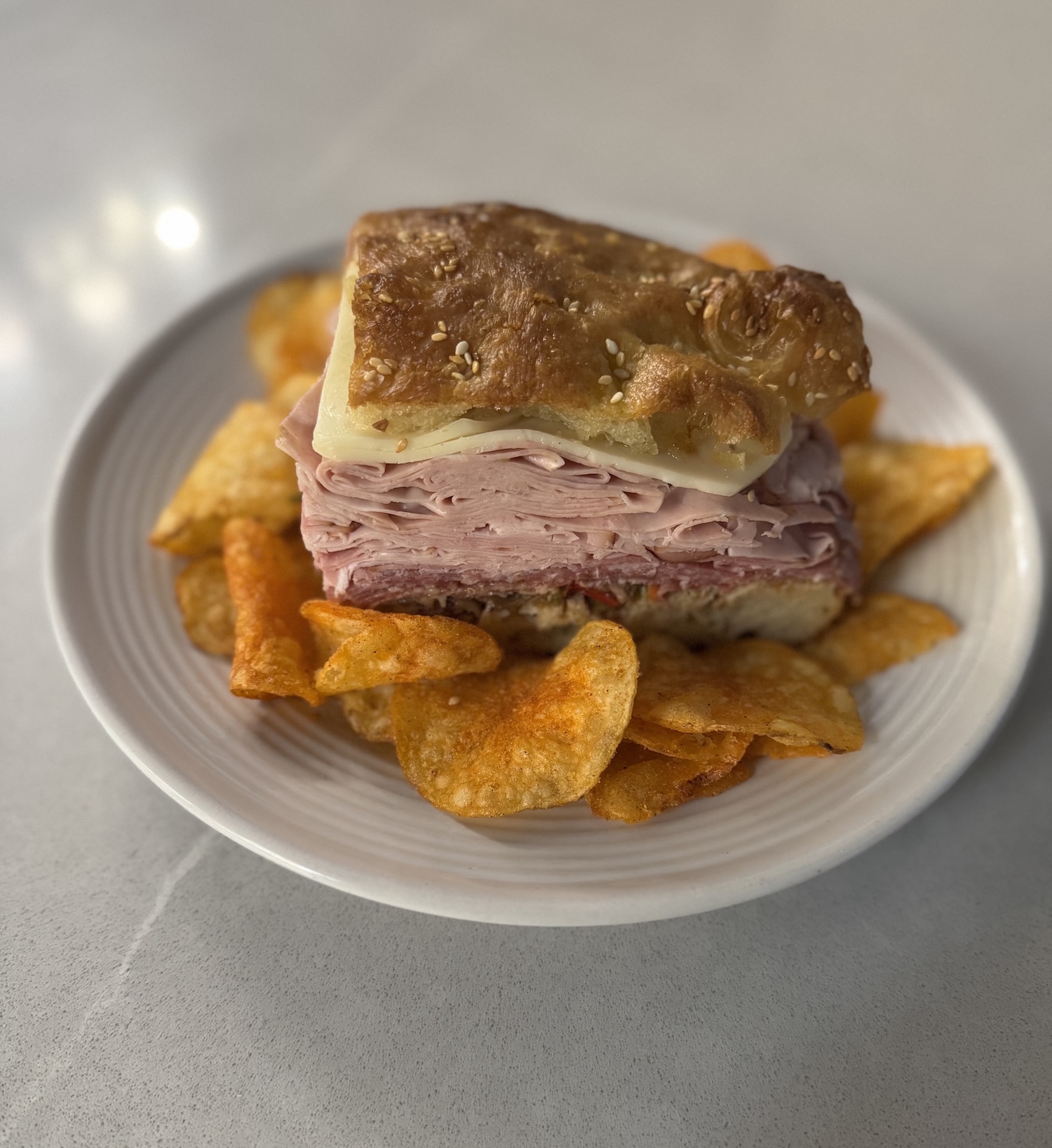
Photo by Abe Beame
Could you walk me through the R&D behind the muffaletta bread and your philosophy in the construction of it?
One of the things I asked myself was, “How do you improve an already perfect sandwich without gentrifying it?” Because culturally, this has to stand up to what this sandwich is actually supposed to be. The other day, I saw a muffaletta egg roll, and it upset me.
But with the bread, I knew the only thing I could do to make the bread better than what is normally served in New Orleans is it needs to be lighter, less dense, not dry, and it needs to be supportive enough to hold the oily giardiniera as well as the weight of the meat and cheese. So I knew it needed to be a crusty bread, with a crust on the bottom, and from there it just made sense to make a seeded focaccia. It needed to be super crispy, soft, and absorbent bread, so I knew I had to make it with yeast so it has that level of softness, and then I heavily salt it. I season the bread, like actually, almost an alarming amount. But it’s a very well-seasoned bread. There’s tons of oil in it. But it’s classic. It’s flour, salt, a little bit of sugar, water, and oil, but the ratios are- it’s just a wet dough. And a lot of people get caught up in fermenting the dough for a certain amount of days. This is an overnight. I just rest it overnight and immediately bake it first thing in the morning, the next day. And it’s perfect every single time.
You run a restaurant out of an existing restaurant, which is somewhat rare. How did the relationship come about?
I already kind of knew Ham and Anoop, who are two of three of the owners of Strange Delight. Anoop would come into Kellogg’s to eat, and he loved the dessert. Ham was obsessed with the ice cream and the pretzel salad at Kellogg’s. I kept seeing photos of their shrimp loaf, and I saw that they used Crystal hot sauce. And I was like, “Man, this actually looks like a proper New Orleans-style sandwich, I’ve gotta go.” And I made this passion fruit pie at Kellogg’s, and I brought it to them as a gift when I went there to eat. And from there, we’ve always been super friendly.
I had just consulted on the pastry menu for JR & Son, and I was supposed to do this huge project after that which didn’t work out, and I had spent the entire summer not working. I was in the midst of looking for something, waiting for something. Summer is always hard for jobs. And Ham randomly reached out to me and was like, “Hey, I keep seeing that rainbow cookie cake at JR. I got to try it. How are things going over there?” And I told him I was waiting for something to work on, and he suggested doing a pop-up. So, we did a muffaletta bar, the pimento sandwich, and the banana pudding pie, and it went really well. We sold out of almost everything. And five days later, I got a call from Ham, and he was like, “The numbers are so good, what if this was a thing? What if you did a residency here?” And the rest is history. It was supposed to be a month, and now it’s been three months.
How does this relationship differ positively or negatively in relation to other pop-up situations you’ve had?
Positively, in the way that I feel like I have a voice and control over the way that the pop-up operates—the autonomy. There’s never a note like, I don’t think you should serve that here. Strange Delight is already a New Orleans restaurant. The cohesiveness of our cuisines has been such a huge and positive thing for me. I think for both of us.
And then the space was not meant to be a bakery, and that’s why things get really hard. The menu reads pretty simple. That’s the way that I love to cook, but it’s what’s required because of the limited space. The walk-in is already so small. Freezer space is small. I operate out of a speed rack. We don’t have a sheeter. We don’t have a proofer. I have a 20-quart mixer and a rolling pin.
It’s like, this is what we’re capable of doing with what we have. But I think that’s also part of why things are so delicious and so special. Because things are made in small batches. And because the batches are so small, my hands are in everything. I touch every single item that comes out of that kitchen, you know?
Each month, we end by asking what the last great Brooklyn meal you had was, dine-in or takeout.
After work, at this very moment, because it’s so close to Strange Delight, and because I need to eat something so vastly different from what I’ve been cooking for the last 10 to 12 hours, I love walking to Los Burritos Juarez.
I am obsessed, and it’s the closest I can get to getting a bean and cheese from Yellow Rose. Even though it’s so vastly different, it’s like the same feeling. The tortillas there are phenomenal and a perfect food. And every time I come in, I love it. You see Alan [Delgado] there, he’s working, and he’s encouraging his team, and you can feel that the morale is high. If someone wants to run into me, they can find me there after work.