Photos by Javier E. Piñero
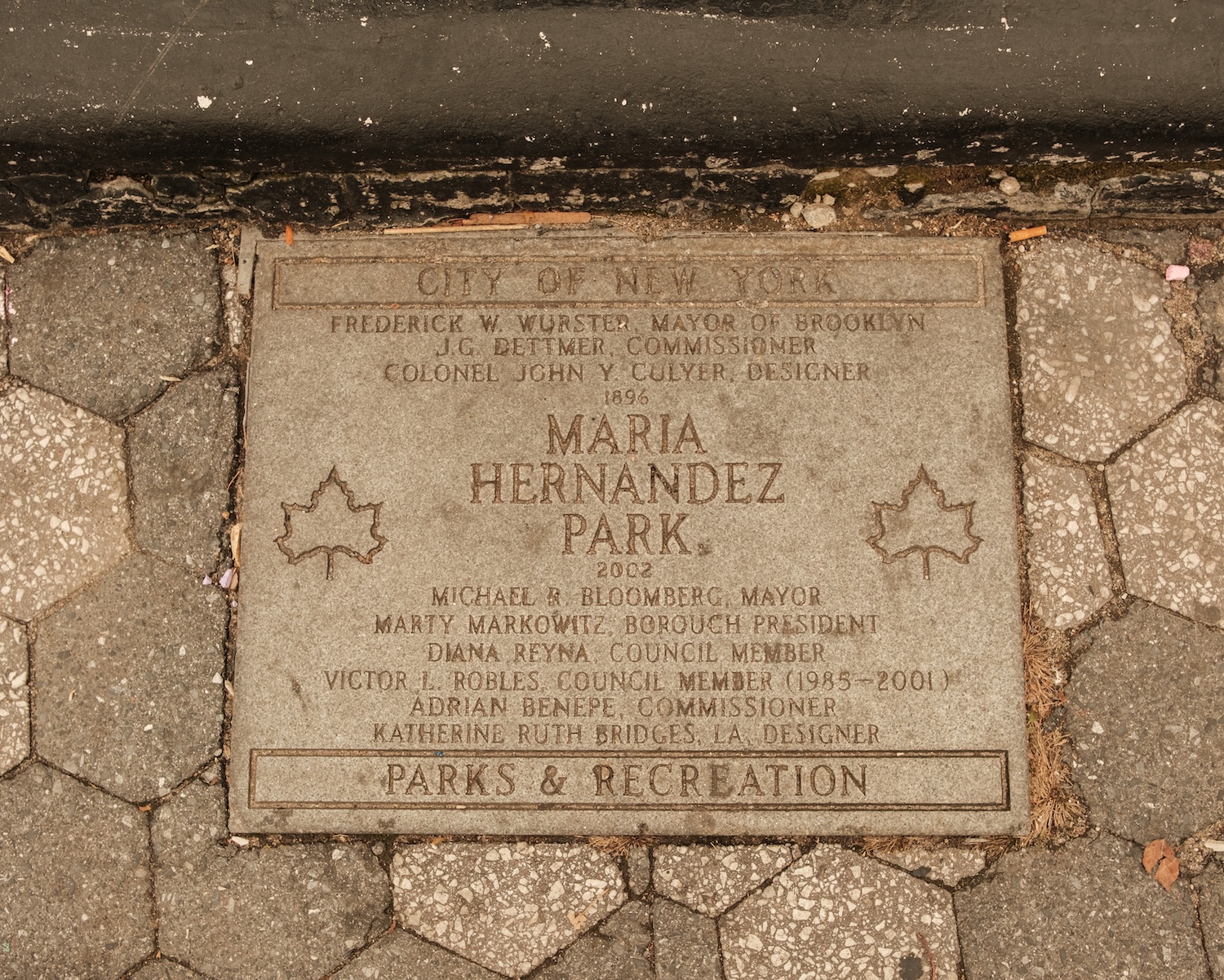
What’s Going on With The Squirrels in Maria Hernandez Park?
A tale of love, trust, and behavioral science between man and beast in Bushwick
When I embarked on this assignment over a year ago, I had no idea what to expect. My one objective: To study and observe the squirrels of Maria Hernandez Park in Bushwick.
(Photo by Javier E. Piñero)
In these parts, the neighborhood’s rats, tenacious in nature, have hogged the spotlight, so much so that the city has declared war on them. The pigeons, too, have received their fair share of attention. Everyone’s a degree or two away from a coop. And who can forget about that pet store owner accused of abducting birds from this very park?
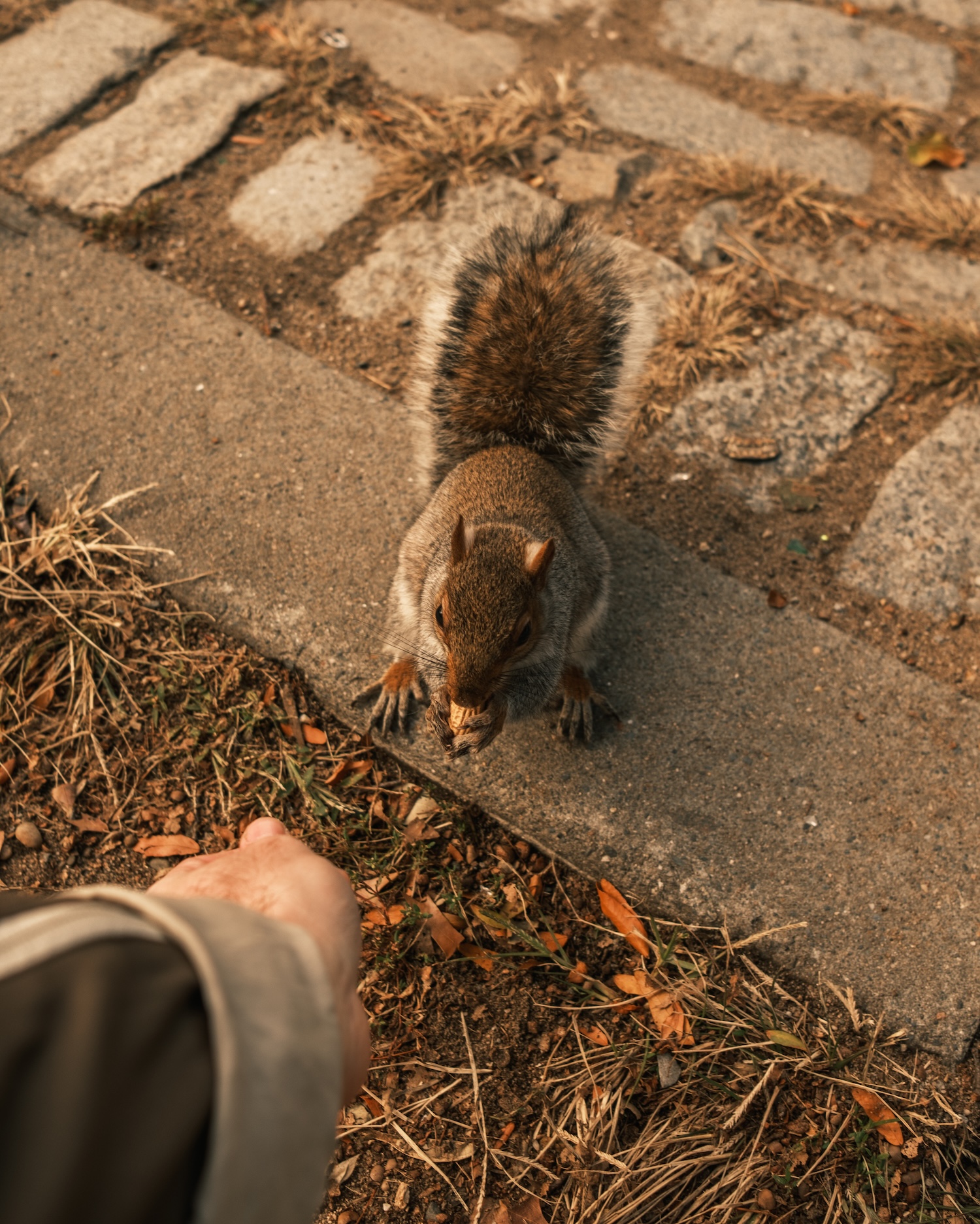
So it’s understandable how the park’s colony of spectacularly chill and trusting squirrels may have gone under the radar. Though they are considered rodents, these particular Eastern Gray Squirrels have a very different relationship with the park and nearby residents. I’ve lived in Brooklyn all my life, and I can confidently say that I’ve never seen squirrels quite like these—sociable like a dog, shrewd like a cat. I make no claims to being Steve Irwin, but I am observant, and, over 14 months, I watched them sit on people’s shoulders, eat directly from human hands, and perform acrobatics high up in the trees. On more than a few occasions, I saw them beguile the neighborhood bodega cat, evade the ever-present off-leash dog, and escape the sharp talons of several hawks. In one instance, a squirrel even took part in a picnic, sitting on a blanket on a warm summer day, continually eating food out of a woman’s hand until full.
I slowly started to notice a community of people from all different walks of life taking care of and protecting these animals. But this wasn’t a coordinated effort or a “Bushwick Squirrel Lovers” meet-up. No, these were all individuals: An elderly Hispanic man, an older Japanese woman, couples, joggers, and a father/daughter duo, all pitching in for their own reasons.
(Photo by Javier E. Piñero)
A community thing
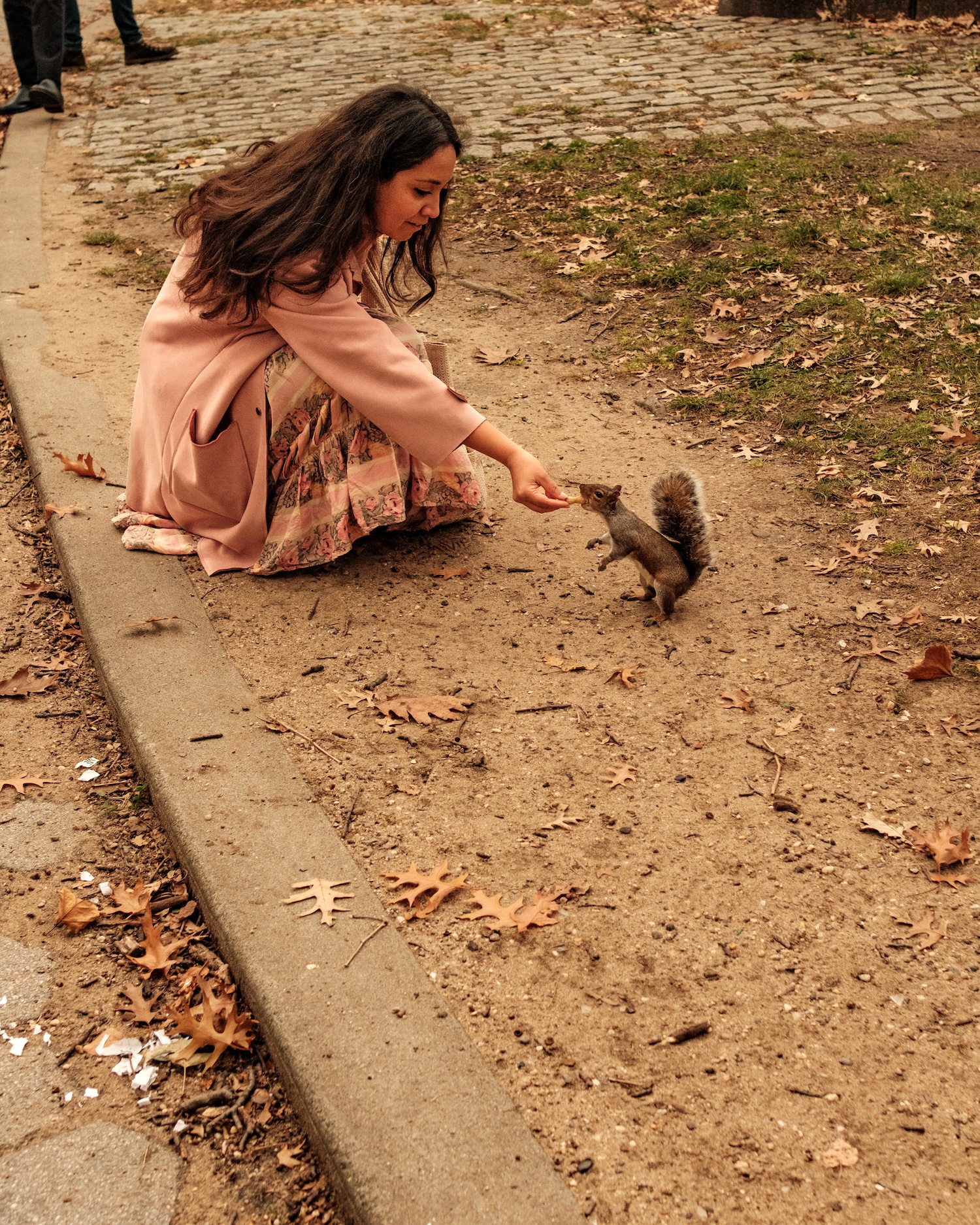
Marisa Thompson and her boyfriend Samuel-Drake Jones live directly across the street from the park and feed the squirrels on most mornings.
(Photo by Javier E. Piñero)
She comes bearing peanuts, pecans, and sometimes berries (though she says they’re not too fond of fruit). She started feeding them last winter when she noticed the squirrels weren’t able to find nuts in the snow and ice. “I’ve lived in Williamsburg and Greenpoint before this, but never really found a way to connect with animals or nature in the same way,” Thompson said. “McCarren Park has some squirrels, but not the number that Maria Hernandez does, and they’re definitely not friendly like these guys are.”
Jones, an executive chef at a swanky Manhattan restaurant, said they’ve entered an infrastructure and culture of neighbors who feed the squirrels. “I mean we’ll be up at 7 a.m. and people will just be walking around feeding them,” he said. Thompson told BKMAG that it only took a few days of feeding the squirrels before they started running out of the trees every time she entered the park. “They’ll chase me because they want more nuts,” she laughs.
“It brings us both so much joy,” says Thompson, who restores vintage wedding gowns. “It’s become a highlight of our day, feeding them. They’re a part of the community. Some of them have really distinct personalities. The way they approach people, it’s clear that they’re loved.”
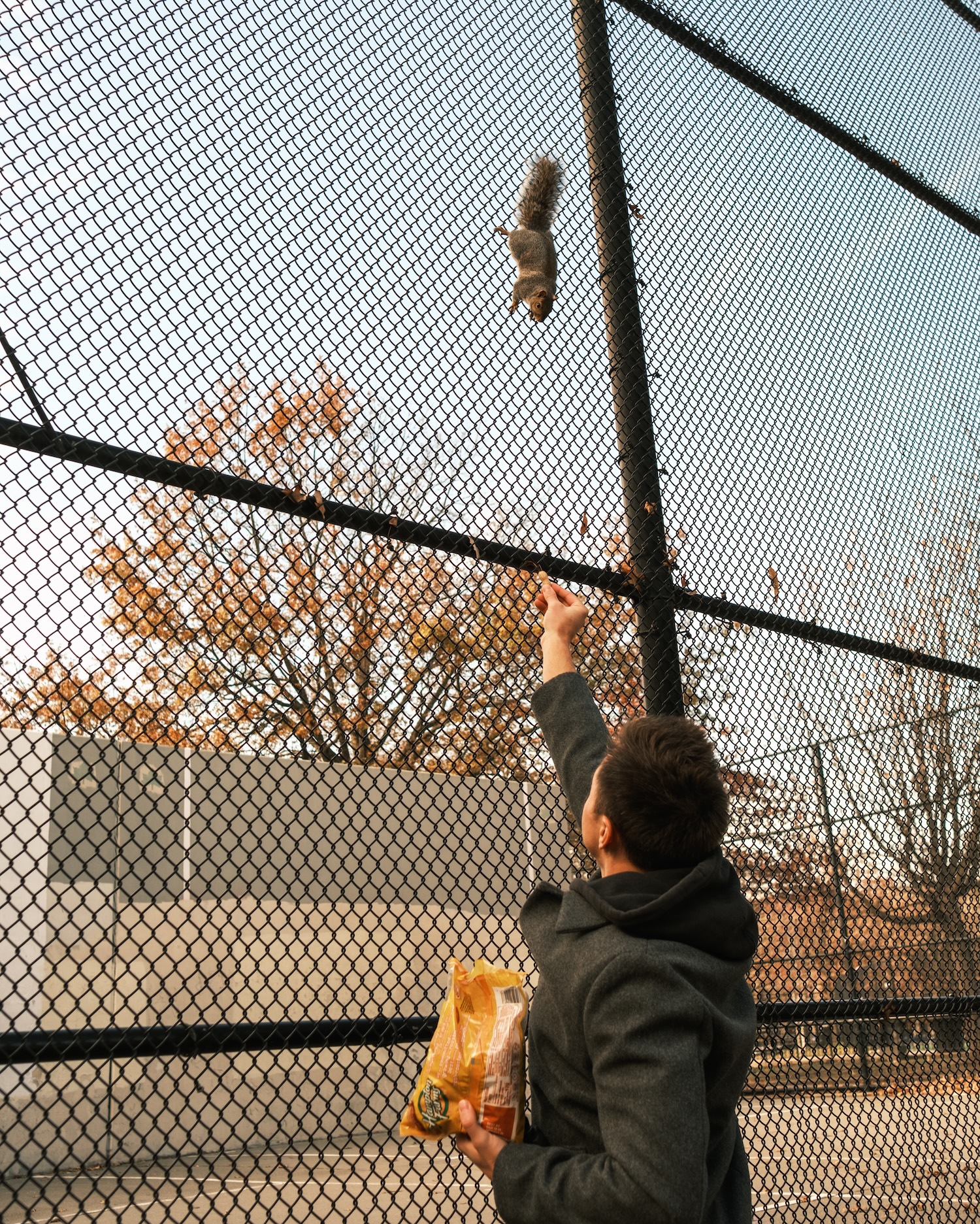
I, too, noticed that after I began feeding them, the squirrels started to recognize me. Initially timid ones now scampered towards me. One, we’ll call him Jorge, now takes peanuts out of my hand and lets me stroke his tail. Joel Brown, an evolutionary ecologist who specializes in squirrels, said the animals only behave this way if they’ve forged a strong relationship with certain humans. “If the squirrels feel very, very safe around these kinds of core individuals, they will recognize them,” Brown said. “Squirrels will learn individual people. When some of the people arrive in the park, a number of squirrels likely perk up in some way. They’re buddies.”
(Photo by Javier E. Piñero)
Brown has studied snow leopards in Nepal, black rhinos in Kenya, coral reef fish in Hawaii, and octopus in Alaska, but he gravitates toward squirrels because they represent “an unbelievable gateway” into getting people interested in animal behavior and nature. I asked Brown why he thought these particular squirrels in Maria Hernandez Park are behaving so friendly toward humans. His response? The love Bushwick has put into them. “The behavior of the squirrels tells me about the behavior of the people,” he said. “You’re actually seeing a reflection of ourselves, and how we view them, and how we view our relationship with nature. It becomes a two-way feedback.”
It’s a symbiotic relationship, Brown insists—the squirrels receive a food source and protection from predators, the humans receive a stress-reliever and a way to connect with nature in a major metropolis. Brown initially surmised there weren’t many predators in Maria Hernandez Park, and that was one reason why the squirrels were more sociable. Once I informed him there were, in fact, cats, dogs, and hawks that chase them, he further emphasized how the humans, then, must be the primary influence on the squirrel’s behavior.
“The squirrels are viewing us as vending machines,” he said. “We provide goodies, and they don’t really think much about us. They’re not like sort of emotionally bonding. However, if with some of these core people—that not only are they getting food from the person, they’re actually getting a human shield—then, yes, that can amplify the relationship between the person and the squirrel.”
“Many of them, as you describe, will just kind of turn their back and sit there and munch on the peanut,” Brown notes. “They’re actually holding you close. They’re saying right now, ‘You’re part of my little micro territory, and I don’t want to share you.'”
(Photo by Scott Enman)
Living the dream
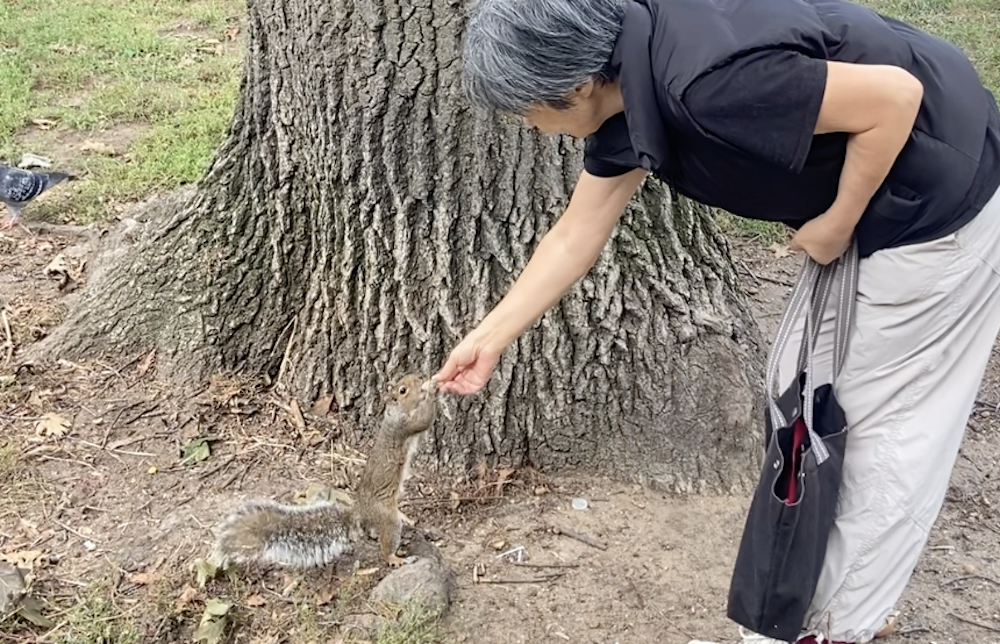
Masumi Ohashi has lived in Bushwick for 15 years and always dreamed of becoming a zookeeper as a little girl back home in Japan. She claims her interactions with these squirrels are the closest she’s come to realizing that dream. “They’re very wild, but so cute,” she says. “I feel happy to live near these creatures. Small animals interacting with humans, it’s very nice.”
On most mornings, she comes to practice Tai Chi. When she’s done, she tends to her furry friends. Clutching a bag of peanuts, salted and unroasted, she clicks her tongue, and within seconds, a half-dozen squirrels begin to gather around, just inches from her body. She slowly passes out treats, one to each squirrel, like a school teacher at lunchtime. She drops food in front of some, while others eat directly from her hand, wrapping their furry, human-like fingers around hers for balance. They all munch simultaneously, breaking the shells with their teeth and nibbling away.
“They’re getting so big because I give them lots of nuts,” she chuckles. “All the squirrels recognize me. I know all the mommas. That one right there is my favorite.”
(Photo by Javier E. Piñero)
Bonding during uncertain times
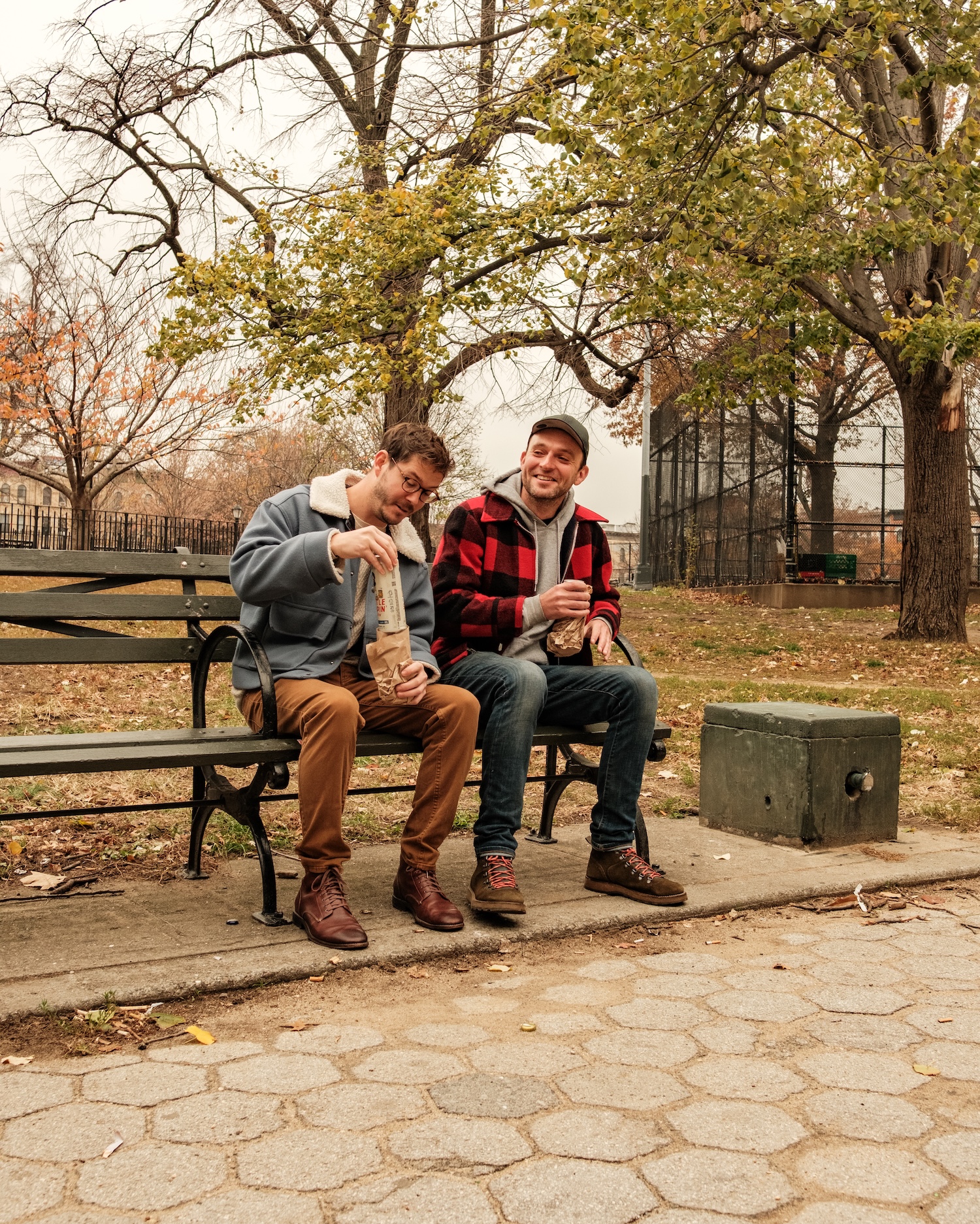
Dylan Goodwin and Ricky Moson both work in television. They started coming to Maria Hernandez Park to see the squirrels at the tail-end of the Hollywood writers’ strike. The strike had just finished, but work hadn’t picked up yet, so they would come here to escape their apartment. The squirrels, Goodwin said, offered respite and relief to what he described as “a tough time of unemployment.”
“We were looking at all the dogs, dreaming of having one one day, but then we realized the squirrels were just as fun to look at,” he said. “We’d grab a tall boy, sit on the bench, and just watch. They have so much personality, they’re not afraid of people. They actually gravitate towards us. They’re not as skittish as normal squirrels, and they’re certainly more approachable than the ones in Central Park.”
“Our relationship has strengthened because of them,” Moson adds. “As they’re running up and down the tree, gathering nuts, we give them names, pick voices for them and narrate stories.”
Vensot Villamar (Photo by Javier E. Piñero)
Spread care, it’s the Bushwick way
I may have set out to learn about the squirrels—how it was possible for such observably skittish and vigilant animals to grow so tolerant of, so reliant on, such historically destructive ones. But I ended up learning just as much about the people of Bushwick and their caring, selfless demeanor.
Thompson, for example, started tending to the squirrels during the winter months when food was scarce. When a pregnant squirrel had an inflamed nipple, she made sure to give her extra peanuts. Ohashi started feeding them after a strong storm knocked down trees with their nests in them. “It speaks to the kind of people that we have in the neighborhood, who really love the animals and want to take care of them,” Thompson says. “We’ve just met so many people who definitely are not in a financial position to take on any kind of animal care or rescue, but still find a way to do it because they just have such a big heart.”
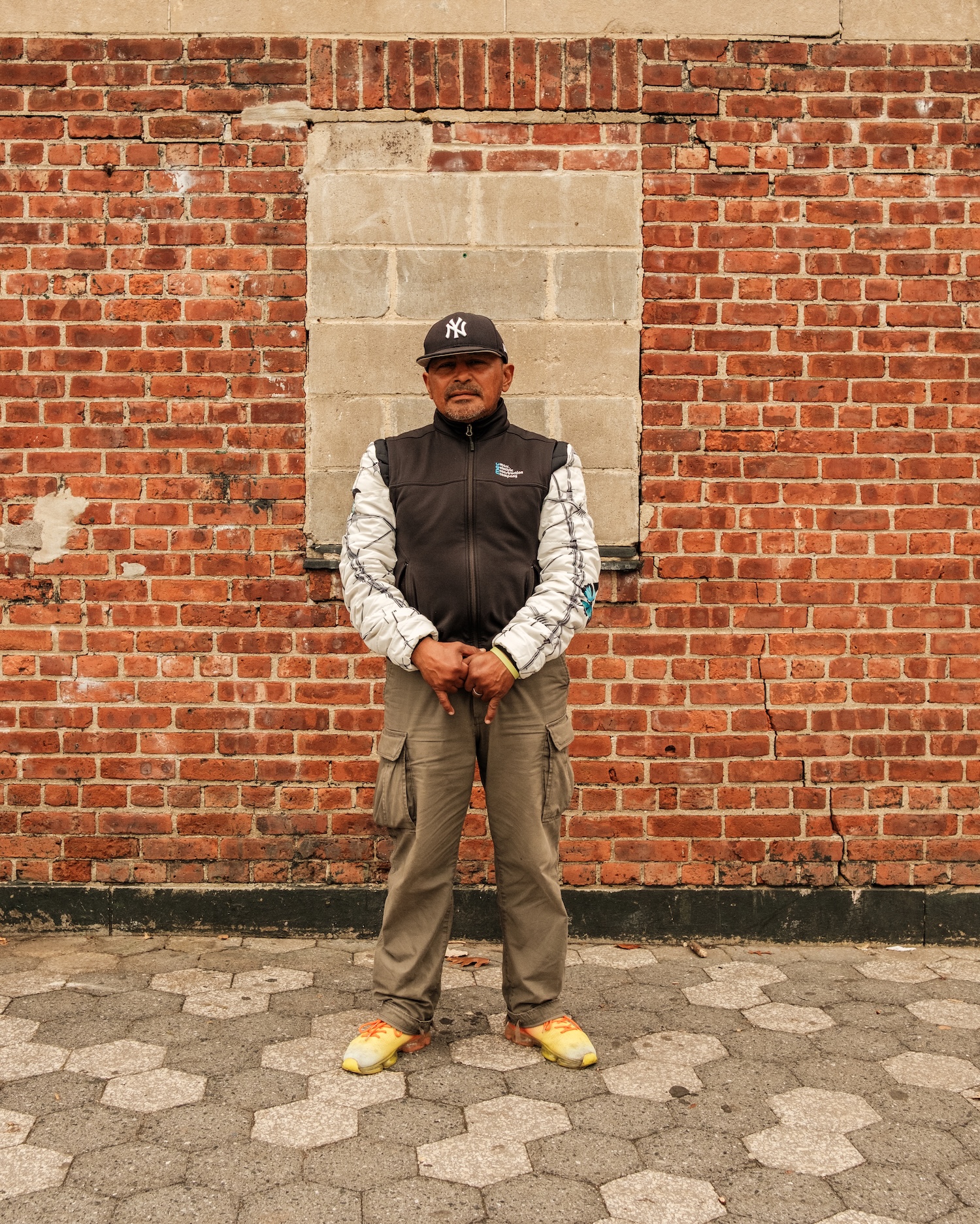
Case in point: If any animal gets hurt, Vensot Villamar, the park custodian, will bring them to get medical attention at an animal sanctuary. The owner of Green Valley, a neighborhood grocery store overlooking the park, will occasionally give out a bag of peanuts for free so Thompson can feed the squirrels. A daily jogger will zig-zag throughout the park rather than along the path, periodically passing out peanuts in the bitter cold.
“It’s definitely a testament to the community here,” Jones reflected. “It’s almost surreal, especially in New York City, to have these animals trust humans so much and to have such positive interactions with them.”