What We Talk About When We Talk About the Middle Class
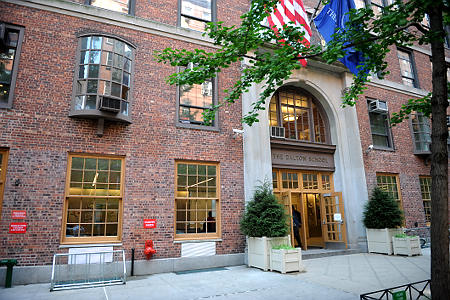
- Only 2% of incoming kindergarteners have no prior connection to the school. I’m so sorry, but your kid is not getting in.
There is no doubt that living in New York is tough and that it comes at a price. But instead of exploring what that price really is and talking to New Yorkers who choose to live here despite it not being in their financial best interests, the Times turns the important issue of economic disparity into a discussion about how much it sucks not to have a country house. I mean, that’s their point, right? Not only that it takes a lot of money to be middle class, but also that it kind of sucks to be middle class. Because what the middle class people that the Times talks to want, is to be wealthy. Sending your child to a private school that costs $40,000-a-year is not fucking middle class. It’s not middle class just because you were traumatized by kindergarten and it’s not middle class because a lot of your neighbors can afford to do it. It’s a privilege that very, very few people can afford. Every child should be entitled to a good education—and, obviously, that is its own, knotted issue—but not every child is entitled to Dalton.
Polarizing New York into the haves and have-nots is easy to do. There are people here who have a whole hell of a lot and there are people with nothing. This is not perfect, but it is also not new. What is perhaps new is that places that used to be relatively affordable—like, I don’t know, lots of places in Brooklyn—are now becoming untenable to live in for all but the very wealthy. However, there are things being done, even on the community level to address some of these issues. Schools are actually a good example of how families who are middle class are trying to stake their claim in a city where the rent might be stratospherically high, but so is the potential for an amazing life. Communities have come together to strengthen their local public schools rather than resort to private school (if that’s even an option) or move somewhere else. People make do with less in all sorts of areas, they compromise where they might not want to, in order to take advantage of what this city has to offer. So, sure, maybe they don’t have what the Times would consider to be the traditional trappings of the middle class. They don’t have exciting vacations or a car or the disposable income to take cabs at whim, but it doesn’t mean they are suffering, or even that they are compromising in some sort of unacceptable way.
The disservice that the Times does to the actual middle class—not the morons who can’t scrape by on a quarter of a million dollars a year—is that it treats those who willingly accept a life where they need to do without certain things as people who have failed. Middle class does not mean upper class. Pretending that privilege is the norm is basically what the Times does on a regular basis, but that doesn’t make it any less egregious. Especially when the topic is one that is as important as this one. We are living in a time when some things that used to get taken for granted as achievable goals—things like being able to graduate from college without mountains of debt—are now seen as something almost unattainable. The things that need to be addressed are not whether or not it’s fair that someone making $200,000 a year can’t afford to live in TriBeCa. Who cares? Only the idiot who is so desperate to live in a certain neighborhood that they whine about it to the New York Times. Only that idiot. Instead of focusing on those people, maybe the Times could look at the existing middle class, the families who stay in New York because they want to let their children grow up in a diverse, imperfect, dirty, beautiful, cultural wonderland and will make sure it happens no matter if they make $50,000 a year or $500,000. The Times could also look at the young people who are not supported by their parents and who live with roommates in order to pursue the careers and lives that they always wanted. The Times could even look at people who live below the poverty line and see how they live in this city of ours, just to see how New Yorkers live when private schools and TriBeCa are not even on the radar. There are a lot of us out there who manage on way less than even $50,000 a year without feeling like our lives are a constant struggle and strain. This is the middle class and it is important to recognize and value it, so that it can be preserved.
Follow Kristin Iversen on twitter @kmiversen